
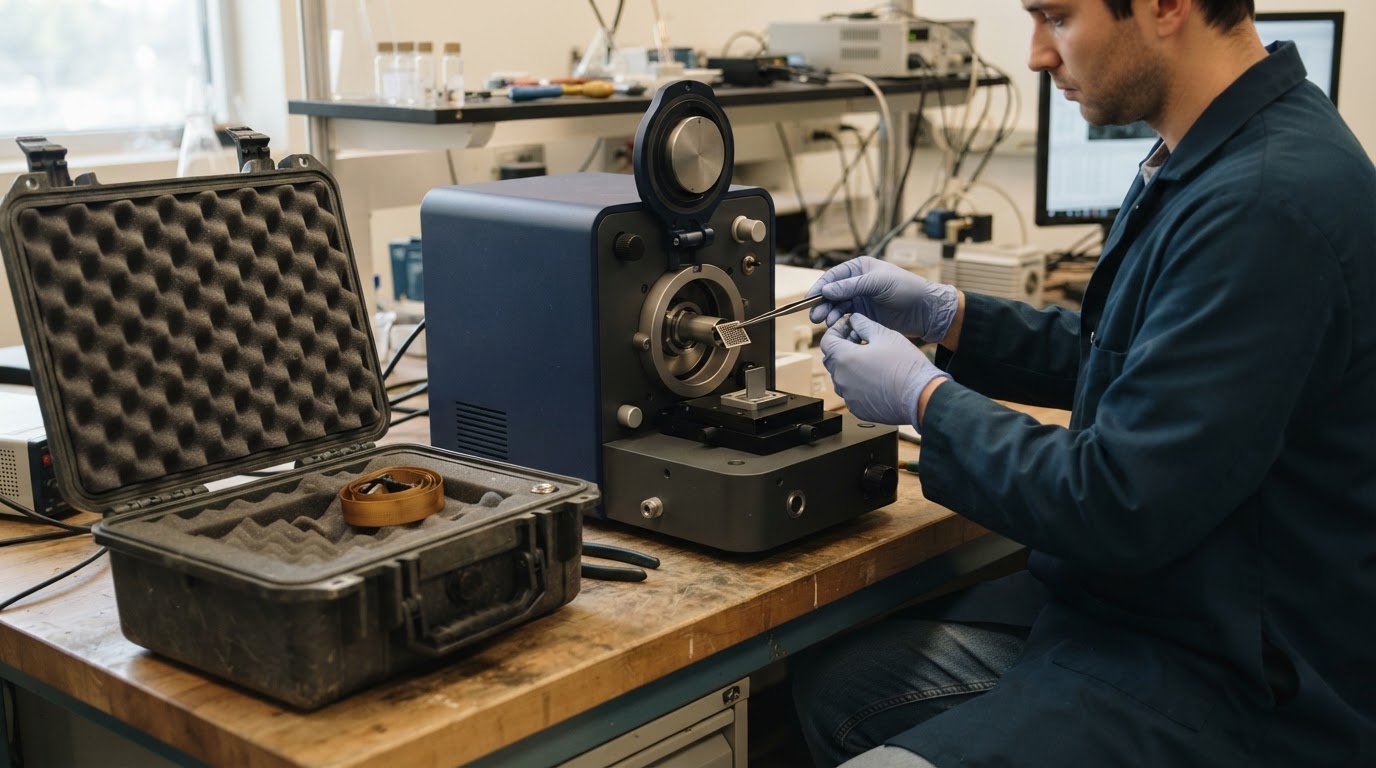
An SEM move is a precision reinstallation, not simply a change of address. Planning how to move an SEM to a new facility means recording baseline performance, preparing the destination environment, securing the electron optics column, vacuum system, stage assembly, and electronics chassis for transport, then verifying imaging and analytical performance after installation.
Protecting an SEM during a move is essential to preserving its performance. Vibration, temperature changes, and electromagnetic interference at the new site can affect image stability and consistency. Relocation involves more than transport: the instrument’s condition, facility readiness, shutdown and packing procedures, and installation all shape the transition. This article explains how to coordinate the move, protect sensitive components, assess the new space, and compare performance before and after relocation so you can plan a controlled return to work.
Key Takeaways
- Coordinate the move around facility readiness and production priorities, with clear responsibilities and communication for affected teams.
- Record imaging performance before relocation so post-installation results can be compared against a reliable baseline.
- Stabilize and secure the electron optics column, vacuum system, stage assembly, and electronics chassis before transport.
- Assess the destination for environmental and infrastructure conditions that can influence image stability and analytical consistency.
Early move planning and stakeholder communication
When planning how to move an SEM to a new facility, appoint a move owner, set a target date, and define how decisions will be made. Coordinate construction, shutdown, transport, and recommissioning so that access changes or delays do not leave the microscope unprotected. Share the schedule with employees, clients, and other stakeholders who may be affected.
Facility Walkthroughs and Space Planning
A facility walkthrough helps determine whether the SEM room and access route are suitable for installation and operation. Include laboratory, facilities, and SEM service personnel to assess doorways, corridors, floor access, placement, and service clearances. Map the final position in relation to utilities and nearby equipment. Transformers and industrial machinery can cause electromagnetic interference that affects beam stability and image quality. Record any room-readiness issues and assign someone to resolve each one before delivery.
Phased Relocation and Moving-Day Logistics
A phased relocation moves equipment in a planned sequence while keeping other machines available for production. Set the SEM shutdown and delivery dates in relation to construction milestones, room readiness, and work that depends on instrument access. If production must continue, stage equipment moves so unaffected machines can keep running. A workable plan for how to move an SEM to a new facility also specifies who will communicate delays or schedule changes. Give movers and facility staff the access route, staging area, unloading point, and receiving contact.
Choosing a Mover and Assessing Costs and Risks
Moving an SEM requires coordinated handling of its mechanical assemblies, vacuum system, electron optics, and precision reinstallation. Electron Optics Instruments provides SEM relocation and site evaluation services, coordinating technical preparation and installation with the physical move. This support is especially important if the instrument needs to be disconnected or recommissioned.
The cost to move and reinstall an SEM depends on the instrument, preparation, transport distance, site access, and reinstallation work. Request a quote to discuss the scope of your relocation.
Risks include impact, vibration, environmental changes, and installation delays. Document the instrument’s condition before transport and clarify insurance coverage for packing, transit, unloading, and reinstallation, including who is responsible for damage at each handoff.
Post-installation imaging and performance verification
After installation, verify that the SEM performs consistently in its new environment before returning it to routine use. Compare post-move results with pre-move imaging records to assess whether the transition affected resolution, beam stability, stage accuracy, or analytical performance.
Where possible, use the same sample types and imaging conditions recorded before relocation. Document each result, including focus behavior, image drift, and stage positioning. If a test image looks blurred or unstable, distinguish instrument issues from environmental factors. Foot traffic, nearby machinery, elevators, HVAC systems, and structural resonance can introduce vibration. Temperature fluctuations can also contribute to mechanical drift and focus instability.
- Assess image resolution against the pre-move reference images.
- Observe beam stability for shifts or visible fluctuation during imaging.
- Test stage accuracy by repeating established positioning tasks.
- Evaluate analytical performance using a suitable known sample and the same measurement approach.
A post-move inspection should also cover the SEM’s placement and surrounding work area. Record the equipment’s condition, cable connections, and any visible transport or installation damage. Ask operators to report practical issues, such as unexpected image drift or difficulty positioning samples. Their feedback adds operational detail that a single test image cannot provide and may reveal workflow problems before they affect routine analysis.
For manufacturing use, test the instrument on a representative product before restoring full production. Review the results with the relevant technical and production teams, then conduct an internal process audit after production resumes. The audit can identify changes to sample preparation, operating steps, or scheduling that could improve consistency at the new location.
Keep findings, corrective actions, and ownership in one transition record. A clear timeline for unresolved issues helps the team distinguish installation tasks from ongoing process improvements. For follow-up related to instrument upkeep, see SEM maintenance support.

Protecting the electron optics column, vacuum system, stage, and electronics
An SEM’s column, vacuum system, stage assembly, and electronics chassis are sensitive equipment, not ordinary freight. Stabilize and secure each component before transport to reduce movement during handling. A successful relocation treats these assemblies as parts of an integrated instrument and follows model-specific shutdown and packing procedures.
The electron optics column requires particular care because movement can affect alignment and imaging performance. The vacuum system also needs controlled preparation before disconnection and transport. Secure the stage against unintended movement and protect the electronics chassis from shocks and vibration. Include these steps in the move plan and assign them to personnel familiar with the instrument.
- Electron optics column: Stabilize and secure it before the SEM is moved.
- Vacuum system: Prepare it for transport using the instrument’s applicable procedures.
- Stage assembly: Secure the moving assembly to limit unwanted motion.
- Electronics chassis: Protect the unit from bumps and vibration during handling.
Keep handling instructions with the SEM throughout packing, loading, unloading, and installation. Clear labels and a record of disconnected connections help the receiving team identify components and restore their intended configuration. These records also support inspection after delivery, particularly if the instrument’s condition has changed between departure and arrival.
Transport conditions matter. Air-ride suspension vehicles may help protect sensitive electronics from road bumps and vibration, but careful loading and controlled handling are still essential. Coordinate the move with personnel experienced in SEM systems, since relocation brings together mechanical handling, vacuum technology, electron optics, and precision reinstallation. A general freight plan alone does not address these requirements.
Keep the SEM protected until it reaches its prepared position in the new facility. Delivery is not the end of the process: secure components must be installed and calibrated before performance checks can determine whether the instrument is ready for use.
How to prepare an SEM for relocation to a new facility
Preparation connects the SEM’s current condition with the requirements of its destination. Before the move, document the instrument’s operating state and secure important records so the team can distinguish pre-existing issues from changes after transport. Even a short-distance move can lead to degraded imaging, downtime, or repairs if planning and handling are inadequate.
Start by assessing the equipment’s condition. Record known performance issues, maintenance needs, and visible damage, then use that information to decide whether repairs or replacement are appropriate before relocation. Back up important operating records and store the copies securely. Include configuration details and move instructions covering shutdown, packing, transport, unloading, and setup at the new facility.
A pre-move site analysis should assess conditions that influence SEM operation, including vibration, electromagnetic interference, acoustic noise, room suitability, power quality, grounding, and temperature stability. Electrical infrastructure, transformers, power lines, and nearby industrial equipment can contribute to electromagnetic interference, affecting beam stability and image quality.
- Assess whether the room’s vibration, acoustic, and thermal conditions suit the instrument.
- Review power quality and grounding alongside nearby sources of electrical interference.
- Plan for suitable power, cooling water, and, where needed, compressed air and nitrogen gas.
- Document the route and the procedures for shutdown, packing, unloading, and configuration.
These checks connect the room plan to the SEM’s operating requirements. A suitable room can still present a problem if a nearby transformer or industrial machine disrupts beam stability. Identifying utility needs early also helps coordinate facility preparation with installation, rather than discovering a missing connection on delivery day.
Coordinate the move instructions with the people handling the instrument and preparing the destination. A consistent record of equipment condition, backups, site findings, and handling requirements gives each stage a clear reference. Discuss SEM relocation planning to align preparation with instrument needs.
Electron Optics Instruments
Electron Optics Instruments sells SEM equipment for organizations evaluating their microscopy needs during a facility transition. If relocation prompts a decision about keeping existing equipment or choosing a different SEM, consider the intended applications, available laboratory space, and operating requirements together.
Its portfolio includes the Cube II Benchtop SEM, Genesis Tabletop SEM, Veritas Series SEM, and Veritas Plus SEM. These offerings provide options to consider when planning an SEM investment alongside broader facility changes. Matching equipment decisions to the laboratory’s work helps keep the transition aligned with research or production priorities.
For help evaluating SEM equipment options, contact Electron Optics Instruments.
Make the Next Facility a Platform for Reliable Analysis
A facility transition is also an opportunity to reassess how microscopy supports your research or production priorities. Planning how to move an SEM to a new facility is not only about preserving its current capabilities; it can clarify whether the instrument remains suited to the work planned at the destination. Consider sample types, imaging needs, analytical workflows, and available space as laboratory requirements evolve.
Electron Optics Instruments offers the Cube II SEM, Genesis SEM, and Veritas SEM. These models can inform equipment planning when relocation coincides with changing laboratory needs. Discussing the application and facility context helps frame the equipment decision without treating the move itself as the only consideration.
For a conversation about SEM equipment options and your facility’s microscopy needs, contact Electron Optics Instruments. A considered next step can help carry your microscopy program into its new setting with purpose.
Frequently Asked Questions
How do you safely disconnect and pack a scanning electron microscope?
Have personnel familiar with the SEM model manage shutdown, disconnection, and packing according to the manufacturer’s procedures. Before removing cables, document the configuration and label connections so installation does not rely on memory. Keep accessories, cables, and removable components identified with the instrument. Choose packing methods suited to each assembly, and specify who is responsible at every handoff.
What lifting and transport requirements apply to an SEM?
Base the lifting and transport plan on the SEM model, weight, designated handling points, and route through both facilities. Account for doorway clearance, floor access, loading conditions, and positioning at the destination. Give movers clear instructions for controlled handling. An air-ride vehicle may help reduce bumps and vibration affecting sensitive electronics. Do not lift from unapproved points.
How can an SEM be transported without damaging its electron column or vacuum system?
Protect the column and vacuum system with instrument-specific preparation, stabilization, and secure packing before transit. Coordinate technical preparation with the physical move rather than treating the SEM as ordinary freight. Record the instrument’s condition before loading and on arrival, and assign responsibility for each transfer. This creates a traceable handoff if an inspection identifies a change after transport.
How should a new facility be prepared for SEM installation?
Prepare the room before delivery by completing construction, confirming utility connections, and clearing the route from the unloading point to the installation position. Make installation documents available to facilities and laboratory teams so the room configuration meets the SEM’s requirements. A readiness review can also identify unresolved work, such as incomplete electrical connections, before it disrupts installation or delays laboratory use.
What facility requirements does an SEM have for power, grounding, vibration, and temperature?
Power quality, grounding, vibration, and temperature must meet the requirements for the specific SEM model. Electrical disturbances can affect operation, while vibration from nearby machinery or building activity may reduce image stability. HVAC changes can contribute to thermal drift. Use the instrument’s installation specifications to define acceptable room conditions, then assess those conditions in the intended location.
How is an SEM reinstalled, aligned, and calibrated after relocation?
Reinstall the instrument according to its procedures, with qualified SEM personnel positioning and configuring the system before alignment and calibration. Once it is operational, evaluate it using established reference samples and compare the results with baseline records. Review image quality, stage positioning, and relevant analytical output before routine work resumes. If results differ, investigate installation and room conditions before attributing the change to process variation.