
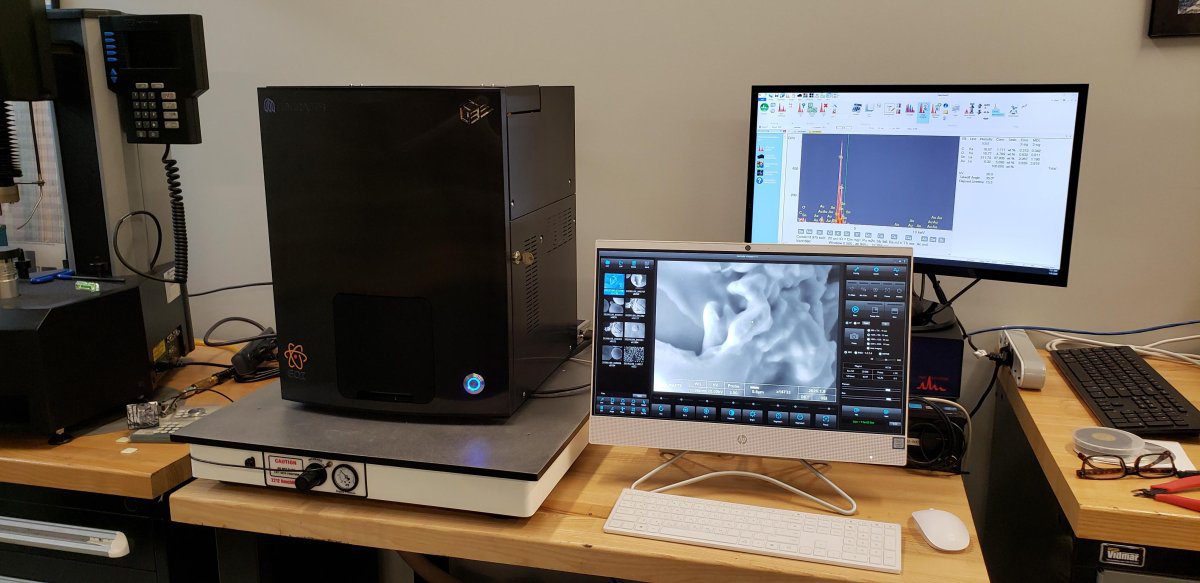
The integrity of a sub-nanometer image rests not on the power of the electron beam, but on the absolute absence of matter within the column. Industry data indicates that approximately 40% of unscheduled instrument downtime stems from pressure fluctuations or seal failures within the sem vacuum system. When a system fails to maintain its operational vacuum, the resulting filament oxidation and beam scattering don’t just degrade resolution; they compromise the fundamental reliability of your analytical results and long-term hardware stability.
You recognize that a high-performance laboratory requires more than just reactive repairs to maintain its technical excellence. This guide delivers the expertise required to master the intricacies of vacuum theory and hardware integration, ensuring you achieve peak analytical performance while extending the lifespan of your most sensitive components. We’ll examine the evolutionary transition from mechanical to turbomolecular pumping, evaluate the role of specific gauges in precision monitoring, and outline a proactive maintenance schedule that prevents the high costs of catastrophic pump failure.
Key Takeaways
- Comprehend the underlying principles of the mean free path to facilitate an environment where electron beams interact with specimens without the degradation caused by residual gas molecules.
- Gain technical insight into the architecture of a high-performance sem vacuum system, focusing on the synergy between mechanical roughing pumps and specimen chamber integrity.
- Analyze how vacuum quality directly influences analytical outcomes, from maximizing secondary electron signal-to-noise ratios to preserving the accuracy of sensitive X-ray detectors.
- Establish a systematic preventative maintenance schedule and learn to diagnose vacuum failures through the identification of slow pump-down times and image artifacts.
- Evaluate the evolutionary advancements in dry vacuum technology that eliminate oil contamination risks while maintaining a compact footprint for modern laboratory environments.
Understanding the Critical Role of the SEM Vacuum System
The sem vacuum system represents the technical foundation upon which all modern electron-based characterization relies, providing the necessary low-pressure environment to ensure beam stability and precise sample interaction. It’s the mechanism that allows for the controlled propagation of electrons through the column, preventing the chaotic scattering that occurs in atmospheric conditions. By maintaining a rigorous vacuum, the system enables a Scanning Electron Microscope to achieve the sub-nanometer resolution required for advanced semiconductor and metallurgical analysis. This evolutionary approach to instrumentation ensures that the electron probe remains focused, allowing for the consistent acquisition of high-fidelity topographical and compositional data.
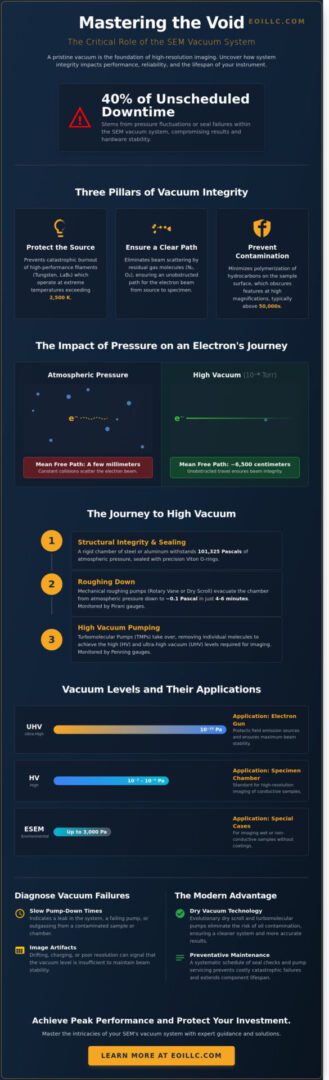
Protecting the electron source is a primary objective of these vacuum protocols. High-performance filaments, such as tungsten or lanthanum hexaboride cathodes, operate at extreme temperatures often exceeding 2,500 Kelvin. If these components encounter oxygen molecules at such temperatures, they suffer immediate oxidation and catastrophic burnout. Additionally, the sem vacuum system minimizes specimen contamination by reducing the presence of residual hydrocarbons. During high-magnification imaging, typically above 50,000x, these hydrocarbons can polymerize under the beam, creating carbon deposits that obscure the delicate features of the sample surface.
Why Electron Microscopy Requires a Vacuum Environment
At atmospheric pressure, an electron beam can’t travel more than a few millimeters before colliding with nitrogen or oxygen molecules, which effectively scatters the energy and destroys the beam’s focus. High-vacuum levels, often reaching 10^-6 Torr, are essential to extend the distance between these collisions and maintain beam integrity. In a vacuum environment of 10^-6 Torr, the Mean Free Path represents the average distance an electron travels before colliding with a residual gas molecule, which extends to approximately 6,500 centimeters to ensure an unobstructed path from the source to the specimen.
Vacuum Levels: Rough, High, and Ultra-High Vacuum
The requirements for vacuum pressure vary significantly between the electron gun and the specimen chamber. While the specimen chamber may operate in the high-vacuum range of 10^-3 to 10^-5 Pascal, the electron gun often requires ultra-high vacuum (UHV) levels reaching 10^-10 Pascal to maintain the stability of field emission sources. Conventional systems require these low pressures to prevent electrical arcing and sample charging. In contrast, Environmental SEM (ESEM) configurations utilize a differential pumping strategy to maintain pressures up to 3,000 Pascal, allowing for the analysis of wet or non-conductive samples without the need for traditional conductive coatings.
Primary Components and Pumping Mechanisms in Modern SEMs
The architecture of a modern sem vacuum system relies on a sophisticated hierarchy of pressure management tools designed to facilitate electron beam stability. At the foundation, the specimen chamber must exhibit exceptional structural rigidity to resist the 101,325 Pascals of atmospheric pressure pressing against its exterior. Engineers typically utilize thick-walled stainless steel or aluminum to ensure the chamber maintains its geometry; any microscopic deflection could compromise the precision of the electron optical alignment. Seal integrity is maintained through Viton O-rings and precision-machined flanges that prevent atmospheric ingress, even at vacuum levels as low as 10^-5 Pascal.
Initial evacuation begins with mechanical roughing pumps, such as rotary vane or dry scroll pumps. These units bridge the gap between atmospheric pressure and the operational thresholds of high-vacuum systems, typically reaching levels of 0.1 Pascal within 4 to 6 minutes in standard benchtop configurations. Monitoring this progress requires specialized sensors. Pirani gauges track the transition from atmosphere to rough vacuum by measuring changes in thermal conductivity, while Penning gauges utilize cold cathode ionization to monitor the high-vacuum regime. Achieving these precise environmentals is a prerequisite for the integration of advanced optical solutions in industrial settings.
The Evolution of Pumping Technology: TMP vs. Diffusion
The transition from traditional oil-based diffusion pumps to turbomolecular pumps (TMP) represents a significant evolutionary step in microscopy. Diffusion pumps, while reliable and cost-effective, carry the risk of hydrocarbon contamination if backstreaming occurs. In contrast, TMPs utilize high-speed turbine blades rotating at speeds often exceeding 60,000 RPM to physically collide with gas molecules, directing them toward the roughing line. This oil-free operation is vital for maintaining the excellence of high-resolution imaging. Modern laboratories prioritize TMPs because they eliminate the low-frequency vibrations associated with older tech and reduce total pump-down times by approximately 25 percent compared to legacy diffusion systems.
Valves and Manifolds: Directing the Flow
A complex network of manifolds and valves coordinates the evacuation sequence to protect sensitive internal hardware. The gate valve serves as the primary barrier, isolating the electron gun and its ultra-high vacuum environment from the specimen chamber during sample exchanges. This isolation ensures the filament or field emission source isn’t exposed to oxygen, which would cause immediate degradation. Understanding SEM vacuum system components helps operators manage the standard startup procedure, which starts with roughing the chamber, followed by the activation of the high-vacuum pump once the crossover pressure is achieved. Airlock systems further enhance laboratory throughput by allowing sample insertion through a small, independently vented volume, preventing the need to vent the entire sem vacuum system.
The Correlation Between Vacuum Quality and Analytical Performance
The operational efficiency of a sem vacuum system directly dictates the precision of every analytical output. When vacuum levels fall below the required threshold of 10^-6 Torr, residual gas molecules interfere with the primary electron beam’s trajectory. This interaction significantly degrades the signal-to-noise ratio. As secondary electrons are scattered by gas molecules before they reach the detector, the resulting images lose the crisp edges and topographical detail necessary for high-level research. Precision microscopy demands a mean free path that minimizes these collisions to ensure that every captured signal represents the sample surface rather than atmospheric interference.
Beam stability is another critical factor linked to vacuum health. Pressure fluctuations as small as 5% can cause noticeable “image drift” during long-duration scans, such as those required for 500-second elemental mapping. This instability originates from the electron source’s reaction to its environment. For instance, in a standard Tungsten source, oxygen levels above 10^-4 Torr accelerate evaporation and oxidation. This process can reduce a filament’s operational lifespan by 60% or more, leading to increased maintenance costs and system downtime. Maintaining a rigorous vacuum environment isn’t just about image clarity; it’s a strategic necessity for hardware longevity.
Protecting Energy Dispersive Spectroscopy (EDS) Detectors
Modern EDS detectors utilize ultra-thin polymer windows, often measured at a mere 100 nanometers, to allow for the transmission of low-energy X-rays. These windows are fragile and susceptible to damage if the sem vacuum system isn’t managed correctly. Because the silicon crystal within the detector is typically cooled to temperatures near -170 degrees Celsius, it acts as a cryo-pump for any residual moisture or hydrocarbons in the chamber. This leads to ice buildup or carbon contamination on the detector face, which absorbs X-rays and skews quantitative data. You can explore these complex interactions further in our guide to Advanced SEM Techniques.
Managing Outgassing and Sample Contamination
Analytical accuracy is frequently compromised by “dirty” samples that release volatile organic compounds (VOCs) when placed under vacuum. This outgassing phenomenon can raise chamber pressure by an entire order of magnitude within seconds. Porous materials, polymers, and samples with residual oils are the primary culprits. To maintain 99.9% analytical integrity, operators must implement strict pre-cleaning protocols, such as using vacuum ovens or plasma cleaners to remove contaminants before insertion. Adhering to the best practices outlined in our technical guide on SEM Sample Preparation ensures that the vacuum environment remains pristine for high-resolution imaging.
Maintenance Protocols and Troubleshooting Vacuum Failures
The operational longevity of a sem vacuum system depends on the implementation of rigorous preventative maintenance (PM) protocols that prioritize mechanical integrity and technical precision. Lab managers must establish a structured schedule for oil changes and seal inspections that aligns with high-utilization environments. Standard rotary vane pumps typically require oil replacement every 1,000 operational hours or whenever the fluid exhibits visible discoloration. Neglecting these intervals leads to increased pump vibration; this serves as a critical early warning sign of mechanical bearing failure that can jeopardize the entire column’s stability.
Identifying the symptoms of a vacuum leak early prevents costly downtime. Slow pump-down times, where the system takes 25% longer than its baseline to reach high vacuum, often indicate a compromised seal. Additionally, “noisy” images characterized by visual artifacts or graininess suggest that atmospheric molecules are scattering the electron beam. O-ring care is a fundamental aspect of this maintenance; these components require regular cleaning with lint-free wipes, lubrication with high-vacuum grease, and replacement every 12 months to ensure an airtight environment.
A Proactive Maintenance Checklist for Lab Managers
A consistent maintenance framework ensures operational excellence and sustainable innovation in the lab. Weekly tasks should include monitoring oil levels and checking the exhaust filter for saturation. Monthly reviews focus on inspecting accessible O-rings for cracks or flattening. To perform a precise leak test, technicians can apply small amounts of isopropyl alcohol to suspected joints while observing the vacuum gauge for transient pressure spikes. Investing in professional SEM training provides a clear return on investment, as expert operators contribute to a 15% reduction in vacuum errors caused by improper sample loading or seal handling.
Troubleshooting Common Vacuum Errors
Troubleshooting begins when the sem vacuum system fails to reach its “Ready” status within the manufacturer’s specified timeframe. It’s necessary to differentiate between hardware degradation and seal failure by isolating components. If the pre-pump achieves its target pressure but the chamber does not, the issue likely resides in the chamber door O-ring or a sample stage feedthrough. Safety protocols dictate an immediate system shutdown if pressure readings fluctuate beyond safe thresholds; this prevents catastrophic contamination of the sensitive optical components. For organizations seeking to enhance their technical prowess, consulting with EOI LLC experts ensures your facility maintains peak industrial performance.
Evolutionary Advancements in Vacuum Technology for Benchtop SEMs
The ongoing evolution of the sem vacuum system represents a pivotal technical milestone in the field of electron microscopy, transitioning from the cumbersome, manual configurations common in the late 20th century to the streamlined, automated architectures that define contemporary research environments. Modern laboratories now prioritize environments free from hydrocarbons, a requirement that’s catalyzed an industry-wide shift toward dry vacuum systems. By utilizing sophisticated diaphragm pumps in conjunction with high-speed turbomolecular pumps, these systems effectively eliminate the risk of oil backstreaming. This advancement is critical for sensitive materials science applications where even trace carbon contamination can compromise the integrity of energy-dispersive X-ray spectroscopy (EDS) data or obscure nanometer-scale surface features.
Automation remains at the forefront of this technological progression. Current integrated vacuum management software handles the entire evacuation and venting sequence with precision, which removes the potential for human error that historically led to catastrophic chamber venting failures or mechanical pump damage. As we look toward the next decade, the role of vacuum technology will become even more central to the development of the next generation of field-emission (FE) SEMs. Achieving and maintaining the ultra-high vacuum (UHV) levels necessary for stable FE source operation within a compact, benchtop chassis is a primary engineering objective that Electron Optics Instruments, LLC continues to pursue through rigorous iterative design.
The Cube II Advantage: Precision Vacuum in a Desktop Format
The Cube II Benchtop SEM demonstrates remarkable engineering integration by housing a high-performance turbomolecular pumping system within its minimal footprint. While traditional floor-standing units often require 15 to 20 minutes to reach operational vacuum levels, the Cube II achieves this state in under 180 seconds. This rapid pump-down capability significantly enhances throughput for industrial quality control and high-volume research. This efficiency is a core component of the Desktop SEM: The Evolutionary Shift toward high-performance microscopy that doesn’t sacrifice speed for resolution.
Selecting the Right System for Your Analytical Requirements
Determining the optimal sem vacuum system requires a detailed analysis of your specific analytical goals and the nature of your specimens. The Veritas series provides exceptional versatility for diverse sample types, while the Genesis series focuses on maximizing vacuum stability for high-resolution imaging at lower kilovoltages. Beyond technical specifications, organizations must consider the total cost of ownership, including maintenance cycles and power consumption, as outlined in our Electron Microscope Cost Guide.
Our team of technical experts is available to help you navigate these complex specifications to ensure your laboratory is equipped for future challenges. Contact Electron Optics Instruments, LLC for a technical consultation on your next SEM acquisition.
Advancing Research Precision Through Integrated Vacuum Excellence
The operational integrity of a modern sem vacuum system directly dictates the limits of image resolution and the reliability of elemental analysis. Achieving consistent results requires a deep understanding of the interplay between turbomolecular pumps and the chamber environment; this knowledge prevents the contamination that often compromises delicate electron emitters. As benchtop technology continues its evolutionary trajectory, the integration of high-performance vacuum components into smaller footprints allows for sub-5nm imaging without the infrastructure demands of traditional floor models. Electron Optics Instruments brings over 30 years of dedicated electron microscopy expertise to help you navigate these technical complexities. As the authorized US distributor for EmCraft Scanning Electron Microscopes, we’re positioned to provide the precision hardware your laboratory requires for high-stakes analysis. Our comprehensive service contracts extend beyond our own catalog to cover all major manufacturers, ensuring that your facility maintains peak performance across its entire fleet.
We’re ready to support your next breakthrough with the technical rigor your research deserves.
Frequently Asked Questions
How long should an SEM take to reach high vacuum?
A standard sem vacuum system typically requires 180 to 600 seconds to achieve operational high vacuum levels below 10^-4 Pa. This duration fluctuates based on the chamber’s volume and the specific pumping speed of the integrated turbomolecular unit. It’s a critical metric; if the system exceeds 15 minutes to reach baseline pressure, it’s indicative of potential seal degradation or excessive moisture within the specimen chamber.
What happens if the vacuum system fails while the filament is on?
Instantaneous filament burnout occurs if the vacuum integrity is compromised while the electron source is energized. The influx of oxygen molecules at pressures above 10^-2 Pa causes the tungsten or LaB6 cathode to oxidize rapidly, resulting in a permanent structural failure. Modern sem vacuum system architectures include automated safety interlocks that terminate high voltage within 50 milliseconds of detecting a pressure surge to mitigate this risk.
Can I operate an SEM without a high vacuum pump?
Conventional scanning electron microscopy requires a high vacuum environment to prevent electron scattering, though Variable Pressure (VP-SEM) units can operate at 10 to 3000 Pa. Operating without a high vacuum pump in standard modes would result in a mean free path too short for the electron beam to reach the specimen. This lack of precision would render imaging impossible as the primary beam would disperse before impacting the sample surface.
How often should I change the oil in my SEM’s roughing pump?
Maintenance protocols dictate that roughing pump oil should be replaced every 3,000 to 4,000 operational hours or at six month intervals to ensure peak mechanical performance. Contaminated oil loses its lubricity and sealing capacity, which directly impacts the evolutionary efficiency of the primary vacuum stage. Technicians should monitor the oil’s color; a transition from clear to dark amber indicates a 20% or greater loss in chemical stability.
What are the signs of a vacuum leak in an SEM image?
Visual evidence of a vacuum leak includes increased image noise and erratic beam instability that manifests as horizontal streaks across the micrograph. When the internal pressure rises above 10^-3 Pa, the electron beam interacts with gas ions, causing a 15% reduction in signal-to-noise ratio. You’ll also notice image drift as the fluctuating pressure affects the electrostatic environment within the column, compromising the system’s inherent precision.
Why is the vacuum level different for the gun and the chamber?
The electron gun requires an ultra-high vacuum of 10^-7 to 10^-9 Pa to maintain cathode longevity, while the specimen chamber often operates at 10^-4 to 10^-6 Pa. This pressure differential is maintained by a small aperture that limits gas flow between the two compartments. Maintaining a higher vacuum at the source is vital because even trace contaminants can cause 50% faster degradation of field emission tips compared to standard tungsten filaments.
What is ‘outgassing’ and how does it affect the vacuum system?
Outgassing is the spontaneous release of trapped gas molecules from internal surfaces or porous samples when exposed to low pressure environments. This phenomenon can increase the time required to reach high vacuum by 40% or more, especially if the sample contains volatile polymers or residual moisture. Effective vacuum management involves pre-baking components or using desiccators to minimize these gas loads, ensuring the excellence of the final imaging environment.
Is a turbomolecular pump better than a diffusion pump for SEM?
Turbomolecular pumps offer superior performance for modern SEM applications because they provide a dry vacuum environment that eliminates the risk of oil backstreaming. While diffusion pumps are robust and have been used in 75% of legacy systems, they require water cooling and can introduce hydrocarbons into the column. The evolutionary shift toward turbomolecular technology provides higher pumping speeds for light gases, ensuring consistent precision during high-resolution imaging sessions.