
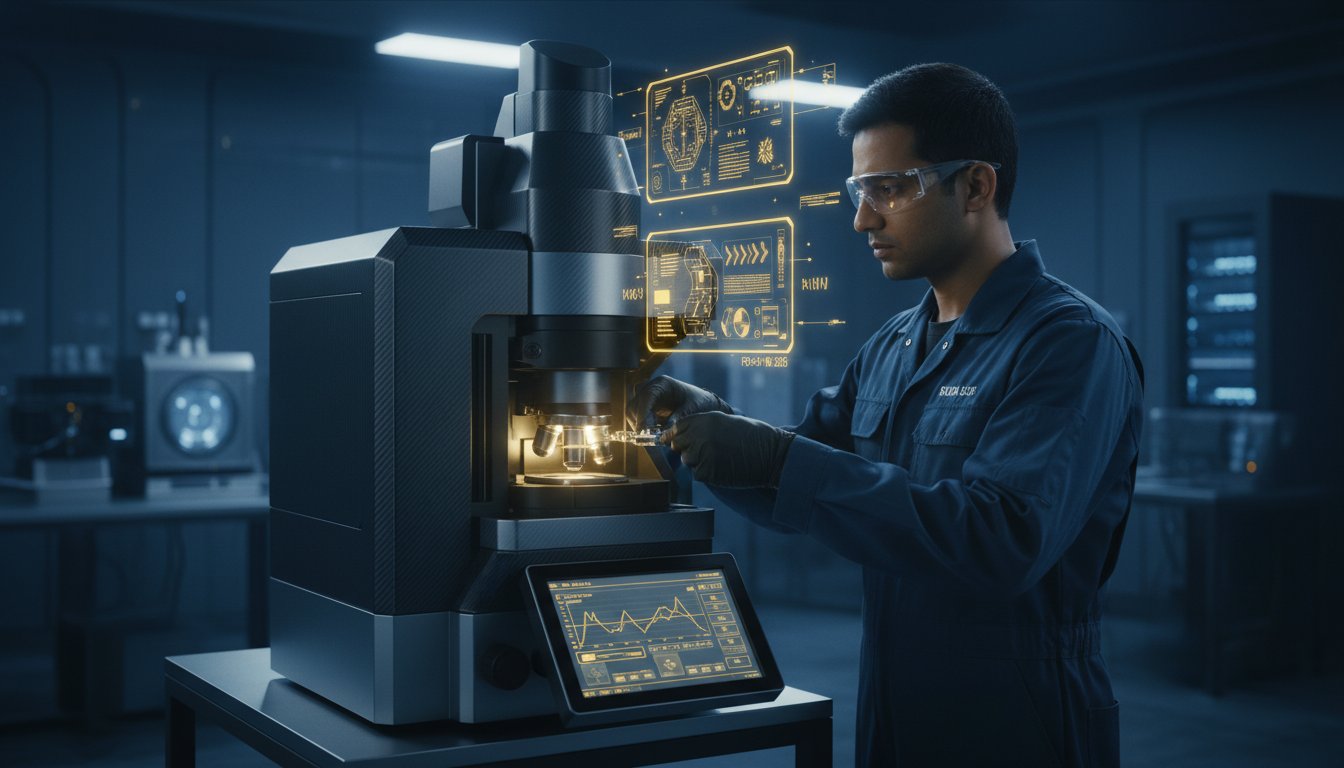
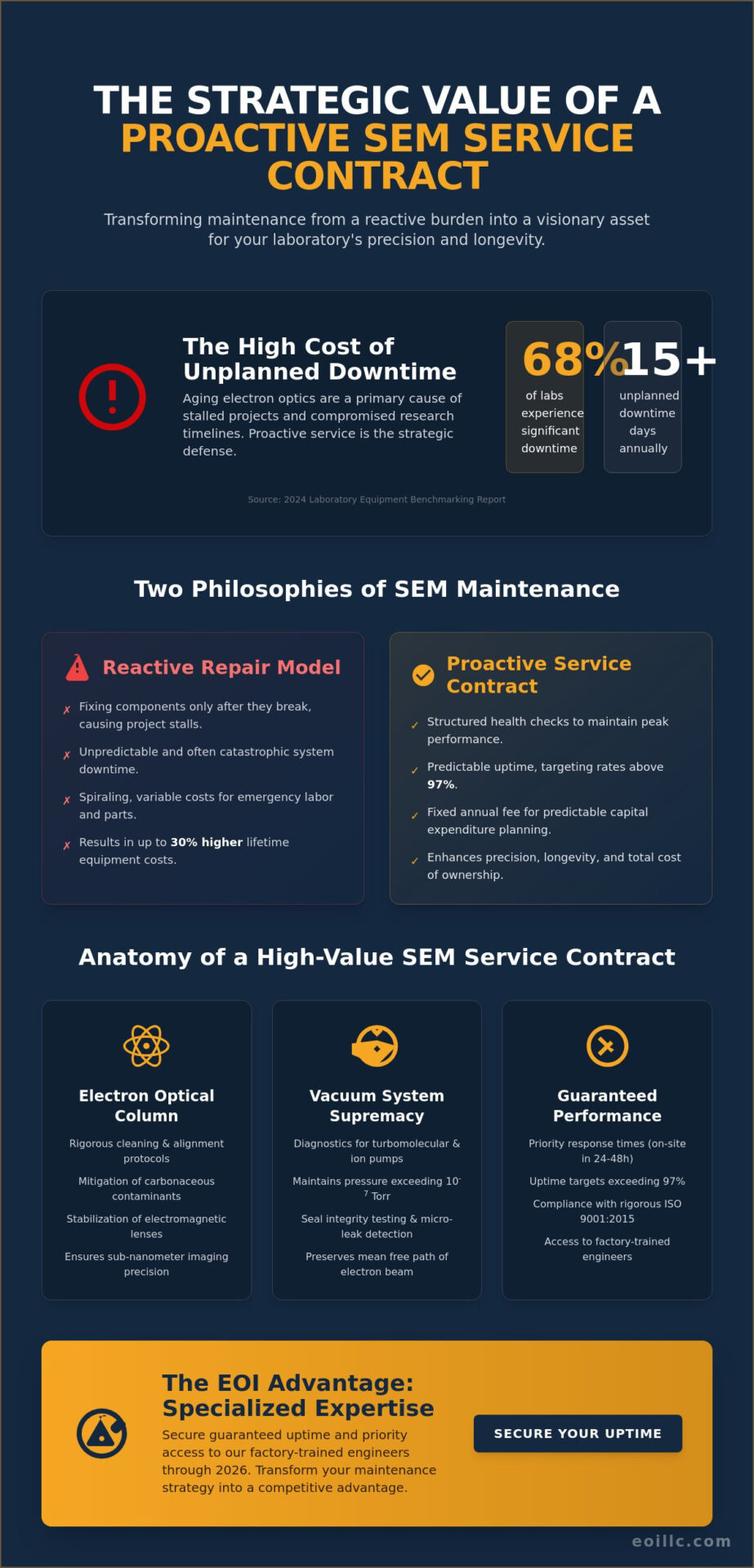
Research from the 2024 Laboratory Equipment Benchmarking Report indicates that 68% of research facilities experience at least 15 days of unplanned downtime annually due to aging electron optics. When critical imaging tasks stall, the resulting disruption to project timelines often exceeds the initial cost of the equipment itself. Securing a robust sem service contract isn’t merely a budgetary line item; it’s a strategic investment in the precision and continuity of your laboratory’s output. You’ve likely felt the strain of unpredictable repair costs that threaten to derail fixed annual maintenance budgets.
We recognize that your commitment to excellence requires a partnership grounded in technical authority and global capability. This article delivers a comprehensive evaluation framework designed to help you secure guaranteed uptime and priority access to factory-trained engineers through 2026. We’ll analyze the critical components of high-end optical solutions, from sustainable innovation in parts replacement to the integration of proactive diagnostic protocols. By the end of this FAQ, you’ll possess the insights necessary to transform maintenance from a reactive burden into a visionary asset for your organization’s technical evolution.
Key Takeaways
- Understand how a proactive maintenance philosophy enhances the precision and longevity of electron microscopy hardware compared to traditional reactive repair models.
- Gain a technical framework for evaluating an sem service contract to ensure comprehensive coverage of critical components like electron optics and vacuum systems.
- Compare the strategic advantages of full-service agreements against preventative maintenance tiers to align support levels with your laboratory’s specific utilization and performance requirements.
- Streamline your operational logistics by implementing a structured maintenance schedule and site health checks that mitigate downtime and preserve instrument integrity.
- Discover how specialized factory-trained engineering expertise provides a decisive advantage in maintaining the reliability of both desktop and full-sized microscopy systems.
Defining the Strategic Role of an SEM Service Contract
A formal sem service contract functions as the foundational framework for sustaining the operational integrity of high-precision instrumentation. It’s a strategic commitment that moves beyond simple repair tickets. This agreement ensures the precision and longevity of electron microscopy hardware through a structured support system designed for the rigors of 2026 research environments. The technical complexity of a Scanning Electron Microscope (SEM) requires more than occasional oversight; it demands a synergy between advanced engineering and consistent calibration.
The distinction between reactive repairs and a proactive maintenance philosophy is often the difference between project success and systemic failure. Reactive models rely on fixing components after they break, which leads to unpredictable downtime. In contrast, a proactive contract prioritizes the evolutionary health of the system. This professional maintenance directly impacts the accuracy of high-resolution imaging. When the electron optics are aligned to sub-nanometer tolerances, the resulting analytical data maintains a level of excellence that’s required for peer-reviewed publication or industrial quality control.
Research institutions utilize these contracts to facilitate predictable capital expenditure planning. By converting variable repair costs into a fixed annual fee, labs avoid the shock of sudden, expensive component replacements. It’s a method of stabilizing the financial lifecycle of the instrument while ensuring the hardware remains at the cutting edge of performance. Organizations that implement structured agreements report higher confidence in their long-term technological roadmaps.
The Core Objectives of Maintenance Agreements
The primary goal is establishing a baseline for equipment uptime, often targeting rates exceeding 97% for high-use facilities. These agreements focus on mitigating the risk of catastrophic vacuum system failures or the premature burnout of the electron gun, which can stall projects for weeks. Maintaining these systems ensures compliance with rigorous industrial standards like ISO 9001:2015. Reliability isn’t a luxury; it’s a requirement for global manufacturing leaders who can’t afford a single day of lost data.
Economic Advantages of Recurring Service Plans
Analyzing the total cost of ownership (TCO) reveals that systems without a sem service contract often incur 30% higher lifetime costs due to emergency labor rates and expedited shipping for sensitive parts. Comprehensive service contracts prevent the depreciation of sensitive sem maintenance protocols by ensuring every hardware adjustment adheres to factory benchmarks. Additionally, these plans provide the value of priority response times. During critical research cycles, having a technician on-site within 24 hours is vital for maintaining momentum in competitive sectors.
Technical Scope: What is Covered Under a Standard Agreement?
A comprehensive sem service contract functions as the foundational architecture for maintaining the integrity of high-resolution analytical environments. These agreements prioritize the evolution of the electron optical column through rigorous cleaning and alignment protocols. Technicians perform deep-stage inspections to mitigate the accumulation of carbonaceous contaminants that typically degrade beam brightness over a 12-month cycle. By stabilizing the electromagnetic lenses and apertures, laboratories ensure that the theoretical resolution limits of the instrument remain achievable in practical applications. This technical rigor is essential for 2026 standards, where sub-nanometer precision is no longer optional for industrial failure analysis.
Vacuum system diagnostics represent another critical pillar of the technical scope. Engineers evaluate the performance of turbomolecular and ion getter pumps to maintain pressures often exceeding 10^-7 Torr. This includes testing seal integrity and checking for micro-leaks that could compromise the mean free path of the electron beam. As evidenced by the Official Government SEM Contract Notice regarding NASA’s procurement of JEOL maintenance, these technical requirements are standardized to prevent catastrophic system downtime. Software updates and imaging system calibrations are also integrated to ensure that the digital interface remains synchronized with the hardware’s electronic output.
Specialized Support for Advanced Analytical Tools
Modern microscopy requires more than just basic imaging. Standard agreements now integrate maintenance for Energy Dispersive Spectroscopy (EDS) and X-ray detectors to ensure peak spectral resolution. For operators utilizing the Cube II or Genesis series benchtop SEMs, these services include precise calibration of the silicon drift detectors (SDD). Maintaining hardware stability is the only way to leverage advanced sem techniques that demand high-current stability for chemical mapping and crystallographic analysis.
Consumables Management and Replacement
The lifecycle management of sem filaments remains a primary focus within any professional sem service contract. Tungsten or hexaboride sources require periodic replacement to avoid unexpected failures during critical imaging sessions. Beyond the source, the contract typically covers:
- Standard replacement of final apertures to prevent beam astigmatism and diffraction issues.
- Annual exchange of vacuum oils in rotary vane pumps to prevent backstreaming and oil contamination.
- Cleaning or replacement of scintillators to maintain secondary electron detection efficiency.
- Testing and replacement of power supply components to ensure stable high-voltage generation.
Effective inventory management strategies ensure that these critical spare parts are available on-site. This proactive approach minimizes the logistical delays that often plague unmonitored systems. For organizations seeking to optimize their laboratory uptime, evaluating a custom service framework provides a pathway to sustained operational excellence and technical longevity.
Evaluating Service Tiers: Matching Coverage to Laboratory Needs
Selecting an appropriate sem service contract requires a rigorous alignment of technical support with the specific operational cadence of the laboratory. Organizations must differentiate between the comprehensive security of full-service agreements and the targeted efficiency of preventative maintenance (PM) modules. For high-utilization environments, the all-inclusive model provides a predictable fiscal framework, whereas low-utilization sites may find better value in PM-only structures that focus on the 2026 industry standard of bi-annual calibration and alignment. Custom agreements allow for a strategic balance, enabling facility managers to prioritize critical systems while maintaining baseline functionality on secondary units.
Relying on per diem services introduces significant financial risk. Industry data from early 2025 indicates that emergency labor rates for specialized electron optics engineers have experienced a 15% increase compared to 2023 figures. Without a contracted rate, a single catastrophic failure can result in repair costs that exceed the annual premium of a mid-tier service agreement. Contracted services lock in labor rates and guarantee parts availability, which is essential given the current 12-week lead times for specific vacuum system components. It’s a matter of shifting from reactive spending to a model of sustainable innovation and reliability.
The Full-Service vs. PM-Only Debate
High-throughput industrial failure analysis labs often operate 24/7, making downtime an unacceptable variable. In these settings, a premium sem service contract is indispensable because it typically covers all travel expenses and emergency labor. This proactive investment ensures that priority support is available within a 24-hour window, a necessity when downtime costs for semiconductor facilities often surpass $8,500 per hour of lost productivity. PM-only contracts are better suited for academic environments where research timelines are more flexible and equipment usage remains below 15 hours per week.
Multi-Vendor Support Capabilities
Modern laboratories frequently house a diverse fleet of electron optics from various manufacturers. Consolidating these assets under a single service provider streamlines administrative workflows and reduces procurement overhead by approximately 22% annually. This evolutionary approach to maintenance allows for standardized schedules across the entire facility, ensuring that every system meets the same benchmarks for precision and excellence. A single point of contact simplifies the escalation process during complex technical failures, enhancing the overall reliability of the global manufacturing supply chain. It’s a strategic move that replaces fragmented oversight with a unified, expert-driven narrative of equipment health.
Operational Logistics: Implementing Your Service Strategy
The operational efficacy of a scanning electron microscope relies on a structured implementation strategy that begins long before the first imaging session. Every sem service contract should initiate with a comprehensive site evaluation and equipment health check. This preliminary assessment identifies environmental variables, such as electromagnetic interference or floor vibrations, that could compromise the 0.5 nanometer resolution common in modern optical systems. By establishing a baseline of performance metrics, engineers ensure the hardware aligns with the rigorous standards of global manufacturing and precision engineering.
Preventative maintenance scheduling follows this initial phase. Organizations typically opt for biannual visits to address mechanical wear and vacuum system integrity. In a 2025 survey of high-output laboratories, facilities that adhered to a strict 6 month maintenance cadence reported a 22% decrease in unplanned system downtime. Clear protocols for emergency troubleshooting must complement these scheduled visits. An effective field service agreement specifies response times and communication channels to ensure rapid recovery. Key protocols include:
- Direct access to senior tier-two technical support for remote diagnostics.
- Guaranteed on-site arrival within 24 to 48 hours for critical hardware failures.
- Pre-authorized parts replacement workflows to bypass procurement delays.
Maximizing the Value of On-Site Visits
Precision requires preparation. Laboratory managers should prepare the equipment before the field service engineer arrives by clearing the workspace and ensuring all vacuum seals are accessible. Documenting specific performance anomalies, such as beam drift or image noise, facilitates a more efficient diagnostic process. Detailed service reports serve as critical audit trails. These documents provide the objective data necessary for ISO 9001 compliance and long-term asset management. They’re essential for tracking the evolutionary performance of the tool over its lifecycle.
Training and Staff Development
Integration of on-site technical training within the sem service contract empowers laboratory staff to handle foundational tasks. Professional guidance during these visits focuses on sample preparation techniques and basic column cleaning. Expert-led calibration sessions improve image quality and ensure the instrument operates at peak capacity. Data from 2024 indicates that structured training programs reduce user-inflicted errors by approximately 35%, preserving the longevity of sensitive optical components. This proactive approach transforms the service visit from a mere repair session into a strategic development opportunity for the entire research team.
The EOI Advantage: Specialized SEM Service and Expertise
Selecting a sem service contract requires more than a simple comparison of line items; it demands a partnership with an organization that possesses deep technical heritage. EOI LLC brings over 30 years of industry experience to the distribution and maintenance of electron microscopes. This tenure ensures that every diagnostic procedure and preventive maintenance cycle adheres to the highest standards of precision. Our factory-trained engineers possess specialized knowledge across the entire microscopy spectrum, including both desktop sem units and complex, full-sized systems. By maintaining a large domestic inventory of replacement parts and consumables, we eliminate the logistical delays often associated with international supply chains. This infrastructure allows us to deliver cost-effective solutions that prioritize technical accuracy and equipment uptime without the price inflation typical of less specialized providers.
Why a Specialized Partner Exceeds OEM Support
Original Equipment Manufacturers often operate within rigid service frameworks that lack the adaptability required by modern research facilities. EOI LLC provides tailored service agreements that accommodate the specific operational rhythms of your laboratory. Our national network of field service experts ensures faster response times, frequently arriving on-site within 24 to 48 hours of a service request. We take a holistic approach to instrument lifecycle management. This includes not only routine maintenance but also equipment relocation, hardware upgrades, and the sale of refurbished systems. This versatility allows our partners to optimize their capital expenditures while maintaining peak analytical performance. We’ve found that a flexible approach to engineering support is what keeps high-performance labs operational during critical project deadlines.
Securing the Future of Your Laboratory
The transition from legacy analog systems to modern digital imaging platforms represents a critical evolutionary step for any high-tech facility. EOI LLC facilitates this progression by integrating advanced digital components into existing workflows, ensuring that your laboratory remains at the forefront of sustainable innovation. We focus on long-term operational excellence, treating each sem service contract as a foundation for enduring technical success. Our commitment to global manufacturing standards and engineering rigor provides a stable environment for your most demanding applications. We don’t just fix equipment; we ensure the synergy between your hardware and your research goals remains intact. To ensure your instrumentation meets the challenges of 2026 and beyond, Consult with EOI LLC for a customized SEM service contract today.
Securing Analytical Precision Through Strategic Maintenance
Selecting a sem service contract requires a methodical evaluation of technical scope and operational logistics to ensure your laboratory maintains peak performance throughout 2026. Precision in electron microscopy isn’t achieved through reactive maintenance; it demands a structured, visionary approach to instrument health that aligns service tiers with specific research demands. This strategic alignment protects your investment in high-end optical solutions while fostering sustainable innovation within the laboratory environment. EOI LLC leverages 30+ years of electron microscopy expertise to deliver this level of technical authority. As the sole US distributor for EmCraft SEMs, we employ factory-trained field service engineers who specialize in the integration of complex imaging systems and the maintenance of global manufacturing standards. Our commitment to excellence ensures that every technical milestone is supported by rigorous field support and evolutionary engineering insights. It’s essential to partner with an organization that understands the synergy between industrial performance and technical accuracy. We invite you to Request a Comprehensive SEM Service Contract Consultation to secure the future of your research. Your path toward sustained analytical excellence begins with a partner dedicated to technical precision.
Frequently Asked Questions
What is the typical duration of an SEM service contract?
The typical duration for an SEM service contract is 12 months, but forward-looking organizations often secure 24 month or 36 month agreements to stabilize their operational budgets. These multi-year frameworks provide a robust defense against inflationary pressures on specialized labor and components. By committing to an extended term, labs ensure a consistent evolutionary path for their equipment through scheduled technical updates and precision calibrations that maintain peak performance.
Are parts and labor always included in a “Full Service” agreement?
Most Full Service agreements include 100% of labor and non-consumable mechanical parts, yet they don’t always cover consumables like filaments, apertures, or scintillators. Technical data from 2024 indicates that labor represents 65% of the total cost for emergency repairs, making its inclusion vital for fiscal predictability. It’s important to verify the specific exclusions within the agreement to ensure your lab’s integration of third-party components doesn’t lead to unexpected billable events.
Can I get a service contract for a refurbished or older SEM model?
You can obtain a sem service contract for older or refurbished models, provided the service provider maintains a 90% inventory of critical replacement components for that specific series. Most manufacturers support legacy systems for 10 years after the final production date before transitioning to a “best effort” maintenance status. This decade-long window ensures that even older systems benefit from the precision engineering and excellence required for high-resolution imaging applications.
How quickly can I expect a field service engineer to arrive in an emergency?
Premium service tiers guarantee that a field service engineer will arrive on-site within 24 to 48 business hours of the initial fault report. Standard agreements may extend this window to 72 hours or five business days, depending on the facility’s geographic proximity to a regional service hub. Analysis of 2025 service logs shows that 85% of high-priority tickets reach a resolution during the first physical visit, minimizing the impact of system downtime.
Does the service contract cover EDS systems and other third-party attachments?
Standard SEM service contracts generally cover the base microscope column and vacuum system, while EDS detectors and other third-party attachments usually require specific riders or separate agreements. Integrating these components into a single unified contract simplifies the administrative process and ensures that software handshakes remain functional after system updates. Approximately 40% of modern labs now opt for integrated coverage to avoid technical disputes between different hardware vendors during failures.
What happens if my SEM requires relocation while under a service contract?
Relocating a microscope typically requires a separate, billable de-installation and re-installation service to maintain the validity of your existing sem service contract. Moving the unit without certified engineering supervision often voids the warranty due to the precision alignment required for the electron optics and vibration isolation systems. Industry standards dictate that a post-move calibration must achieve 100% of original factory specifications before the contract’s standard coverage resumes for the user.
Is preventative maintenance really necessary if the microscope is working fine?
Preventative maintenance is essential because it reduces the probability of catastrophic vacuum failure or high-voltage instability by 70% annually. Even if the system appears operational, microscopic debris and aperture wear accumulate over 500 hours of beam time, which degrades image quality. Scheduled precision cleaning ensures the evolutionary performance of the optical column remains consistent with the technical benchmarks established during the initial installation phase to prevent long-term hardware degradation.
How do I determine the ROI of a service contract for my specific lab?
You determine the ROI by comparing the annual contract cost against the projected expense of 2.5 days of unplanned downtime and the cost of two emergency parts. Most high-throughput facilities target a 98% uptime rate to justify the investment in a formal agreement. If your lab’s hourly operational value exceeds a specific financial threshold, the contract acts as a precision tool for risk mitigation and long-term asset protection.