
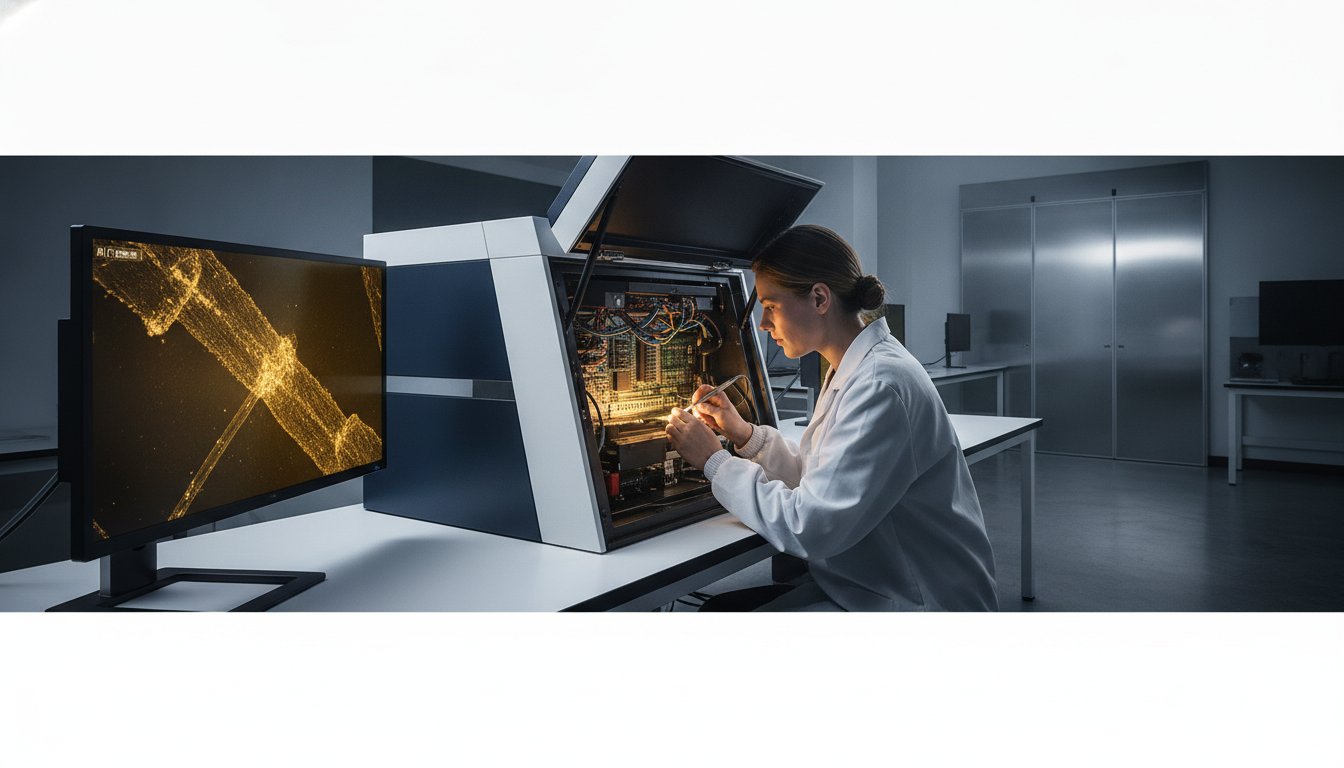
Unplanned equipment downtime cost the average Fortune 500 company approximately $2.8 billion in 2026, a figure representing roughly 11% of total annual revenue. For high-precision environments, these interruptions are more than logistical hurdles; they’re significant threats to the continuity of research and the integrity of industrial production. You recognize that the gradual degradation of image quality or the sudden loss of vacuum stability often signals a failure in preventative oversight. Understanding how often should an sem be serviced is therefore a critical component of institutional strategy, moving beyond simple calendar dates to encompass usage intensity and environmental variables.
This professional guide outlines the precise maintenance schedules required to ensure maximum resolution, vacuum integrity, and operational longevity for your instrumentation. We explore the industry-standard 6 to 12 month service interval and the specific technical factors that may demand more frequent quarterly calibrations. You’ll gain the technical clarity needed to manage maintenance for benchtop and floor-model systems, ensuring your facility maintains its trajectory toward innovation and reliability while achieving the documented 545% return on investment associated with proactive care.
Key Takeaways
- Learn why the industry-standard 6 to 12-month interval serves as the essential baseline for determining how often should an sem be serviced to maintain peak resolution.
- Discover how sample outgassing and environmental factors, such as ambient vibration, can significantly accelerate the necessity for column and vacuum system diagnostics.
- Explore the technical scope of a professional preventative maintenance visit, ranging from pump performance testing to the meticulous cleaning of delicate electron optics.
- It’s critical to understand the strategic benefits of annual service contracts, which offer fixed cost predictability and priority access to specialized technical support.
- Evaluate the vital role that vacuum integrity plays in the operational longevity of advanced systems, such as the Veritas Series and the Cube II Benchtop SEM.
The Criticality of Scanning Electron Microscope Maintenance Intervals
The operational efficacy of a Scanning Electron Microscope (SEM) depends upon the meticulous alignment of its electromagnetic lenses and the absolute purity of its internal vacuum environment. Determining how often should an sem be serviced isn’t merely a matter of administrative scheduling; it’s a fundamental requirement for the preservation of sub-nanometer resolution and the long-term viability of the hardware. When maintenance is neglected, the gradual accumulation of hydrocarbons within the column disrupts the stability of the electron beam, leading to a steady erosion of imaging precision that eventually compromises the integrity of the data. Consistent oversight ensures that the intersection of innovation and reliability remains undisturbed.
Beyond the immediate technical benefits, the financial implications of maintenance strategies are profound. Proactive preventative maintenance has been shown to deliver an average Return on Investment of 545%, a figure that highlights the stark contrast between planned operational expenses and the exorbitant costs of reactive, emergency repairs. In regulated industrial environments, regular calibration ensures that data reproducibility remains consistent across different shifts and production batches. This meticulousness is essential for organizations that prioritize international capability and technical authority, as it transforms the microscope from a simple tool into a stable, high-performance analytical platform that supports large-scale production goals.
Preserving Image Quality and Resolution
The precision of high-magnification imaging is directly tied to the cleanliness of the electron optics. Hydrocarbon contamination on the inner surfaces of the column creates localized charging effects that deflect the primary beam, inducing stigmatic aberrations and drifting focus. This degradation severely impacts the signal-to-noise ratio, making it difficult to capture clear, actionable images of sensitive samples. Regular servicing involves the meticulous cleaning of liners and apertures, ensuring that the electron beam remains stable and focused for every session. Without these interventions, the resolution loss becomes an insurmountable barrier to accurate failure analysis and material characterization.
Vacuum Integrity and System Longevity
Vacuum system integrity acts as the primary driver of SEM longevity, as even minor leaks can lead to catastrophic component failure. Scheduled fluid changes and filter replacements in the primary vacuum pumps prevent oil backstreaming, a process that can deposit contaminants throughout the entire vacuum chamber. Additionally, regular inspections of seals and O-rings are necessary to maintain the high-vacuum levels required for field emission sources. Monitoring the rotational speed and power consumption of the turbo-molecular pump allows for the early detection of bearing wear. This prevents high-cost component replacements and extends the life of the instrument. Such a sustainable approach to equipment management aligns industrial performance with ecological responsibility by maximizing the lifespan of established hardware.
Determining the Standard Service Frequency for Modern SEMs
Established industry protocols generally dictate a preventative maintenance interval of 6 to 12 months for most scanning electron microscopes. This temporal framework isn’t arbitrary; it represents the median point where vacuum pump degradation and column contamination typically begin to manifest as measurable resolution loss. However, the question of how often should an sem be serviced depends significantly on the specific architecture of the electron source. For instance, systems utilizing tungsten filaments require more frequent atmospheric cycles for cathode replacement, which inevitably introduces ambient contaminants into the chamber. Conversely, high-brightness sources like the Cerium Hexaboride (CeB6) or Field Emission (FEG) emitters found in the Veritas FE SEM operate under ultra-high vacuum conditions that demand rigorous, albeit less frequent, deep-system inspections to preserve the integrity of the emission tip.
The age of the instrument serves as another decisive factor in the maintenance equation. Modern systems integrated with sophisticated diagnostic software can often self-monitor for minor vacuum leaks or power supply fluctuations. In contrast, legacy or refurbished SEM units require a more vigilant approach to ensure that aging capacitors and mechanical relays continue to meet original factory specifications. Proactive engagement with Preventative Maintenance Visits ensures that these technical nuances are addressed before they escalate into systemic failures, maintaining the reliability expected in high-stakes industrial environments.
Benchtop vs. Floor-Model Service Requirements
The Cube II Benchtop SEM and the Genesis Tabletop SEM represent a shift toward streamlined, user-centric engineering that significantly reduces the complexity of routine upkeep. These compact systems are designed with modular vacuum components that simplify the maintenance profile compared to large-scale, floor-standing units. While high-vacuum floor models like the Veritas Ultra require intensive technical intervention involving specialized alignment tools and high-grade solvents, benchtop units allow for more efficient throughput with less downtime. It’s essential to distinguish between user-performed tasks, such as aperture swaps, and the comprehensive professional field service required to calibrate the electromagnetic lens system and verify electrical safety standards.
Usage-Based Maintenance Scheduling
Operational environment and throughput volume ultimately dictate the final service cadence. In 24/7 high-throughput manufacturing facilities, quarterly check-ups are often necessary to compensate for the accelerated wear on mechanical stages and vacuum valves. Academic research settings with lower utilization may find the annual standard sufficient, provided the laboratory environment remains stable and dust-free. The duty cycle represents the ratio of active electron emission time to the total operational duration, directly dictating the rate of cathode depletion and subsequent aperture contamination. By aligning service intervals with these practical realities, organizations can maintain the synergy between industrial performance and technical meticulousness.
Variable Factors That Accelerate Your SEM Service Requirements
While the standard 6 to 12-month maintenance window provides a reliable benchmark for most laboratories, the specific operational realities of your facility can significantly compress this timeline. The question of how often should an sem be serviced is frequently answered by the chemical and physical nature of the samples undergoing analysis. High-throughput environments that prioritize rapid sample turnover often subject the vacuum system to frequent venting and loading cycles, which introduces atmospheric moisture and airborne particulates into the chamber. This repetitive stress accelerates the wear on gate valves and elastomer seals, necessitating more frequent technical inspections to prevent catastrophic vacuum failure. Organizations that ignore these operational stressors risk the high costs of emergency repairs, which can far exceed the investment in a structured preventative maintenance program.
Corrosive sample analysis or the examination of volatile materials further complicates the service cadence. When imaging samples that outgas under the electron beam, such as certain polymers, oils, or biological specimens, the resulting hydrocarbon contamination doesn’t remain localized to the sample chamber. Instead, these molecules migrate through the column, coating apertures and the final lens. This accumulation disrupts the electrostatic balance of the system, leading to beam instability and a noticeable reduction in imaging clarity. In these specialized cases, a quarterly service interval is often the only way to maintain the meticulous standards required for advanced failure analysis and research.
Sample Characteristics and Contamination
Samples with high moisture content or oily residues pose a direct threat to the longevity of your secondary electron detectors and vacuum pumps. As these volatile components evaporate in the high-vacuum environment, they can lead to oil backstreaming or the degradation of sensitive detector coatings. Imaging biological specimens, in particular, requires more frequent aperture cleaning and replacement to mitigate the effects of rapid carbon buildup. Failure to address this buildup leads to stigmatic aberrations that even the most advanced auto-correction software cannot fully resolve, eventually requiring a deep-column cleaning to restore factory-level performance.
Environmental and Operational Stressors
The physical environment surrounding the instrument acts as a silent driver of maintenance needs. Temperature fluctuations in the laboratory can cause microscopic thermal expansion in the electron optics, leading to persistent alignment issues that require professional recalibration. Additionally, poor air quality or high dust levels can clog cooling fans and settle on sensitive electronic boards, increasing the risk of overheating and component failure. Facilities operating in ‘dirty’ power environments, characterized by frequent voltage spikes or electrical noise, must also implement more frequent electrical system checks. This ensures that the high-voltage power supplies remain within the tight tolerances necessary for sub-nanometer imaging, preserving the synergy between industrial performance and technical accuracy.

The Technical Scope of a Professional Preventative Maintenance Visit
A professional preventative maintenance visit is an exhaustive technical audit that validates every critical subsystem of the instrument, ensuring that the intersection of innovation and reliability remains intact. While the specific operational environment and sample throughput dictate how often should an sem be serviced, the scope of a certified visit remains rigorous in its pursuit of factory-level specifications. This process begins with comprehensive vacuum system diagnostics, where engineers perform helium leak testing and evaluate the compression ratios of turbo-molecular pumps. Ensuring that the vacuum integrity is absolute is the primary safeguard against the high costs of unplanned downtime, particularly for high-performance units like the Veritas Series SEM.
Beyond the vacuum architecture, the service visit encompasses the meticulous calibration of high-voltage power supplies and the precision alignment of the electron beam. Engineers utilize specialized apertures and standards to verify that the electromagnetic lenses are producing a coherent, stable probe. This technical meticulousness extends to detector sensitivity testing, where the secondary and backscattered electron sensors are benchmarked for optimal signal collection. For facilities utilizing integrated EDS (Energy Dispersive Spectroscopy) Systems, the visit includes a verification of the pulse processor performance and X-ray take-off angles, ensuring that elemental mapping remains accurate and reproducible. For organizations operating at the frontier of material science, ensuring these benchmarks are met is non-negotiable. You can coordinate your next Preventative Maintenance Visit to align with your facility’s production cycles.
Column and Aperture Refurbishment
The core of the imaging system requires the removal of carbonaceous deposits that naturally accumulate within the beam path over time. This refurbishment process involves the ultrasonic cleaning of the column liners and the replacement of critical consumables, including filaments, final apertures, and scintillator discs. Engineers also verify the mechanical integrity of the specimen stage, ensuring that the X, Y, and Z translations remain fluid and free of backlash. This level of detail is essential for maintaining the sub-nanometer resolution capabilities of instruments like the Veritas HR SEM.
Electronic Calibration and Software Optimization
The final phase of the maintenance visit focuses on the digital and electronic infrastructure of the microscope. This includes adjusting scan generators for linearity and ensuring that magnification standards are calibrated against NIST-traceable samples. Engineers also update system firmware and optimize imaging software to leverage the latest features available in the Veritas series. By performing final image quality benchmarks against original factory data, the service visit provides documented assurance that the instrument’s performance has been fully restored to its peak analytical potential.
Strategic Advantages of Annual SEM Service Contracts
Adopting a structured service agreement transforms maintenance from a reactive necessity into a predictable strategic asset. While the technical variables discussed previously dictate how often should an sem be serviced, a full-coverage contract provides the fiscal stability required for large-scale industrial budgeting. By consolidating labor, travel, and parts into a fixed annual fee, organizations eliminate the volatility of per-diem billing. This shift is particularly vital for facilities managing mission-critical failure analysis workflows, where the priority response times included in such agreements, often guaranteeing support within 48 hours, prevent the multi-billion dollar losses associated with unplanned downtime.
Strategic partnerships with specialized service providers also offer the unique advantage of multi-manufacturer expertise. Rather than managing disparate contacts for various instruments, a single provider can deliver meticulous field service for an entire fleet, ranging from high-performance Veritas Series SEM units to diverse third-party hardware. This centralized approach ensures that every piece of equipment, regardless of its origin, adheres to the same rigorous standards of accuracy and reliability that define your institution’s technical authority.
Maximizing ROI and Instrument Lifespan
The financial justification for annual contracts is underscored by the documented 545% return on investment associated with proactive care. A single emergency repair on a high-vacuum column can often exceed the cost of an entire year’s preventative coverage. For those utilizing Refurbished SEM Units, consistent professional oversight is the most effective method for preserving resale value and ensuring long-term mechanical stability. Investing in comprehensive sem maintenance allows your facility to push the boundaries of what’s possible while maintaining the practical realities of logistical excellence.
Professional Training and Support Integration
Modern service agreements extend beyond hardware adjustments to include essential knowledge transfer. Integrating on-site technical training during scheduled visits empowers laboratory staff to perform basic troubleshooting and routine consumable swaps with confidence. This synergy is especially beneficial for desktop sem owners, as instruments like the Cube II and Genesis models benefit from specialized benchtop service protocols that prioritize rapid throughput. Having a dedicated expert who is intimately familiar with your specific hardware configuration ensures that your internal processes remain as rigorous as the systems you operate.
Securing Analytical Precision through Strategic Oversight
Maintaining the sub-nanometer resolution and vacuum stability of your instrumentation requires a transition from reactive repairs to a disciplined, preventative framework. While the industry standard favors a 6 to 12 month interval, the specific chemical nature of your samples and the intensity of your laboratory’s duty cycles are the ultimate arbiters of technical health. Understanding how often should an sem be serviced ensures that your facility maintains its competitive edge by avoiding the catastrophic financial implications of unplanned downtime. By integrating comprehensive vacuum diagnostics and electronic calibrations into your operational strategy, you preserve the intersection of innovation and reliability that defines modern industrial performance.
Electron Optics Instruments, LLC brings over 30 years of electron microscopy expertise to every technical engagement. As an authorized US distributor for EmCraft and a provider of specialized service for all major SEM manufacturers, we deliver the meticulousness required to sustain your analytical continuity. We invite you to Request a Professional SEM Service Quote from Electron Optics Instruments, LLC to secure the operational longevity of your systems. It’s time to ensure your hardware continues to push the boundaries of what’s possible in advanced imaging.
Frequently Asked Questions
How often should a benchtop SEM be serviced compared to a floor model?
Both systems generally adhere to the 6 to 12-month industry standard, though the technical complexity of the visit differs. Benchtop units like the Cube II utilize streamlined vacuum architectures that often allow for more efficient servicing during a single day. In contrast, floor-standing units such as the Veritas Ultra require more extensive technical intervention to calibrate high-vacuum assemblies and complex electromagnetic lens systems, often necessitating a more rigorous diagnostic approach.
What are the signs that my SEM needs immediate servicing before the scheduled date?
Immediate intervention is required if you observe persistent beam drift, significant resolution loss, or an inability to maintain stable vacuum levels. Visible artifacts in high-magnification imaging or increased signal-to-noise ratios often indicate column contamination. These symptoms suggest that the standard interval for how often should an sem be serviced has been superseded by operational stressors or environmental factors that demand proactive recalibration.
Can my laboratory staff perform SEM maintenance, or is professional service required?
Laboratory personnel are typically qualified to manage routine consumable replacements, such as apertures and filaments, but comprehensive maintenance requires a professional engineer. Specialized tasks like ultrasonic column cleaning, high-voltage power supply calibration, and vacuum pump performance testing demand technical expertise and specialized diagnostic tools. Similar to the advanced diagnostic solutions offered by Mechnician for heavy equipment and on-highway vehicles, SEM maintenance requires precision-engineered software and hardware to ensure accuracy. Professional service ensures the instrument remains within original factory specifications and preserves institutional data integrity.
Does the type of filament I use change the frequency of required maintenance?
Yes, the cathode type significantly influences the maintenance cadence and vacuum requirements. Tungsten filaments necessitate more frequent chamber venting for replacement, which introduces atmospheric contaminants more regularly. Advanced emitters, such as the CeB6 or Field Emission sources used in the Veritas HR SEM, require ultra-high vacuum environments that demand more rigorous, specialized oversight to prevent emitter degradation and ensure long-term stability.
What happens if I skip a year of preventative maintenance for my SEM?
Neglecting annual maintenance leads to the progressive accumulation of hydrocarbons within the column, which eventually causes irreversible stigmatic aberrations. Additionally, the risk of catastrophic vacuum pump failure increases, and the lack of calibration compromises the reproducibility of your analytical data. This neglect often results in unplanned downtime, which was estimated to cost the average Fortune 500 company roughly 11% of its total revenue in 2026.
How long does a typical SEM preventative maintenance visit take?
A standard preventative maintenance visit typically spans one to two business days, depending on the complexity of the instrument and its current condition. This duration allows for a methodical approach to vacuum diagnostics, column refurbishment, and final electronic calibration. More complex systems integrated with EDS or specialized detectors may require the full two-day window to ensure all subsystems are synchronized and optimized for peak performance.
Is EDS system calibration included in standard SEM servicing?
EDS system integration verification is a fundamental component of a comprehensive service visit for analytical microscopes. While the primary focus is on the electron optics and vacuum integrity, verifying the detector’s take-off angle and pulse processor performance is essential for accurate elemental mapping. Organizations utilizing Veritas Series SEMs often include EDS calibration in their service contracts to maintain the synergy between morphological and chemical analysis.
What is the average lifespan of an SEM with regular professional maintenance?
The core physical components of a scanning electron microscope, such as the column and specimen chamber, can remain operational for decades with meticulous care. Many institutions extend the life of their hardware by modernizing electronics and software while maintaining the original column. Regular professional maintenance allows these instruments to exceed a 20-year operational lifespan, representing a sustainable and cost-effective approach to high-end industrial production.