
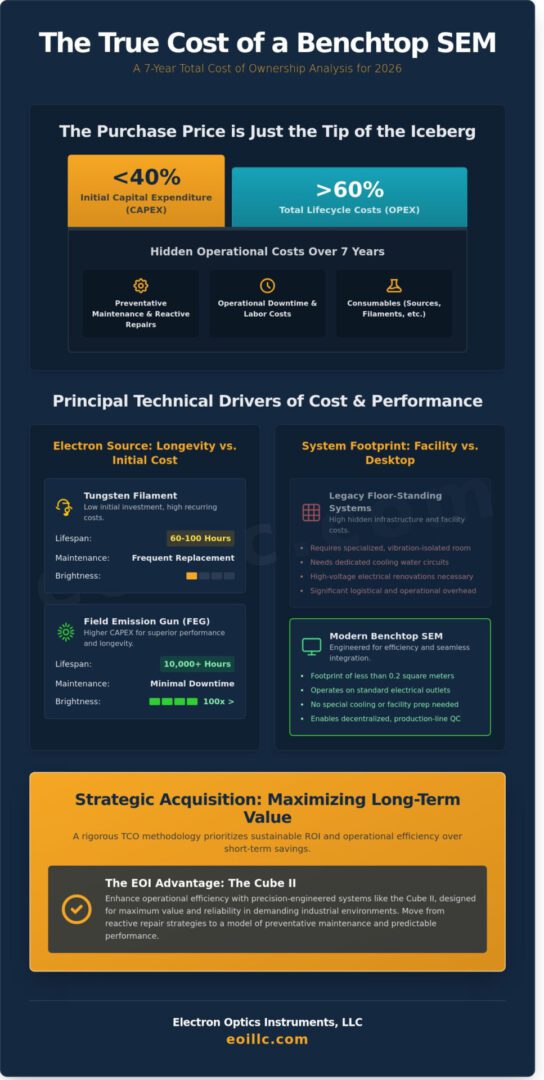
The initial capital expenditure for a scanning electron microscope represents less than 40% of its total lifecycle cost over a seven-year operational period. For organizations prioritizing precision and global manufacturing excellence, it’s clear that the sticker price of a system is merely the entry point into a broader ecosystem of optical innovation. When you evaluate the benchtop SEM price in 2026, you’re not just purchasing hardware; you’re committing to a specific evolutionary trajectory for your laboratory’s analytical capabilities.
We understand that justifying such a significant capital investment to stakeholders is challenging when hidden maintenance and rapid technical shifts threaten to render systems obsolete within 60 months. This article delivers a comprehensive framework to dissect acquisition costs and technical drivers while providing a roadmap for managing the total cost of ownership. We’ll examine the critical intersection of technical performance and fiscal responsibility, ensuring your choice supports both immediate research goals and long-term industrial performance through a lens of sustainable innovation.
Key Takeaways
- Analyze the technical evolution of electron sources and lens precision to understand how these critical components influence the initial capital expenditure for high-performance microscopy.
- Examine the market’s tiered pricing structures to identify a benchtop SEM price that aligns with your facility’s specific resolution demands and throughput objectives.
- Develop a rigorous methodology for assessing the Total Cost of Ownership, prioritizing the long-term ROI of preventative maintenance over reactive repair strategies.
- Identify strategic opportunities to enhance operational efficiency through the deployment of precision-engineered systems like the Cube II, designed for maximum value in industrial environments.
Navigating the Economic Landscape of Modern Benchtop Scanning electron Microscopy
The perception of the Scanning Electron Microscope (SEM) has undergone a radical transformation as the technology transitioned from a room-sized research curiosity to a streamlined industrial tool. Modern compact systems shouldn’t be viewed as budget-restricted alternatives to floor-standing units; rather, they represent a high-performance analytical evolution. When evaluating the benchtop SEM price, stakeholders must recognize that these instruments are engineered for precision and reliability in high-throughput environments. This shift reflects a broader trend in global manufacturing where localized, immediate data acquisition replaces the delays of centralized core facilities.
Procurement strategies in 2026 are increasingly influenced by global supply chain stability, particularly regarding precision optics and electron source components. While the initial capital expenditure (CAPEX) remains a primary focal point, it’s merely the surface layer of the total procurement equation. The true economic value lies in the synergy between hardware longevity and the reduced operational overhead inherent in compact designs. By integrating these systems directly into production lines, organizations eliminate the logistical friction that historically hindered rapid iterative development.
The Shift from Floor-Standing to Compact Systems
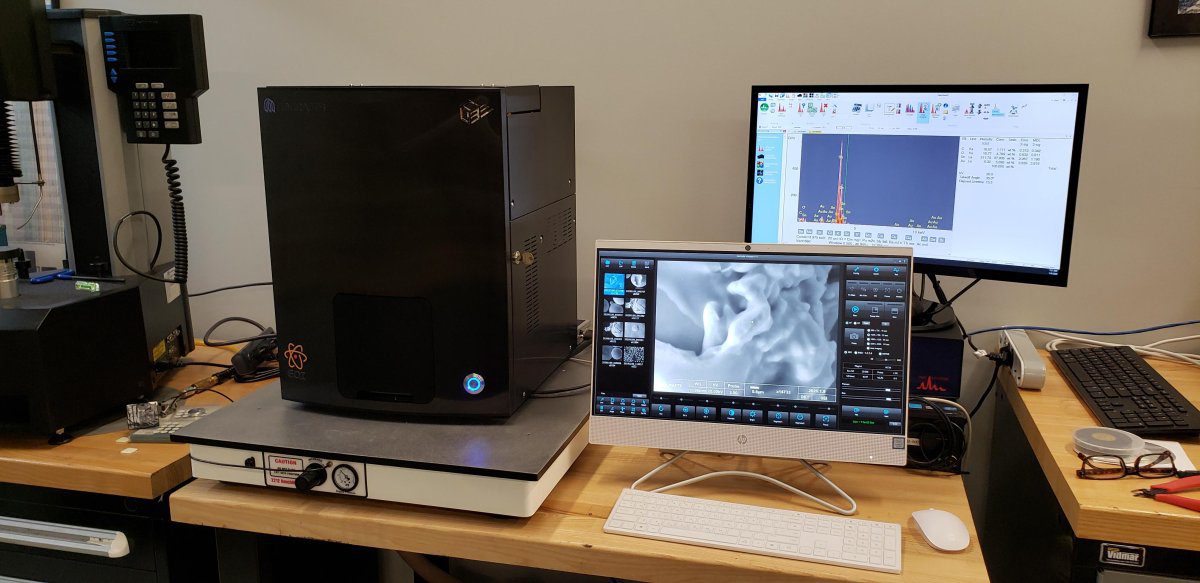
Miniaturization technology has matured to a point where resolution benchmarks once exclusive to large-scale systems are now achievable within a footprint of less than 0.2 square meters. This evolution significantly alters the infrastructure cost profile. Organizations no longer need to invest in specialized vibration isolation tables, dedicated cooling water circuits, or high-voltage electrical renovations. The Desktop SEM represents the new standard for decentralized laboratory workflows, integrating high-resolution imaging with a minimal physical footprint. By removing these environmental requirements, the effective benchtop SEM price becomes more attractive when calculated against total facility readiness costs.
Industrial vs. Academic Pricing Structures
The divergence between industrial and academic pricing structures is driven by specific configuration requirements and duty cycle expectations. Industrial sectors often prioritize hardware durability and automated software modules for 24/7 quality control, which influences the base investment. In contrast, academic environments may prioritize multi-user flexibility and modular detector upgrades. The impact of multi-user environments necessitates robust hardware that can withstand frequent sample changes without compromising vacuum integrity. These application-specific drivers are detailed in our analysis of the Desktop SEM: The Evolutionary Shift to High-Performance Benchtop Microscopy in 2026
Principal Technical Drivers Influencing Benchtop SEM Procurement Costs
The procurement of high-precision imaging technology requires an analytical approach to the underlying hardware specifications that dictate performance. The final benchtop SEM price is primarily determined by the synergy between the electron source and the electromagnetic lens assembly. Higher precision optics demand sophisticated manufacturing tolerances, often exceeding 0.1 nanometers in surface finish. This engineering rigor ensures that the instrument maintains stability during high-magnification sessions, which is a critical requirement for industrial quality control. The architecture of the vacuum system also plays a silent but significant role in cost, as the transition from basic rotary pumps to high-performance turbo-molecular pumps affects both the price and the ultimate image clarity.
Electron Sources: Longevity vs. Initial Investment
The choice of electron emitter represents the most significant variable in the total cost of ownership. Tungsten filaments provide a low entry point for laboratories with constrained budgets. These sources require replacement every 60 to 100 hours of operation, leading to increased downtime and recurring maintenance labor. In contrast, Field Emission (FEG) sources offer a brightness level 100 times greater than tungsten. While the initial capital expenditure for FEG systems is higher, they facilitate nanometer-scale resolution that’s essential for advanced materials science. According to a recent electron microscopy market analysis, the shift toward high-brightness sources reflects a broader industrial demand for greater throughput and data accuracy. Calculating the cost per image reveals that FEG sources often yield a more favorable long-term ROI due to their 3,000-plus hour lifespan.
Analytical Detectors and Modular Upgrades
The integration of specialized sensors further scales the benchtop SEM price. Basic configurations typically include a Secondary Electron (SE) detector for topographical mapping. Adding a Backscattered Electron (BSE) detector introduces compositional contrast, which is vital for identifying phase distributions in alloys. For organizations requiring chemical characterization, the inclusion of Energy Dispersive Spectroscopy (EDS) adds a layer of analytical depth. Modular hardware architectures allow for these upgrades to be phased in over time. Choosing a platform that supports future expansion prevents premature obsolescence and aligns with sustainable innovation goals. Professionals seeking to optimize their laboratory’s evolutionary trajectory should evaluate how integrated optical solutions can streamline their specific characterization workflows.
Modern systems now incorporate AI-driven automation software as a standard value-added expenditure. This software reduces the need for constant manual adjustment, allowing technicians to focus on data interpretation rather than instrument calibration. This shift toward intelligent automation represents a strategic investment that enhances overall laboratory efficiency and reduces the margin for human error. When these software capabilities are paired with robust vacuum architectures, the result is a tool that maintains peak performance across diverse environmental conditions.
Comparative Analysis of Market Price Tiers for Compact Electron Optics
The procurement of electron microscopy instrumentation requires a rigorous evaluation of technical specifications against capital expenditure. The benchtop SEM price typically falls into three distinct tiers, each defined by its electron source and detection capabilities. Analytical laboratories must balance the immediate cost with the long-term evolutionary requirements of their research or production cycles. This stratification ensures that organizations don’t over-invest in features that exceed their operational needs while maintaining the precision necessary for global manufacturing standards.
Entry-Level Systems: The Educational and QC Standard
Systems priced between $50,000 and $85,000 represent the foundational tier of the market. These instruments generally utilize tungsten (W) hair-pin filaments, delivering a resolution range of 10 to 15 nanometers. They’re designed with simplified interfaces to facilitate rapid data acquisition in routine quality control environments. While effective for STEM education and basic surface inspection, these units face limitations in high-end materials characterization. Their inability to resolve features below 10nm makes them unsuitable for advanced semiconductor failure analysis where sub-surface defects require higher brightness and smaller spot sizes.
Premium Benchtop SEMs: Rivaling Floor-Standing Performance
The premium market segment, ranging from $100,000 to $180,000, introduces Field Emission Gun (FEG) technology to the compact format. These systems provide sub-5nm resolution, rivaling the performance of traditional floor-standing units. Integration of advanced automation, such as auto-focus, auto-stigmator, and multi-sample chambers, justifies the higher benchtop SEM price for intensive research applications. High-performance units often feature Energy Dispersive X-ray Spectroscopy (EDS) as a standard integration. Manufacturers like Electron Optics Instruments, LLC, develop these advanced benchtop systems to facilitate complex research across various scientific disciplines, demonstrating their capability to handle high-level academic and industrial inquiries. This tier is essential for nanotechnology research where precision and repeatability are non-negotiable.
Refurbished units represent a strategic middle ground for cost-sensitive laboratories. These systems often provide a 30% to 40% reduction in initial cost compared to new models. They allow facilities to access mid-range capabilities, such as backscattered electron (BSE) detectors and variable pressure modes, without the premium price tag. For a growing enterprise, a refurbished system offers a pathway to industrial excellence while preserving capital for other critical infrastructure. This approach aligns with a sustainable innovation strategy, extending the lifecycle of precision optics without compromising on the accuracy of the analytical output.
Evaluating the Total Cost of Ownership (TCO) and Long-term Operational Expenditures
The initial benchtop SEM price represents only the gateway to a multi-year financial commitment. A sophisticated total cost of ownership analysis reveals that operational expenditures frequently account for 25% to 35% of the total investment over a typical five-year lifecycle. Precision instrumentation requires a rigorous approach to upkeep to ensure the evolutionary trajectory of laboratory research remains uninterrupted. Organizations that ignore these recurring costs often find their long-term budgets strained by technical debt and unexpected hardware failures. For a broader perspective on how these financial dynamics apply across all system categories, our scanning electron microscope price strategic guide provides a rigorous framework for evaluating total cost of ownership and technical synergy across the full spectrum of SEM configurations.
Service Agreements and Maintenance Strategies
Selecting a service strategy is a critical decision for laboratory managers. Tiered service levels offer a range of protection, from basic annual inspections to all-inclusive packages that cover vacuum pumps, electronics, and labor. Industry benchmarks suggest budgeting 10% to 12% of the initial benchtop SEM price for annual maintenance. This expenditure acts as an insurance policy against catastrophic failure. While reactive repair might appear cheaper in the short term, the cost of laboratory downtime can exceed $4,500 per day in lost throughput and delayed project milestones. A preventative approach stabilizes the precision of the electron optics and extends the instrument’s operational life.
- Consumables management: Routine replacement of tungsten filaments or CeB6 cathodes is mandatory. Tungsten filaments typically last 40 to 100 hours, whereas CeB6 sources offer longer life but higher replacement costs.
- Apertures and stubs: Regular replacement of final apertures prevents beam astigmatism, while a steady supply of aluminum sample stubs and carbon tape is necessary for daily operations.
- Vacuum system care: Periodic oil changes for rotary pumps or maintenance of scroll pumps ensures the system maintains the high vacuum required for clear imaging.
Operational Logistics: Training and Installation
Maximizing the utility of high-end optical solutions depends on the technical proficiency of the staff. Professional on-site training, often lasting two to three days, isn’t an optional luxury; it’s a requirement for achieving the resolution specifications promised by the manufacturer. Beyond human capital, the physical environment must meet stringent criteria. Site requirements often include dedicated power conditioning to eliminate voltage fluctuations and electromagnetic interference (EMI) shielding to protect the beam’s stability.
If a facility undergoes relocation, specialized technical expertise is non-negotiable. Decommissioning and re-installing a benchtop SEM requires recalibrating the entire electron column. Attempting to transport these instruments through standard logistics channels without professional oversight risks permanent misalignment of the internal components. It’s a risk that doesn’t align with the goals of a high-performance laboratory.
Strategic Acquisition: Maximizing Value with EOI LLC’s Benchtop SEM Solutions
Electron Optics Instruments, LLC leverages over 30 years of technical expertise to help organizations navigate the complexities of instrumentation acquisition. Identifying the ideal price-to-performance ratio requires a deep understanding of electron optics; it’s not merely about the initial capital outlay. The Cube II Benchtop SEM serves as a primary example of this balance. It integrates precision engineering with high-resolution imaging capabilities that rival larger floor models. By optimizing the internal column design and vacuum systems, EmCraft has engineered a solution that maintains technical excellence while reducing the total cost of ownership. This strategic approach ensures that industrial and research budgets are utilized effectively, prioritizing long-term reliability over short-term savings.
Our comprehensive support ecosystem extends far beyond the point of sale. We view every installation as the beginning of a technical partnership designed to maximize equipment uptime. Customized financing and service structures allow laboratories to acquire high-end imaging technology without compromising their operational liquidity. This focus on sustainable innovation ensures that your benchtop SEM price reflects a holistic investment in future discovery and quality control excellence.
The Electron Optics Instruments, LLC Advantage: Expert Consultation and Direct Distribution
As the sole US distributor for EmCraft systems, Electron Optics Instruments, LLC ensures that the benchtop SEM price remains competitive by eliminating intermediary markups. This direct relationship facilitates a seamless flow of technical support and factory-certified parts. We emphasize preventative maintenance as a core component of capital equipment management. Regular calibration and cleaning protocols can extend the operational lifespan of an SEM by 20% compared to neglected systems. Moving from general market estimates to a specific budgetary solution requires a personalized assessment. We provide tailored quotes that reflect your specific imaging requirements and throughput goals, ensuring the hardware matches the application perfectly.
Future-Proofing Your Laboratory Investment
Laboratory requirements evolve as research priorities shift. Selecting a system that accommodates these changes is vital for long-term ROI. Electron Optics Instruments, LLC provides a unique advantage by offering maintenance and repair services for all major SEM manufacturers. This breadth of knowledge ensures that your investment remains functional regardless of the original equipment manufacturer. Our service structures adapt to industrial budgets, offering flexible financing to support sustainable innovation. Precision and reliability aren’t just goals; they’re the standards we uphold for every partner. Contact Electron Optics Instruments, LLC for a comprehensive consultation to secure your laboratory’s future.
Navigating the Evolution of High-Resolution Electron Microscopy
Success in the 2026 analytical landscape depends on a granular understanding of how technical drivers and operational efficiencies dictate the final benchtop SEM price. Decision makers shouldn’t focus solely on initial capital expenditure; they must instead evaluate the total cost of ownership across the instrument’s entire lifecycle. This strategic approach ensures that the integration of advanced electron optics aligns with both immediate research demands and long-term industrial performance goals. Precision in procurement is as vital as precision in measurement.
EOI LLC brings 30+ years of industry-leading expertise to your procurement process, providing the technical authority necessary for such high-stakes investments. We serve as the sole US distributor for EmCraft Scanning Electron Microscopes, offering the precision-engineered Cube II alongside comprehensive service for all major SEM manufacturers. Our commitment to excellence ensures that your organization transitions seamlessly into the next generation of microscopy technology. Request a Tailored Quote for the Cube II Benchtop SEM to secure a solution that balances evolutionary innovation with practical manufacturing reliability. We’re ready to help you achieve your most ambitious technical milestones.
Frequently Asked Questions
What’s the average starting price for a benchtop SEM in 2026?
The anticipated entry-level benchtop SEM price for 2026 begins at approximately $75,000 for basic imaging configurations. This figure reflects the ongoing integration of advanced CMOS sensors and automated alignment protocols that drive manufacturing efficiencies across the sector. While basic models start here, systems optimized for high-resolution analytical tasks frequently reach $130,000. These investments provide essential precision for laboratories requiring rapid characterization without the footprint of traditional infrastructure.
How much does it cost to add EDS capabilities to a benchtop SEM?
Integrating Energy Dispersive X-ray Spectroscopy (EDS) typically adds between $25,000 and $45,000 to the base system cost. This hardware expansion allows for simultaneous elemental mapping and quantitative chemical analysis directly within the vacuum chamber. High-throughput environments often select silicon drift detectors for their superior count rates. While the initial capital expenditure increases, the resulting analytical synergy reduces the need for external laboratory testing; this accelerates project timelines significantly.
Is a refurbished scanning electron microscope a reliable cost-saving option?
Refurbished units provide a viable alternative, often yielding savings of 40% compared to new instrumentation, provided they undergo certified factory recalibration. Reliability depends on the replacement of critical vacuum seals and the installation of modern electronics suites. A 2024 industry report indicates that 85% of refurbished benchtops meet original manufacturer specifications for resolution. Technical teams shouldn’t overlook the importance of a comprehensive 12-month warranty to protect against unforeseen component fatigue in older vacuum systems.
What are the typical annual maintenance costs for a benchtop SEM?
Annual maintenance budgets for these instruments generally range from $6,000 to $12,000, which covers routine service and software updates. Service contracts usually represent 10% of the total benchtop SEM price and include preventative maintenance visits to ensure vacuum integrity. Proactive calibration minimizes downtime by identifying potential aperture contamination or mechanical wear before they impact image quality. Maintaining a consistent service schedule preserves the instrument’s evolutionary lifespan and ensures data accuracy across multi-year research initiatives.
How does the price of a benchtop SEM compare to a full-size floor model?
Benchtop systems cost roughly 60% less than full-size floor models, which frequently exceed $250,000 for entry-level configurations. This price disparity stems from the compact vacuum architecture and simplified electron optics found in portable units. While floor models offer higher accelerating voltages and larger sample chambers, benchtops deliver sufficient resolution for 90% of industrial quality control applications. For a comprehensive comparison of electron microscope cost factors across all system types, including detailed analysis of floor-standing versus benchtop configurations, organizations can better understand the total investment required for their specific analytical needs. The reduced overhead associated with specialized room requirements further enhances the total value proposition for modern manufacturing facilities.
Does the benchtop SEM price include installation and training?
Most reputable vendors include on-site installation and initial operator training within the quoted purchase price, a service valued at approximately $4,000. Professional setup ensures the vibration isolation and electromagnetic shielding parameters meet the required technical thresholds for high-resolution imaging. Training sessions typically span two days and focus on vacuum management, sample preparation, and software optimization. This structured onboarding process ensures that the laboratory doesn’t face delays in achieving peak operational efficiency from the first day of deployment.
What’s the lifespan of a benchtop SEM filament and its replacement cost?
Standard tungsten filaments provide approximately 100 hours of active beam time and cost between $150 and $250 per unit. In contrast, Cerium Hexaboride (CeB6) cathodes offer an extended lifespan of 1,500 hours but command a higher replacement price of $2,000. Laboratories prioritizing throughput often choose CeB6 to minimize the frequency of vacuum venting cycles. Regular filament replacement is a critical aspect of maintaining electron source stability and ensuring the precision of high-magnification imaging.
How do Field Emission (FEG) sources affect the long-term cost of ownership?
Field Emission (FEG) sources increase the initial acquisition cost by $60,000 or more, yet they offer an operational lifespan exceeding 5,000 hours. This longevity reduces the total cost of ownership by eliminating the frequent downtime associated with thermionic filament failures. FEG technology provides superior brightness and a smaller probe size, which are essential for nanoscale characterization. The higher upfront investment facilitates long-term stability and high-resolution performance that simpler electron sources can’t match in demanding industrial environments.