
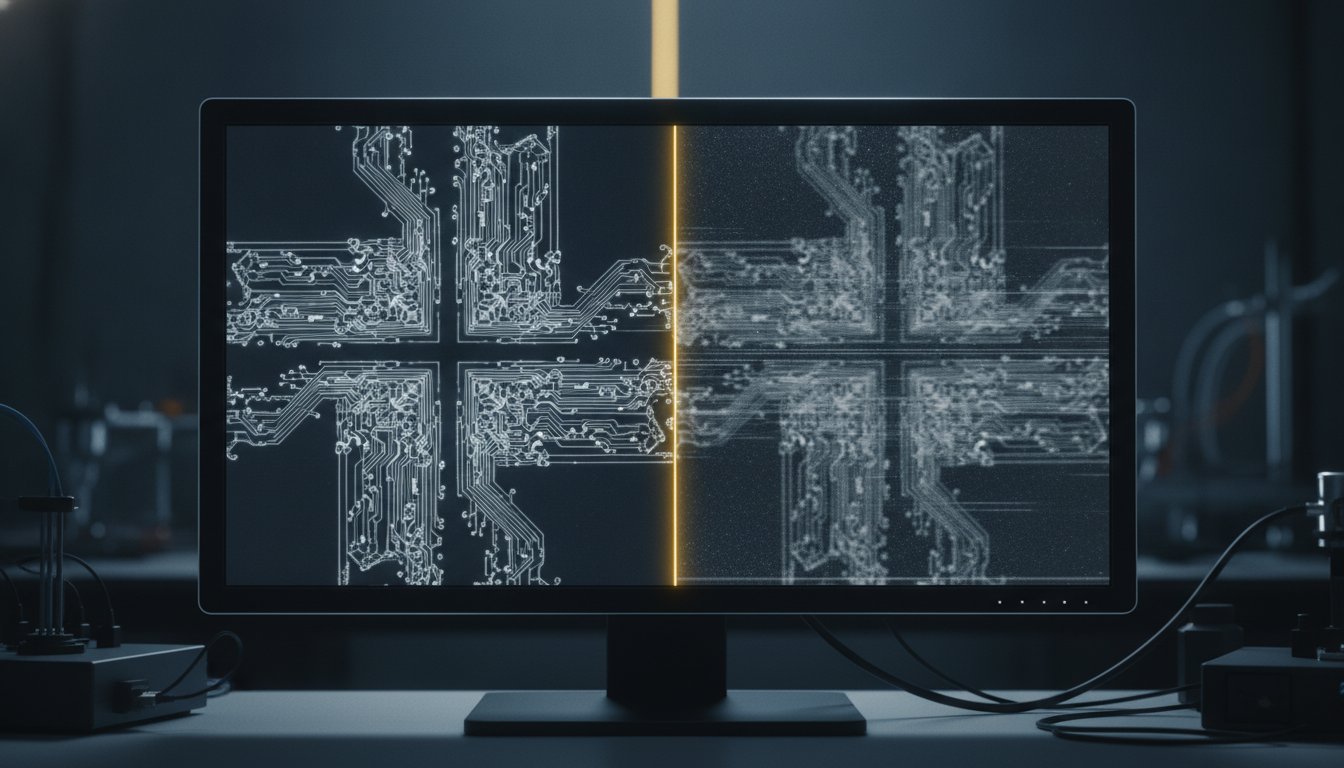
Recent industry data indicates that 73% of manufacturing leaders identify unplanned downtime as a primary catalyst for degraded product quality. For organizations relying on high-precision instrumentation, the impact of poor sem maintenance on image quality manifests as a cascade of systematic errors that jeopardize the validity of every captured micrograph. When hardware infrastructure is neglected, the resulting image artifacts don’t just obscure subtle sample defects; they introduce significant noise that forces researchers into exhaustive, often futile, post-processing cycles. You likely recognize the frustration of staring at a blurred edge or a shifting scan line, knowing that your instrument’s performance has drifted from its peak calibrated state.
We understand that maintaining the rigorous standards of a Veritas Series SEM or a Genesis Tabletop SEM requires more than reactive troubleshooting. This technical analysis provides the professional clarity you need to correlate specific visual aberrations with their underlying hardware failures. You’ll discover how to identify diagnostic criteria for hardware-related degradation and gain access to a professional checklist designed to restore microscopic resolution. This guide establishes a clear roadmap for instrument restoration and provides the technical justification required to prioritize preventative maintenance as a core strategic investment for your laboratory.
Key Takeaways
- Learn to correlate precise electron optics alignment with final image clarity to prevent the gradual erosion of the Signal-to-Noise Ratio (SNR).
- Discover how to distinguish between sample charging and beam drift to accurately diagnose the impact of poor sem maintenance on image quality.
- Understand the risks of artifact-driven failure analysis and how neglected hardware can mask critical material features in advanced nanotechnology applications.
- Access a professional maintenance checklist covering daily vacuum optimization and monthly hardware protocols to ensure sustained instrument precision.
- Explore high-reliability hardware solutions, such as the Cube II Benchtop SEM, designed to streamline operational workflows and minimize maintenance-related downtime.
The Correlation Between Hardware Integrity and Microscopic Resolution
The operational efficacy of a Scanning electron microscope (SEM) depends entirely on the physical state of its internal components. While many laboratories focus on software-based image enhancement, the impact of poor sem maintenance on image quality remains a fundamental hurdle that post-processing cannot rectify. This degradation often begins with a subtle erosion of the Signal-to-Noise Ratio (SNR), where hardware drift introduces electronic or mechanical noise that obscures the primary signal. Unlike operator error, such as improper focus or stigmation adjustments, systematic hardware failure results from the physical deterioration of the electron column or vacuum seals. In the high-stakes environment of 2026 industrial manufacturing, maintaining a baseline of meticulous hardware stability is essential for accurate defect identification and research integrity.
The Role of the Electron Column in Image Formation
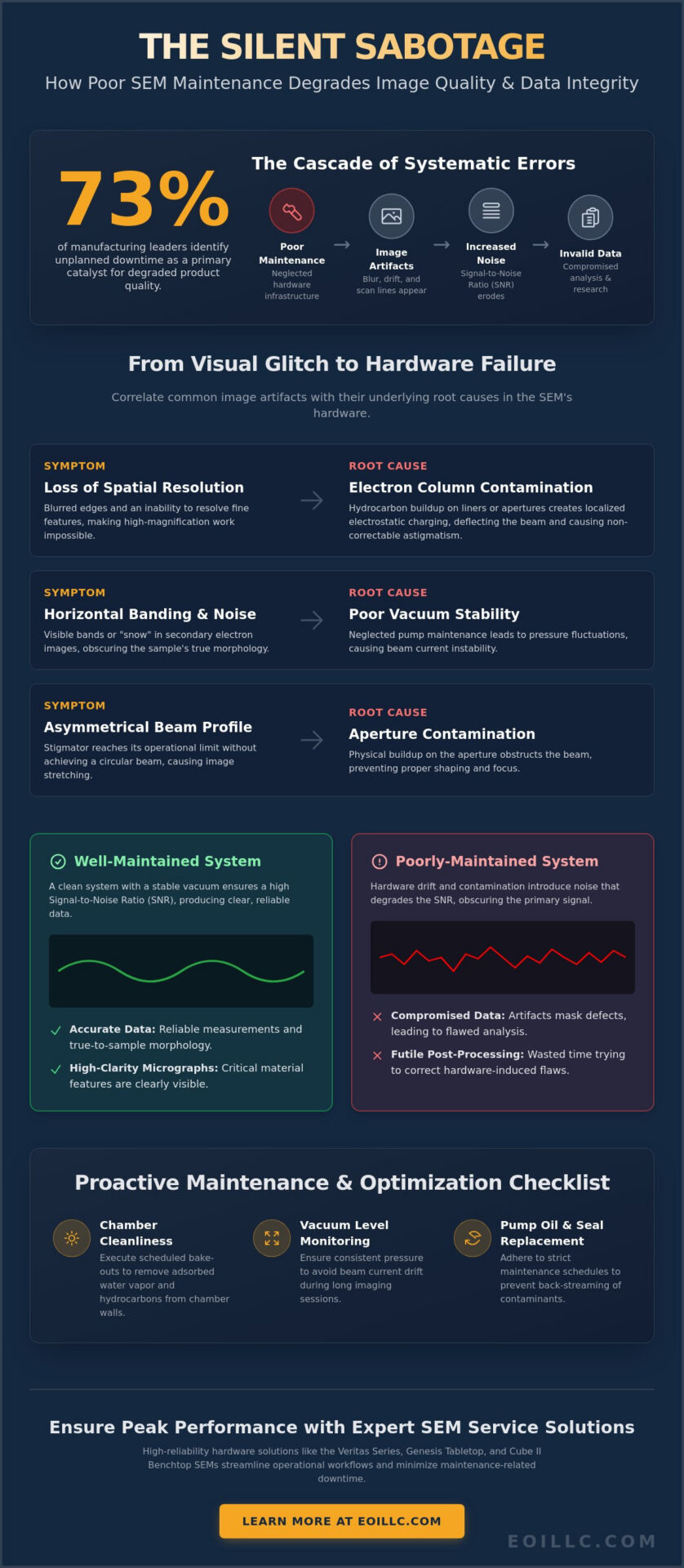
The electron column acts as the primary conduit for the imaging beam, and any internal contamination significantly disrupts the beam’s intended path. Hydrocarbon buildup on the column liners or final apertures creates localized electrostatic charging, which deflects the beam and introduces non-correctable astigmatism. This contamination forces the beam to deviate from its optimal axis, resulting in a loss of spatial resolution that makes it impossible to resolve features at high magnifications. The internal cleanliness of the electron column dictates the absolute resolution limit that the instrument can achieve regardless of the operator’s skill level.
Vacuum Stability and Signal Clarity
Vacuum integrity is the silent driver of beam stability. When maintenance of the rotary or turbo-molecular pumps is neglected, small fluctuations in chamber pressure cause the beam current to fluctuate. These instabilities manifest as horizontal banding or increased background noise in secondary electron (SE) images, making it difficult to distinguish between sample morphology and electronic artifacts. Proper vacuum system oversight ensures that the mean free path of electrons isn’t compromised by residual gas molecules. To prevent sample contamination and maintain signal clarity, imaging teams should prioritize the following:
- Oil and Seal Replacement: Prevent back-streaming of contaminants by adhering to strict pump maintenance schedules.
- Vacuum Level Monitoring: Ensure consistent pressure to avoid beam current drift during long imaging sessions.
- Chamber Cleanliness: Execute scheduled bake-outs to remove adsorbed water vapor and hydrocarbons from the chamber walls.
Maintaining a pristine vacuum environment is the only way to ensure that the signal clarity remains consistent across the entire field of view. Without this foundation, even the most advanced Veritas Ultra SEM or Veritas FE SEM cannot reach its peak performance specifications, leading to unreliable data and increased time spent attempting to correct hardware-induced defects in post-processing.
Primary Hardware Failures and Their Visual Manifestations
Accurate failure analysis in electron microscopy requires a disciplined approach to distinguishing between sample-induced artifacts and genuine hardware deficiencies. The impact of poor sem maintenance on image quality is most frequently observed when the physical state of the instrument deviates from its calibrated equilibrium. While operators often attempt to compensate for poor resolution through software tuning, these efforts are frequently undermined by underlying mechanical or electronic failures. Identifying the visual signatures of these failures allows imaging teams to move from reactive troubleshooting to systematic restoration. For instance, when a stigmator reaches its operational limit without achieving a circular beam profile, the root cause is almost invariably physical contamination rather than a software calibration error.
Aperture Contamination and Beam Symmetries
Periodic aperture cleaning is a non-negotiable requirement for maintaining a circular beam profile and ensuring edge definition at high magnifications. As objective apertures accumulate carbonaceous deposits, they create an asymmetric electrostatic field that deflects the primary beam. This phenomenon leads to stigmator saturation, where the electromagnetic correction coils cannot counteract the physical filth within the column. The resulting images exhibit a distinct lack of depth of field and soft edges that no amount of focus adjustment can sharpen. Routine inspection of these components is vital, as even microscopic levels of aperture wear can significantly compromise the precision of your data.
Electronics and Power Supply Fluctuations
The stability of the high-voltage (HV) power supply and scanning electronics is the foundation of a flicker-free imaging environment. Aging capacitors and deteriorating control boards often introduce periodic noise, which manifests as horizontal banding or “moiré” patterns across the field of view. These artifacts are clear diagnostic signs that the instrument requires professional recalibration of its scanning coils or a complete electronics modernization. Beyond the visual noise, electronics instability can cause the following manifestations:
- Image Flickering: Rapid fluctuations in brightness caused by inconsistent HV emission or detector pre-amplifier failure.
- Geometric Distortion: Non-linear scanning patterns resulting from drift in the scan generator circuits.
- Emission Instability: Sudden bursts of noise or “ghosting” effects that occur as a filament nears the end of its functional lifespan.
With the cost of unplanned downtime in large manufacturing operations reaching an average of $260,000 per hour as of March 2026, ensuring the reliability of these systems is a critical operational priority. Maintaining the sophisticated architecture of the Veritas Series SEM or the Genesis Tabletop SEM requires more than surface-level cleaning. It demands a rigorous schedule of Preventative Maintenance Visits to ensure that every electronic and mechanical component remains within its specified tolerance, preserving the integrity of your high-resolution data.
Beyond the Visual: How Poor Maintenance Compromises Data Integrity
The analytical validity of electron microscopy extends far beyond the aesthetic clarity of the micrograph. When evaluating how the impact of poor sem maintenance on image quality manifests as corrupted data, we must consider the integrity of the underlying signal. In the rigorous context of international production, where logistical excellence is a prerequisite for success, data integrity acts as the anchor for quality assurance. In industrial manufacturing, where failure analysis dictates critical production decisions, the presence of systematic noise or column-borne contamination can lead to disastrously incorrect conclusions. An analyst might misidentify a cluster of hydrocarbon deposits as surface pitting or material inclusions, triggering unnecessary production halts or product recalls based on false-positive data.
For nanotechnology applications, the stakes are even higher. High-resolution SEM requires a pristine signal to resolve features at the sub-10nm scale. When maintenance is neglected, the increased noise floor masks subtle topographical variations and grain boundaries. This loss of information doesn’t just result in poor images; it fundamentally compromises the ability to characterize advanced materials, effectively rendering the microscope’s high-resolution capabilities obsolete. Meticulousness in hardware upkeep is the only way to ensure that the instrument remains a reliable partner in scientific discovery.
Artifacts vs. Real Defects: The Analyst’s Dilemma
A primary challenge in unmaintained systems is distinguishing between physical sample defects and column-generated artifacts. Column debris can mimic surface irregularities with startling accuracy, leading to a profound analyst’s dilemma. Utilizing advanced sem techniques requires a verified hardware baseline to ensure that analytical findings are rooted in reality. EDS (Energy Dispersive Spectroscopy) Systems act as a secondary verification tool in these scenarios. If an observed feature lacks a corresponding chemical signature distinct from the column’s known contaminants, the analyst can confirm a hardware-related artifact rather than a sample failure. This diagnostic rigor is essential for maintaining the superior standards expected in specialized industrial sectors.
The Hidden Costs of Downtime and Retesting
The economic implications of unreliable imaging are profound. Recent data from February 2026 suggests that unplanned downtime costs U.S. manufacturers approximately $50 billion annually. When a laboratory is forced to re-run samples due to the impact of poor sem maintenance on image quality, the labor loss and consumable expenditure quickly exceed the cost of a preventative maintenance contract. Calculating the labor loss associated with troubleshooting a failing system reveals a significant drain on high-value human capital. Preventative maintenance visits represent a visionary approach to reliability, ensuring that the synergy between ecological responsibility and industrial performance remains intact. By reducing the volume of retests, laboratories minimize their consumable footprint while maximizing their analytical throughput. Maintaining compliance with established standards like ISO 9220 or ISO TS 21383 is impossible without a documented history of hardware precision and methodical maintenance.
The SEM Image Optimization Checklist: Maintenance Best Practices
Mitigating the impact of poor sem maintenance on image quality requires a transition from reactive troubleshooting to a proactive, multi-tiered audit strategy. While the technical manifestations of hardware neglect are diverse, the solution lies in a structured protocol that prioritizes the physical integrity of the electron column and vacuum architecture. A disciplined approach to sem operation serves as the first line of defense, allowing imaging teams to identify early warning signs of hardware drift before they evolve into systemic failures. By standardizing these procedures, laboratories ensure that every micrograph meets the rigorous clarity requirements of modern industrial analysis.
Routine Hardware Audits for Image Clarity
Daily and weekly hardware checks form the foundation of sustained microscopic resolution. Imaging teams should begin each session with a vacuum audit, monitoring pump cycle times and baseline pressure for any deviations that suggest failing seals or contaminated oil. Filaments must be inspected for signs of thinning or uneven saturation, as these precursors to failure introduce significant beam instability and visual noise. Centering and cleaning the objective apertures should be treated as a preventative measure rather than a response to visible astigmatism. To further reduce column contamination rates, laboratories must implement standardized sample preparation protocols that include thorough degassing and the removal of volatile hydrocarbons, ensuring the vacuum environment remains pristine during critical imaging sessions.
Professional Calibration and Service Intervals
While routine checks maintain operational stability, annual sem maintenance is essential for deep-system restoration and precise beam alignment. Professional service involves a methodical cleaning of the gun assembly and the inner column liners, removing the tenacious contamination that routine bake-outs cannot address. These intervals provide the opportunity for expert technicians to calibrate the scanning coils and objective lenses, ensuring that the instrument operates within its original factory specifications. Key components of a professional audit include:
- Column Decontamination: Mechanical and chemical cleaning of internal column components to eliminate charging sources.
- Electronics Modernization: Inspection of power supplies and control boards for aging capacitors that introduce periodic noise.
- EDS Verification: Testing the sensitivity and energy resolution of EDS (Energy Dispersive Spectroscopy) Systems to ensure analytical accuracy.
- Lens Alignment: Precise mechanical and electronic centering of the electromagnetic lenses to maximize spatial resolution.
Adhering to these rigorous standards ensures that your Veritas Series SEM or Genesis Tabletop SEM continues to deliver the high-fidelity data required for competitive industrial performance. Neglecting these deep-clean cycles inevitably leads to the systematic degradation of image quality, regardless of the operator’s proficiency. To maintain the peak precision of your microscopic infrastructure, consider scheduling a professional preventative maintenance consultation to audit your current hardware health.
Ensuring Peak Performance with Expert SEM Service Solutions
Maintaining the sophisticated equilibrium of high-precision electron optics requires more than internal diligence; it necessitates a partnership with a seasoned, global innovator capable of providing comprehensive technical support. Electron Optics Instruments, LLC provides this essential layer of reliability, offering expert service solutions for all major SEM brands to ensure that hardware drift never compromises your research or production quality. We understand that the impact of poor sem maintenance on image quality represents a significant risk to your data integrity and operational throughput. By implementing custom service contracts designed to maximize uptime, we help laboratories transition from reactive repairs to a state of visionary reliability where instrument precision is guaranteed through meticulous hardware oversight.
Our technical integration strategy extends beyond simple hardware adjustments. We empower your laboratory staff through on-site training programs that focus on advanced imaging techniques and early-stage maintenance skills. This educational synergy ensures that your team can recognize the subtle visual signatures of hardware degradation before they manifest as critical failures. Whether your facility operates a single unit or a complex fleet of analytical instruments, the commitment to logistical excellence at Electron Optics Instruments, LLC ensures that your hardware remains a reliable partner in your industrial or scientific advancements.
The EOI Advantage: 30 Years of Technical Authority
With three decades of experience in the precision equipment repair sector, Electron Optics Instruments, LLC has established itself as a leader in specialized industrial sectors. Our approach to preventative maintenance involves a precision calibration for every unit, ensuring that electromagnetic lenses and scanning coils operate at their peak theoretical limits. Leading US research facilities trust our expertise for their sem maintenance needs, particularly when managing high-end systems such as the Veritas Series SEM and the Genesis Tabletop SEM. This technical authority allows us to provide a level of meticulousness that mirrors the rigorous internal processes of the world’s most advanced laboratories.
Upgrading to Modern Benchtop Solutions
There comes a point in the lifecycle of every instrument where the cost of maintaining aging electronics outweighs the return on investment. When troubleshooting the impact of poor sem maintenance on image quality becomes a daily burden, it’s often more cost-effective to modernize your infrastructure. The Cube II Benchtop SEM represents a visionary leap in this regard, offering a low-maintenance platform that doesn’t sacrifice microscopic resolution for its compact footprint. Modern benchtop systems significantly reduce the maintenance burden by utilizing streamlined vacuum architectures and resilient electronics packages. Choosing to upgrade to a Cube II Benchtop SEM provides a sustainable path forward, ensuring that your facility maintains superior standards of accuracy while reducing the long-term costs associated with emergency repairs. Contact Electron Optics Instruments, LLC today for a technical consultation to audit your current imaging challenges and discover how our advanced hardware solutions can restore your instrument’s competitive edge.
Securing the Future of Microscopic Precision
The technical analysis presented confirms that the impact of poor sem maintenance on image quality is a multifaceted challenge that requires a rigorous, hardware-centric response. By correlating specific visual aberrations with underlying component degradation, imaging teams can move beyond reactive troubleshooting toward a state of sustained analytical excellence. We’ve explored how maintaining vacuum stability and column cleanliness acts as a prerequisite for resolving sub-nanometer features, ensuring that your data remains a reliable anchor for industrial innovation and logistical excellence. Without this foundation of hardware integrity, the most advanced analytical techniques lose their diagnostic power.
As the sole US distributor for EmCraft SEMs and a provider with over 30 years of specialized electron microscopy expertise, Electron Optics Instruments, LLC is uniquely positioned to support your facility’s transition to superior imaging standards. Our status as an authorized service provider for all major SEM manufacturers ensures that your infrastructure receives the meticulous calibration required for international production standards. Request a Technical Service Consultation from Electron Optics Instruments, LLC today to audit your hardware health and restore the peak resolution your research demands. We’re ready to help your laboratory maintain its position as a global leader in technical precision.
Frequently Asked Questions
How often should I perform preventative maintenance on my SEM to ensure image quality?
Annual preventative maintenance is the industry standard for ensuring long-term hardware integrity and microscopic resolution. While daily vacuum audits and weekly aperture inspections are necessary for operational stability, a professional deep-clean of the electron gun and column liners should occur at least once every twelve months to prevent systematic performance drift.
Can dirty apertures cause permanent damage to the electron column?
Dirty apertures don’t typically cause permanent damage to the electron column itself, but they facilitate the accumulation of tenacious hydrocarbon deposits. If left unaddressed, these contaminants can bake onto internal surfaces, eventually requiring aggressive mechanical polishing or the replacement of specialized column liners to restore the beam’s original focal precision.
What are the most common image artifacts caused by a failing vacuum system?
A failing vacuum system manifests through horizontal banding, increased background noise, and accelerated sample contamination. These artifacts are clear indicators of the impact of poor sem maintenance on image quality, as pressure fluctuations disrupt the mean free path of electrons and introduce electronic noise into the secondary electron detector signal.
Is it possible to fix astigmatism issues through software, or is it always a hardware problem?
While stigmator coils provide electronic correction for minor beam asymmetries, persistent astigmatism is almost always a hardware-related issue. If the stigmator reaches its operational limit without achieving a circular beam profile, the root cause is likely physical contamination in the objective aperture or the final lens assembly rather than a software calibration error.
How does filament age affect the signal-to-noise ratio in my images?
Filament age directly degrades the signal-to-noise ratio by introducing emission instability and reducing the available beam current. As a tungsten filament thins, its thermal properties shift, resulting in a fluctuating electron source that forces the detector to compensate with higher gain, which inevitably increases the graininess and noise in the final image.
What is the difference between image drift and sample charging?
Image drift refers to the gradual movement of the field of view caused by mechanical stage instability or electronic scan coil drift. In contrast, sample charging is an electrostatic phenomenon where electrons accumulate on non-conductive surfaces, causing localized brightness glows, sudden image shifts, or severe geometric distortions that are independent of the instrument’s mechanical state.
Can poor maintenance affect the accuracy of EDS chemical analysis?
Poor maintenance significantly compromises the accuracy of EDS chemical analysis by introducing stray signals and reducing detector sensitivity. Contamination on the detector window or within the column can mask low-energy X-ray peaks and alter the peak-to-background ratio, leading to incorrect elemental quantification and unreliable material characterization.
Why should I choose a service contract instead of on-call repairs?
Choosing a service contract ensures a visionary approach to laboratory reliability and predictable cost management. Annual service contracts for scanning electron microscopes typically range from $5,000 to $20,000 per year and provide priority access to certified technicians, ensuring that the impact of poor sem maintenance on image quality is mitigated through scheduled, proactive intervention rather than costly emergency downtime.