
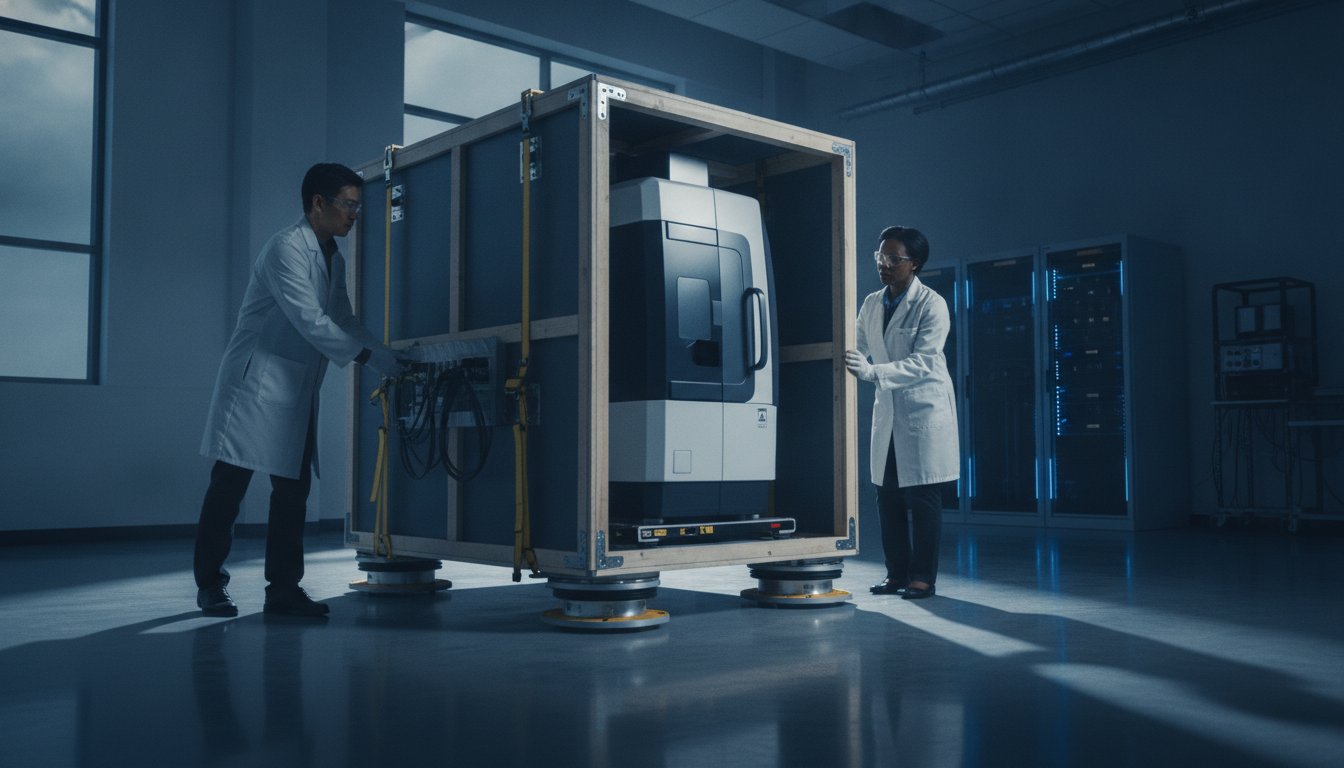
A successful scanning electron microscope relocation is measured in microns of resolution, not miles traveled, because even a minor kinetic disturbance can render a sophisticated electron column permanently misaligned. When you are planning an sem lab move, the primary objective is to mitigate the substantial risks of structural damage and prolonged downtime that threaten your research productivity. You likely recognize that the high cost of post-move repairs often stems from improper handling during the transition of sensitive optics. It’s a complex undertaking that demands more than simple logistics; it requires a deep understanding of vacuum integrity and electromagnetic shielding.
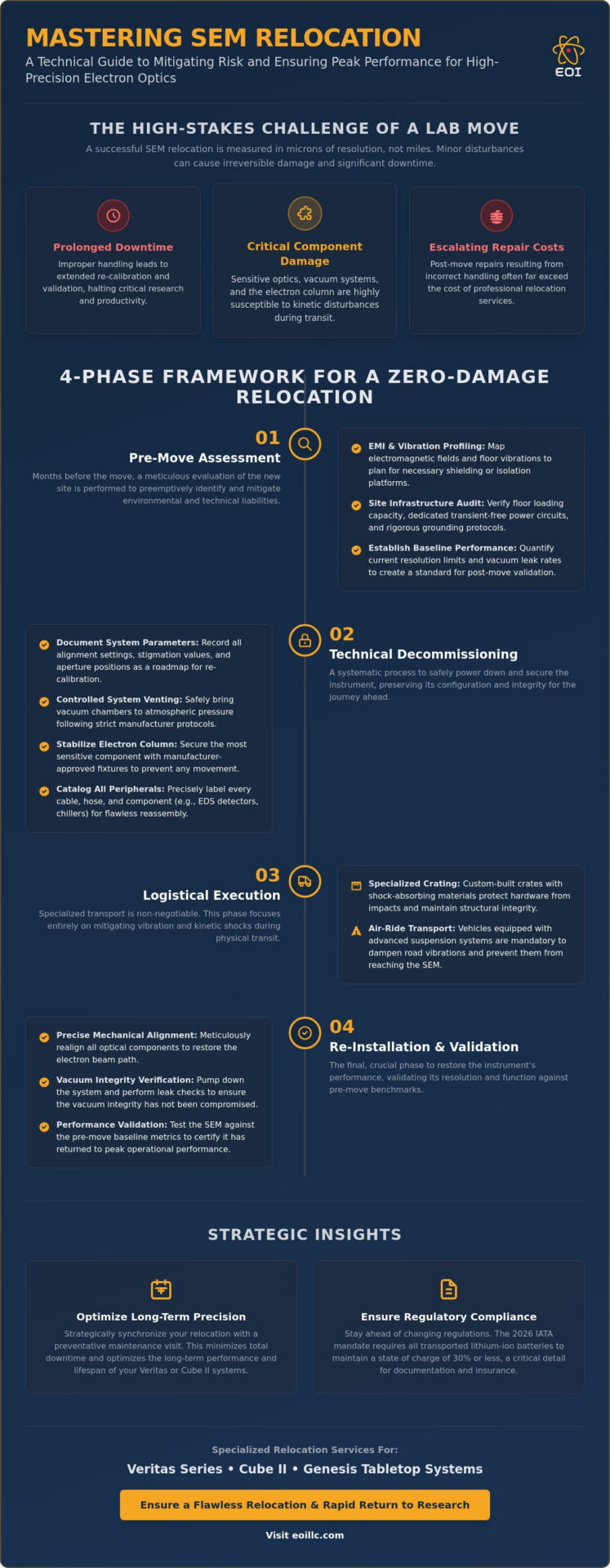
This professional framework provides the technical authority needed to master the complexities of relocating your Veritas Series or Cube II systems. By following this structured methodology, you’ll achieve a zero-damage relocation and a rapid return to peak operational performance through expert re-calibration. We’ll explore the critical 2026 regulatory updates, such as the IATA mandate requiring lithium-ion batteries to maintain a state of charge of 30% or less, while detailing the documentation protocols essential for insurance and compliance in an increasingly rigorous industrial landscape.
Key Takeaways
- Quantify electromagnetic interference (EMI) and environmental tolerances to ensure the destination site supports the stringent requirements of high-resolution electron optics.
- Master the technical protocols for planning an sem lab move, including the controlled venting of vacuum systems and the stabilization of the electron column for secure transit.
- Identify the specialized crating and air-ride transport requirements necessary to mitigate kinetic disturbances and maintain the structural integrity of sensitive hardware.
- Establish performance validation standards for re-installation, focusing on precise mechanical alignment and vacuum integrity verification to minimize research downtime.
- Discover the strategic advantages of synchronizing your relocation with preventative maintenance visits to optimize the long-term precision of your Veritas or Cube II systems.
Pre-Move Assessment: Evaluating Environmental and Technical Site Requirements
Successful execution in planning an sem lab move begins months before a single crate is constructed. A laboratory environment must be engineered to sustain the operational integrity of a Scanning Electron Microscope (SEM), where sub-nanometer resolution is susceptible to even minute external variables. Relocating high-precision hardware like the Veritas FE or Veritas Ultra requires a meticulous transition from a known, optimized environment to a new space that may harbor unforeseen technical liabilities. Establishing baseline performance metrics before decommissioning is mandatory; this involves quantifying current resolution limits and vacuum leak rates to provide an empirical standard for post-move validation.
Technical site requirements extend beyond mere floor space. Engineering teams must verify that the destination’s floor loading capacity can support the concentrated mass of a floor-standing unit without risk of structural settling over time. Electrical infrastructure is another critical pillar. Modern SEM units require dedicated, transient-free power circuits and rigorous grounding protocols to prevent electrical noise from interfering with the secondary electron detectors. If these factors aren’t audited early, you’ll likely face costly retrofitting after the instrument has already been delivered, leading to unacceptable project delays.
Vibration and Acoustic Noise Profiling
Acoustic and floor-borne vibrations are the primary antagonists of high-magnification imaging. During the site assessment, technicians utilize high-sensitivity accelerometers to profile the new location’s vibration spectrum across various frequency bands. Proximity to HVAC units, elevators, or even high-traffic corridors can introduce mechanical resonance that destabilizes the electron beam. Depending on the results, the new layout may require the integration of passive damping pads or advanced active vibration isolation platforms to ensure the Veritas Series maintains its specified resolution. It’s a critical step that prevents the permanent loss of imaging quality due to environmental interference.
Electromagnetic Interference (EMI) Mapping
Electromagnetic fields are often invisible disruptors that cause beam deflection and image distortion. A comprehensive magnetic field survey is essential to identify interference from building power lines, nearby heavy machinery, or laboratory equipment in adjacent rooms. If the EMI levels at the new site exceed the strict manufacturer tolerances for units like the Genesis Tabletop or Cube II, specialized magnetic shielding must be planned. This proactive approach ensures that the relocation promise is met by creating an environment where the electron optics can function at peak performance immediately upon re-installation.
The Technical Decommissioning Process for Electron Optics
Decommissioning an electron microscope is an intricate reversal of its original commissioning. It demands a level of meticulousness that standard laboratory equipment does not require. When planning an sem lab move, the decommissioning phase serves as the foundation for a successful re-installation. This stage involves more than simply powering down the console; it requires the systematic documentation of all current alignment parameters, including stigmation values and aperture positions. These baseline settings provide the necessary roadmap for technicians to achieve rapid re-calibration once the instrument reaches its destination.
Every peripheral component, from Energy Dispersive Spectroscopy (EDS) detectors to external chillers, must be cataloged and labeled with surgical precision. This ensures that the complex web of cable interfaces and vacuum lines is restored without error. Before any physical movement occurs, the technical team must complete a formal decontamination and decommissioning protocol to ensure the hardware is safe for transport and compliant with institutional safety standards. If your existing hardware has reached the end of its viable lifecycle, this transition period is also an ideal time to evaluate Refurbished SEM Units as a cost-effective alternative to moving aging, high-maintenance systems.
Vacuum Integrity and Pump Management
The vacuum system is the most vulnerable element during a relocation. Diffusion pumps require several hours of cooling to prevent oil backstreaming into the column, while turbo-molecular pumps must reach a complete spindown before any venting occurs. Technicians must use high-purity dry nitrogen for controlled venting to avoid introducing atmospheric moisture or contaminants. Once the system is at ambient pressure, all apertures and ports must be sealed with professional-grade blanking flanges. This maintains internal cleanliness and protects the sensitive inner workings of the Veritas Series or Cube II systems from particulate ingress during transit.
Stabilizing the Electron Column
Mechanical stability is non-negotiable when moving sensitive electron optics. The internal goniometer and stage assembly must be secured using manufacturer-specific shipping locks and specialized bracing to prevent kinetic energy from causing structural misalignment. Protecting the electron source is equally vital. Whether the unit utilizes a tungsten filament or a field emission (FE) source, the assembly must be shielded from mechanical shock. All filaments and consumables should be removed and stored in vibration-dampened containers. This rigorous approach ensures that the Veritas FE or Veritas Ultra maintains its structural integrity, allowing for a seamless return to peak operational performance.
Logistical Execution: Mitigating Vibration and Environmental Risks
The physical transit of an electron microscope represents the period of highest vulnerability for the hardware’s internal alignment. When planning an sem lab move, logistical execution must be viewed as a precision engineering event rather than a standard transport operation. Standard freight services lack the specialized infrastructure necessary to isolate a Veritas FE or Veritas Ultra from the kinetic energy generated during road travel. Consequently, selecting a carrier that utilizes air-ride suspension is mandatory. This technology utilizes pressurized air bags to absorb high-frequency road vibrations that would otherwise cause permanent misalignment of the electron column or damage the sensitive goniometer assembly.
Professional SEM technicians must oversee every stage of the loading process to ensure the instrument’s center of gravity is correctly managed. Their presence is vital for verifying that the shipping locks engaged during decommissioning remain secure against lateral forces. Because these instruments represent significant capital investments, insurance protocols must be robust. Standard carrier liability is rarely sufficient for the high-value nature of a Veritas Series SEM; therefore, a comprehensive policy that covers technical recalibration in the event of a documented impact is essential for institutional risk management. This meticulous approach ensures that the transition doesn’t compromise the long-term reliability of your research infrastructure.
Advanced Crating and Packaging Standards
Custom-engineered crating is the first line of defense against environmental and mechanical hazards. For benchtop systems like the Cube II or Genesis Tabletop, crates must incorporate multi-layer shock-absorbing materials that dissipate energy before it reaches the chassis. Every crate should be equipped with G-force indicators and tip-sensors to provide an empirical record of the instrument’s handling throughout the journey. Additionally, internal packaging must integrate electrostatic discharge (ESD) shielding to protect the sophisticated circuit boards and controllers from static accumulation, which can occur during the friction of transport. These standards are non-negotiable for maintaining the integrity of advanced hardware.
Climate and Humidity Regulation
Thermal stability is critical for maintaining the tight tolerances of electron optics. Rapid fluctuations in temperature can lead to the thermal expansion or contraction of the column’s internal components, potentially compromising the vacuum seals. Climate-controlled transport vehicles must maintain a consistent temperature to prevent condensation from forming within the vacuum chamber or on sensitive electronic interfaces. Upon arrival, the instrument requires a designated staging area for thermal acclimation. This allows the hardware to reach equilibrium with the new lab’s environment before any power-up sequence or vacuum pumping begins, ensuring the structural stability of the system is preserved during planning an sem lab move.
Re-installation and Performance Validation Standards
Successfully executing the re-installation phase when planning an sem lab move requires a methodical approach that mirrors the initial commissioning of the instrument. The physical placement of the unit is merely the first step; the true objective is the restoration of quantifiable performance metrics. Technicians must prioritize precise mechanical leveling to ensure the electron column is perfectly vertical, as even a minor tilt can introduce unwanted aberrations in the beam path. Once the chassis is stabilized, the focus shifts to the internal environment, where the integrity of the vacuum seals and the alignment of the electron optics determine the system’s eventual resolution capabilities.
Validation isn’t complete until the instrument produces data that matches or exceeds its pre-move baseline. This involves a rigorous series of tests using NIST-traceable magnification standards to verify that the software’s measurements remain accurate across all magnification ranges. For laboratories utilizing advanced analytical tools, the geometric relationship between the sample stage and the detector must be perfectly restored. If your current configuration requires enhanced analytical capabilities or a more robust platform for high-resolution imaging, you may find that upgrading to a Veritas Series SEM provides the superior stability needed for modern research environments.
Systematic Power-Up and Vacuum Testing
The transition from ambient pressure to ultra-high vacuum is a critical period where micro-leaks often manifest. Technicians conduct a controlled pump-down, monitoring the vacuum recovery rate to identify any compromised gaskets or fittings that may have shifted during transport. Once the desired vacuum level is achieved, the stability of the high-voltage power supplies is verified. In some instances, a bake-out cycle is necessary to eliminate residual moisture or outgassing from the chamber walls. This ensures that the electron gun, whether it’s a tungsten source or a field emission tip in a Veritas FE system, operates in a pristine environment free from ion bombardment and contamination.
Imaging Performance and Analytical Calibration
Resolution verification is the definitive test of a successful relocation. Technicians utilize gold-on-carbon standards to perform gap-and-edge tests, ensuring the electron beam focus and stigmation are optimized for the highest possible clarity. Beyond imaging, the integration of Energy Dispersive Spectroscopy (EDS) systems requires precise recalibration to ensure chemical analysis accuracy isn’t compromised by detector misalignment. Finalizing the SEM installation checklist is the final administrative hurdle, providing the necessary documentation for quality management systems and insurance providers. This structured validation process guarantees that your laboratory returns to peak operational performance without the risk of long-term technical degradation.
Professional SEM Relocation Services: Ensuring Operational Continuity
Relocating a scanning electron microscope is a high-stakes engineering project that requires more than logistical coordination. When planning an sem lab move, the decision to utilize manufacturer-certified technicians ensures that the instrument’s complex internal architecture is handled with the necessary technical authority. These specialists understand the nuanced calibration requirements of Veritas Series or Cube II systems, providing a level of reliability that generic laboratory movers can’t replicate. This expertise is vital for maintaining the continuity of your research cycles and protecting the substantial capital investment represented by your hardware.
A strategic relocation also presents a unique opportunity to provide on-site technical training for your staff. As the instrument is re-installed and validated, technicians can offer refresher courses on advanced imaging techniques or system optimization. This ensures that your team is fully prepared to leverage the instrument’s capabilities in its new environment. Additionally, facility managers should use this transition to update service contracts to reflect the specific environmental parameters of the new location, ensuring that future support is tailored to the site’s unique technical profile.
Integrating Maintenance with Relocation
The physical decommissioning and re-installation phases are naturally intrusive, making this the ideal time to synchronize the move with annual preventative maintenance visits. Performing internal column cleaning and filament replacement while the system is already vented maximizes efficiency and reduces overall downtime. By integrating these services, the relocation fee becomes a strategic investment in the equipment’s longevity. It’s also critical to verify that your SEM service contract includes provisions for post-move troubleshooting, which protects your laboratory against unforeseen technical anomalies that may arise during the initial weeks of operation in the new facility.
Post-Move Staff Orientation
Securing the Future of Your Research Infrastructure
With over 30 years of industry experience in electron optics, we provide comprehensive service for all major SEM manufacturers. As the sole US distributor for EmCraft Scanning Electron Microscopes, we maintain a standard of technical authority that guarantees your hardware’s performance. Your transition to a new facility is an opportunity to optimize your operational standards and extend the longevity of your sensitive instrumentation. We’re ready to support your next project with meticulousness and international capability.
Request a Professional SEM Relocation and Installation Quote
Frequently Asked Questions
How long does a typical SEM lab move take from start to finish?
Comprehensive planning for a laboratory transition typically requires a lead time of 12 to 18 months to ensure all environmental and regulatory standards are met. The physical relocation and re-installation phase usually spans one to two weeks, depending on the complexity of the electron optics and the distance between facilities. This timeline accounts for meticulous site preparation, decommissioning, transit, and the subsequent performance validation required to return the system to peak operational status.
Can I move a benchtop SEM like the Cube II without professional assistance?
Attempting to relocate a benchtop SEM like the Cube II without manufacturer-certified technicians isn’t recommended due to the high risk of kinetic damage to the internal optics. While these units are more compact than floor-standing models, they contain the same sensitive vacuum seals and precisely aligned components that are vulnerable to mechanical shock. Professional handling ensures that shipping locks are correctly engaged and that the system is properly vented to prevent internal contamination during the transition.
What are the most common causes of SEM damage during a lab relocation?
Structural misalignment of the electron column and vacuum system leaks are the most frequent consequences of improper handling during a move. These issues often arise from excessive vibration during transit or the failure to secure internal goniometers and stages with specialized shipping braces. Environmental shifts, such as rapid temperature fluctuations, can also lead to thermal expansion and the eventual failure of critical vacuum gaskets or electronic controllers.
Does moving my scanning electron microscope void my existing warranty or service contract?
Relocating an instrument without professional oversight often voids manufacturer warranties and existing service agreements because the structural integrity of the unit can’t be guaranteed. Most contracts require that decommissioning and re-installation be performed by certified personnel to ensure the hardware remains within specified operational tolerances. It’s essential to review your specific agreement while planning an sem lab move to ensure that your coverage remains active throughout the transition.
What is the acceptable vibration threshold for a new SEM lab space?
Acceptable vibration thresholds vary by model, but high-resolution systems typically require environments that meet VC-D or VC-E criteria for floor-borne vibration. These stringent standards minimize the mechanical resonance that can destabilize the electron beam at high magnifications. Detailed site surveys using high-sensitivity accelerometers are necessary to verify that the destination’s acoustic and floor vibration levels fall within the manufacturer’s specified tolerances for your Veritas Series or Cube II units.
How do I verify that my SEM is performing at pre-move levels?
Verification is achieved by comparing post-move resolution tests on gold-on-carbon standards against the empirical baseline data collected before decommissioning. This quantitative assessment must also include NIST-traceable magnification calibration and a thorough audit of the vacuum recovery rate. Consistent results across these metrics provide the necessary evidence to confirm that the relocation was successful and that the system is ready for research-grade data acquisition in its new environment.
Should I replace my SEM filaments before or after the move?
Filaments should be replaced after the instrument has been successfully re-installed and reached its target vacuum level at the new facility. Moving a system with a used filament increases the risk of the fragile tungsten or hexaboride source breaking due to mechanical shock. Planning an sem lab move provides a logical opportunity to perform this maintenance during the re-commissioning phase, ensuring a pristine electron source for your initial post-move imaging and calibration.
What specialized equipment is required to move a full-sized SEM unit?
Relocating a floor-standing unit requires air-ride suspension vehicles, custom-engineered crates with integrated G-force monitoring, and specialized rigging equipment. The use of vibration-dampened dollies and hydraulic lifts ensures that the instrument’s center of gravity is maintained without subjecting the column to lateral stress. These technical tools are essential for mitigating the environmental and mechanical risks associated with transitioning high-value scientific hardware between facilities.