
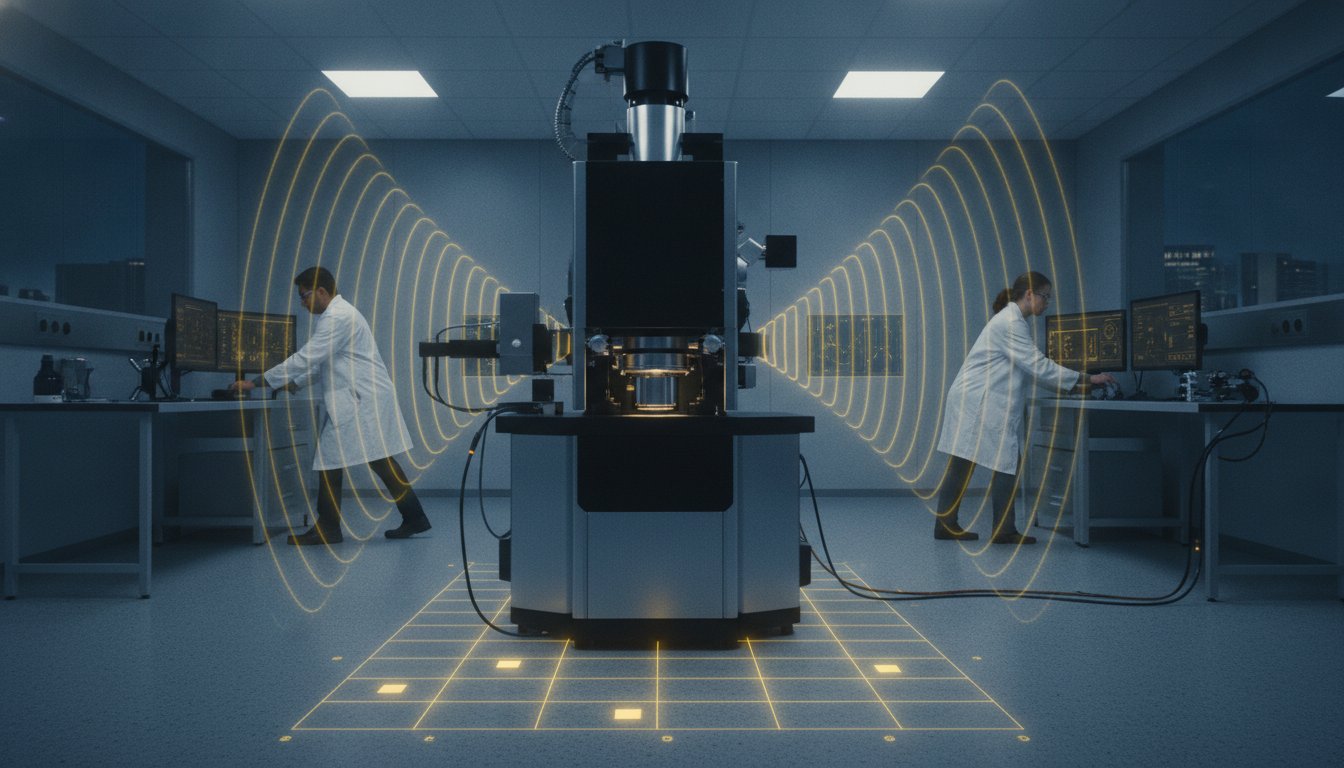
A successful sem installation is fundamentally an engineering project rather than a logistical task; the integrity of your data depends entirely on the rigorous environmental mitigation performed before the instrument ever reaches the laboratory floor. You likely recognize that the transition of sensitive electron optics involves more than just physical transport. It requires a sophisticated understanding of floor vibration, electromagnetic interference, and thermal stability to prevent the high costs of extended downtime or hardware degradation.
This article provides a comprehensive technical framework designed to ensure the precision and longevity of your scanning electron microscope during initial deployment or complex facility relocation. We’ll explore the critical infrastructure requirements for 2026, including adherence to the ISO 25387:2026 protocol for point resolution and the necessary environmental controls to maintain imaging integrity. By following this structured approach, you can achieve a seamless transition that meets specified resolution standards immediately. This ensures your laboratory’s operational continuity and technical excellence while protecting your investment in high-end units like the Veritas Ultra SEM.
Key Takeaways
- Execute a sophisticated site survey to verify that floor loading capacities and spatial clearances align with the rigorous demands of advanced microscopy.
- Deploy active or passive damping systems to neutralize the detrimental effects of mechanical vibration and electromagnetic interference on imaging resolution.
- Follow a structured sem installation checklist that addresses critical infrastructure needs, including dedicated electrical grounding and pneumatic exhaust management.
- Protect the technical integrity and warranty of your Veritas or Cube II systems by utilizing professional decommissioning and climate-controlled logistics.
- Ensure your laboratory meets the ISO 25387:2026 resolution standards through meticulous post-installation calibration and specialized operator training.
Essential Site Requirements for Scanning Electron Microscope (SEM) Installation
Precision in electron optics begins with the physical environment. A successful sem installation is an exercise in meticulous spatial orchestration. The Scanning electron microscope is exceptionally sensitive to its surroundings, meaning that even minor oversights in site preparation can manifest as image drift or resolution loss. Technical leads must account for the primary console, the vacuum pumping system, and the necessary clearance for peripheral analytical tools like EDS systems. Achieving the specified resolution standards of 2026 requires a proactive approach to environmental stabilization before the hardware ever arrives at the facility.
Spatial Planning and Ergonomics
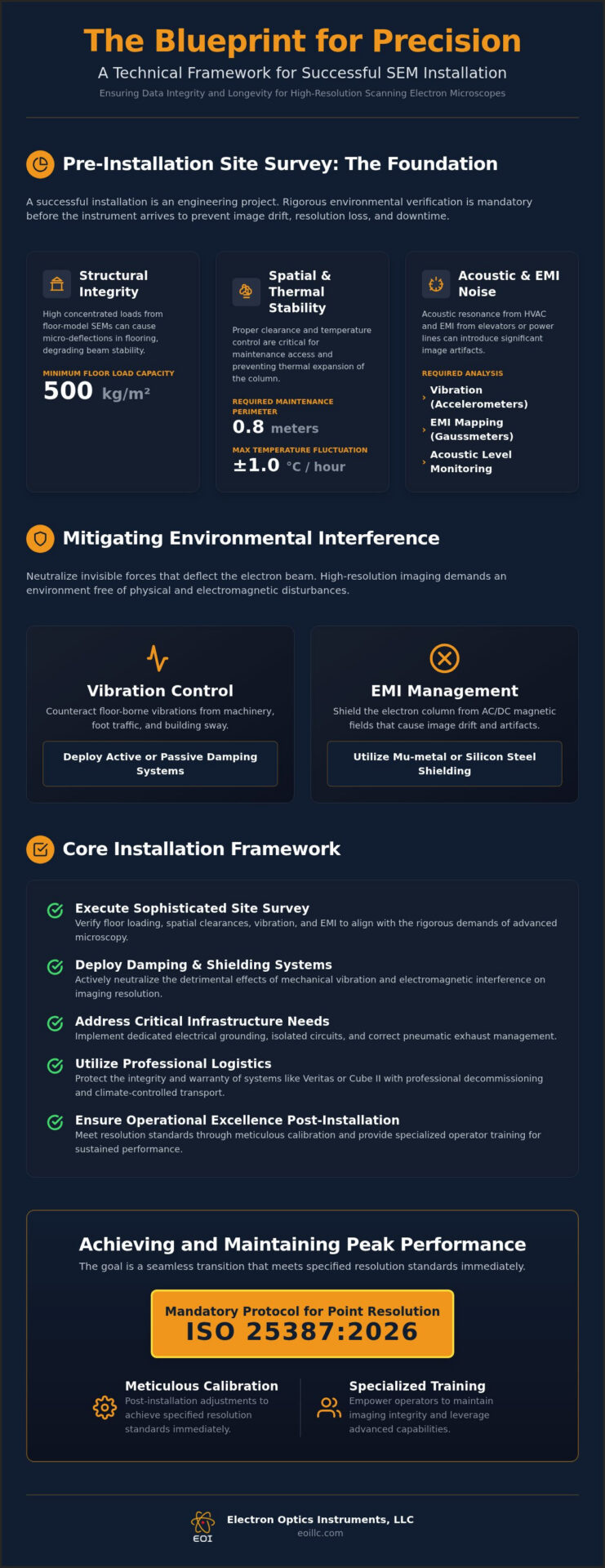
Effective spatial planning involves more than just fitting the instrument into a room. For systems like the Cube II or the Veritas series, maintenance access requires a perimeter of at least 0.8 meters around the console to allow for the service of the electron column and electronics racks. Workflow efficiency dictates that sample preparation stations should be adjacent to the imaging suite but isolated from the main vacuum system to prevent cross-contamination. Heat dissipation is another critical factor; vacuum pumps generate significant thermal energy, requiring a minimum of 30 centimeters of clearance and dedicated ventilation to prevent the ambient temperature from rising beyond operational limits.
Structural Integrity and Floor Loading
The structural capacity of the laboratory subfloor is a non-negotiable prerequisite for high-resolution imaging. While tabletop units like the Genesis series distribute weight across a bench, floor-model systems exert high concentrated loads that can cause micro-deflections in standard flooring. This is particularly problematic in high-rise laboratory buildings where structural resonance and building sway can introduce low-frequency vibrations that degrade the electron beam stability. For a standard Veritas series installation, the laboratory floor must sustain a concentrated load capacity of at least 500 kilograms per square meter to ensure the long-term alignment of the optical column.
Environmental stability extends to acoustic and thermal parameters. High-decibel environments, often caused by HVAC systems or nearby machinery, can cause mechanical resonance within the microscope’s internal components. Similarly, thermal expansion is a primary enemy of column alignment. Professional installations require an environment where temperature fluctuations don’t exceed ±1.0°C per hour, as even slight changes can cause the metal components of the column to expand or contract, shifting the focal point of the electron beam and ruining long-term automated imaging tasks. Proper sem installation protocols demand that these variables are measured and mitigated to protect the longevity of the instrument.
Mitigating Environmental Interference: Vibration and EMI Control
High-resolution microscopy demands an environment that is virtually devoid of external physical and electromagnetic disturbances. During a professional sem installation, the primary challenge lies in neutralizing invisible forces that can deflect the electron beam or introduce mechanical instability. Because the electron column operates by manipulating charged particles, it’s inherently sensitive to the Lorentz force. Even a minor fluctuation in the local magnetic field can cause significant image drift or periodic artifacts that compromise the accuracy of your data.
Executing a pre-installation site survey is a mandatory step in the commissioning process. This involves utilizing specialized gaussmeters to map electromagnetic fields and high-sensitivity accelerometers to measure floor-borne vibrations across a broad frequency spectrum. Without these empirical datasets, laboratory managers risk placing sensitive equipment in zones where elevators, power transformers, or nearby transit lines generate intermittent interference that exceeds the instrument’s tolerance thresholds.
Managing Electromagnetic Interference (EMI)
Effective EMI management requires a clear distinction between static DC fields and oscillating AC fields. Shielding techniques, such as the application of Mu-metal or silicon steel plates, are often necessary for laboratories located near high-voltage power lines or heavy machinery. Stray fields from internal building infrastructure can also degrade resolution, making it vital to understand the underlying Advanced SEM Techniques required to maintain high-resolution analytical standards in 2026. If interference levels remain high, active field cancellation systems may be deployed to create a stable magnetic null zone around the column.
Vibration Isolation and Damping
Mechanical stability is achieved by addressing both floor-borne seismic energy and acoustic noise. While passive damping systems, such as pneumatic legs, are standard for many instruments, benchtop models like the Cube II often require specialized vibration isolation tables to achieve their peak performance specifications. For ultra-high-resolution systems, such as the Veritas HR units, active cancellation technology is the preferred solution. These systems use internal sensors to detect incoming vibrations and apply immediate, equal, and opposite counter-forces. This level of precision is essential for maintaining the sub-nanometer stability required for advanced materials research. If you’re planning a new facility, consulting with an expert for a comprehensive site assessment is the most reliable way to ensure your infrastructure supports your imaging goals.
Infrastructure and Utility Specifications for High-Resolution SEMs
Beyond the environmental mitigation strategies previously discussed, a robust infrastructure of utilities serves as the operational foundation for any high-performance sem installation. While entry-level benchtop models like the Cube II possess simplified requirements, transitioning to sophisticated high-resolution systems such as the Veritas HR necessitates a complex array of electrical, pneumatic, and cooling supports. Ensuring these utilities meet specific engineering tolerances is paramount to maintaining the instrument’s specified point resolution and long-term hardware reliability; to safeguard your facility’s power quality, check out Energy Control Systems. In 2026, the integration of these systems must be planned with precision to avoid the common pitfalls of laboratory infrastructure bottlenecks.
Electrical Power Quality and Grounding
A dedicated, noise-free electrical circuit is a non-negotiable requirement for the electron column and its sensitive control electronics. Grounding must be meticulously executed to ensure a common potential between the microscope and its peripheral analytical systems, particularly Energy Dispersive Spectroscopy (EDS) detectors. Utilizing an Uninterruptible Power Supply (UPS) isn’t merely a precaution; it’s a critical requirement to prevent sudden vacuum crashes that can contaminate the electron column or damage the field-emission source. Understanding the SEM Maintenance implications of power-related failures reveals that a single surge or unexpected outage can lead to significant downtime and the need for professional column cleaning.
Vacuum and Cooling Systems
High-performance units, such as the Veritas FE and Ultra series, often utilize water-cooled electromagnetic lenses to manage thermal loads during high-resolution imaging sessions. This requires a closed-loop chiller system with precise flow and temperature control to prevent thermal drift. Additionally, managing the exhaust of rotary and turbo-molecular pumps is vital for maintaining a clean laboratory environment. These pumps should be mechanically isolated from the microscope frame using flexible bellows and vibration-damping mounts to ensure that mechanical noise doesn’t degrade image quality. A dry nitrogen supply is also necessary for venting the specimen chamber, as it prevents the introduction of atmospheric moisture and contaminants that can compromise vacuum integrity.
Modern sem installation protocols also prioritize network connectivity for remote diagnostics and large-scale data management. Secure, high-speed connections allow for real-time technical support and the seamless integration of AI-powered analysis tools, ensuring your laboratory remains at the forefront of industrial microscopy standards. Compressed air is frequently required for the operation of automated valves and active vibration isolation systems. This air must be dry and oil-free to prevent internal contamination of the pneumatic circuits, which can lead to mechanical failures in the specimen stage or column valves. By synchronizing these utility specifications, you create a stable ecosystem that maximizes the technical prowess of your microscopy assets.
The SEM Relocation and Installation Process: A Step-by-Step Framework
Relocating a scanning electron microscope is a high-stakes engineering endeavor that demands a rigorous departure from standard logistical practices. Unlike typical laboratory equipment, the structural and optical integrity of an SEM is highly susceptible to mechanical shock and atmospheric exposure during transit. A successful sem installation at a new facility begins with a methodical decommissioning phase, ensuring that every sensitive component is stabilized and protected against the variables of transportation. This process is not merely about moving hardware; it’s about preserving a sophisticated analytical environment across geographical distances.
Professional Decommissioning and Packing
The decommissioning process involves the mechanical immobilization of the specimen stage and the secure housing of the electron gun assembly to prevent misalignment caused by vibration. Specialized handling is critical for accessories such as EDS detectors, which often require separate, vibration-isolated packaging to protect their delicate window materials and cooling components. While the process for a Desktop SEM is relatively streamlined due to its compact architecture, the fundamental principles of vacuum stabilization and optical protection remain identical. Climate-controlled logistics are utilized to prevent thermal expansion or contraction cycles that could jeopardize the vacuum seals or delicate internal wiring of Veritas or Genesis systems.
Re-installation and System Optimization
Upon arrival at the new site, the mechanical assembly must be executed with extreme meticulousness, following the environmental site survey results established in earlier phases of the project. The initial vacuum pull-down is a critical milestone, followed by high-voltage seasoning procedures that gradually introduce electrical potential to the gun assembly to prevent arcing. Once a stable vacuum is achieved, engineers perform a comprehensive alignment of the electron column and calibrate the stigmator to ensure the beam profile is perfectly circular. A final vacuum leak check using a pressure-rise test is mandatory before high-voltage activation to prevent catastrophic filament oxidation.
Final validation of the system involves performing resolution tests using standard gold-on-carbon samples to verify that the unit meets or exceeds its original factory performance specifications. This step ensures that the transition hasn’t compromised the instrument’s ability to meet the ISO 25387:2026 protocol for point resolution. To protect the warranty of high-end units like the Veritas Ultra SEM and ensure a seamless transition, it’s essential to partner with a team that possesses over 30 years of industry experience. If you’re preparing for a facility move, you should schedule a professional relocation consultation to ensure every technical detail is managed with precision.
Ensuring Operational Excellence: Post-Installation Calibration and Training
The physical sem installation marks the transition from logistical execution to operational realization, requiring a final layer of meticulous validation to secure the instrument’s performance envelope. Achieving a successful deployment isn’t merely about achieving a vacuum; it’s about verifying that every subsystem operates within its engineered tolerances. This concluding phase focuses on technical calibration and human integration, ensuring that the laboratory’s investment in sophisticated hardware translates into reliable, repeatable data. By establishing rigorous benchmarks immediately after the move, you ensure that the instrument’s technical integrity is preserved for years to come.
Technical validation involves a systematic evaluation of beam stability, signal-to-noise ratios, and stage repeatability against original factory performance standards. This process creates a definitive baseline for future imaging performance audits, allowing laboratory managers to detect subtle hardware degradation before it impacts research outcomes. In the context of 2026 industrial standards, these audits are essential for maintaining compliance with international resolution protocols. Documenting these initial metrics provides the empirical data necessary to justify future maintenance cycles and ensures the system consistently meets the high-resolution demands of advanced materials science.
Technical Training and Staff Integration
Maximizing the utility of specialized systems like the Cube II or Veritas series requires a workforce that is deeply integrated with the hardware’s operational nuances. Training programs must extend beyond basic software navigation to include comprehensive education on sample preparation and vacuum etiquette. Improper sample handling is a primary source of column contamination, which can rapidly degrade the precision achieved during the initial sem installation. For teams seeking to implement SEM Operation best practices, advanced training in EDS analysis and specialized imaging modes is vital. This expertise allows the laboratory to leverage the full analytical power of their facility from the moment operations commence.
Service Contracts and Long-Term Stability
A proactive maintenance strategy is the final component of a professional installation framework. Scheduling the first preventative maintenance visit within the initial months post-relocation allows engineers to verify that the system has settled correctly into its new environmental conditions. Annual service contracts are not merely an administrative requirement; they’re a strategic tool for preventing costly downtime and ensuring the longevity of sensitive electron optics. This methodical approach to post-installation care transforms a complex logistical event into a sustainable foundation for research excellence. To ensure the continued precision of your laboratory assets, you should protect your investment with professional SEM installation and service from EOI.
Securing the Future of Your Analytical Infrastructure
Successful microscopy operations in 2026 depend on the synergy between advanced hardware and a meticulously prepared environment. By prioritizing rigorous site surveys and adhering to structured relocation protocols, laboratories can eliminate the risks of optical degradation and minimize operational disruption. A comprehensive sem installation integrates physical stability with technical calibration to ensure that high-end instruments, such as the Veritas series, deliver their specified resolution from the first day of operation. For facilities that also aim to meet high environmental standards, Ekocentric provides expert consulting to help laboratories achieve green and sustainable building certifications.
Electron Optics Instruments brings over 30 years of industry expertise to every project, serving as the sole US distributor for EmCraft Scanning Electron Microscopes. Our commitment to your laboratory’s success includes comprehensive on-site training to empower your team with the skills necessary for sophisticated imaging and analysis. We invite you to Request a Professional SEM Site Survey and Installation Quote to secure your facility’s technical prowess. We look forward to partnering with you to achieve a seamless transition and lasting analytical precision.
Frequently Asked Questions
How long does a typical scanning electron microscope installation take?
A standard scanning electron microscope installation typically requires between two and five business days to complete, depending on the complexity of the system and the level of site preparation. This timeframe encompasses the physical assembly of the console, vacuum system stabilization, and the execution of rigorous performance validation protocols to ensure the unit meets factory resolution standards. More complex field-emission systems may require additional time for high-voltage seasoning and fine-tuning of the optical column.
Can I relocate an SEM myself, or do I need professional services?
You should not attempt to relocate an electron microscope without professional technical assistance, as doing so risks catastrophic damage to the sensitive electron optics and column alignment. Professional relocation services ensure that the instrument is properly decommissioned, securely crated, and transported via climate-controlled logistics. This methodical approach is essential for protecting the warranty of high-end units like the Veritas Ultra SEM and preventing costly hardware degradation during transit.
What are the most common environmental issues found during SEM site surveys?
The most frequent environmental obstacles identified during site surveys are excessive electromagnetic interference and low-frequency mechanical vibration from building infrastructure. These invisible factors can deflect the electron beam or cause significant image drift, necessitating the implementation of active field cancellation or specialized damping platforms. Identifying these issues early allows for the design of a stable imaging environment that supports the instrument’s peak performance specifications.
Do benchtop SEMs like the Cube II have the same installation requirements as floor models?
While benchtop models like the Cube II possess a significantly smaller physical footprint, they still require a stable environment characterized by low vibration and precise thermal control. These compact units benefit from a simplified sem installation process compared to floor-standing models, yet they remain sensitive to electromagnetic noise. It’s vital to ensure the supporting bench can sustain concentrated loads and that the local power supply is free from electrical interference.
How much space is required for a standard SEM installation?
A standard installation requires a dedicated laboratory space that provides at least 0.8 meters of clearance around the console for maintenance access and heat dissipation. This footprint must also account for peripheral equipment such as vacuum pumps, cooling chillers, and sample preparation stations. Proper spatial planning ensures a functional workflow and provides enough room for technicians to service the electron column without disrupting the surrounding laboratory environment.
What happens if the laboratory floor has excessive vibration?
Excessive floor vibration introduces mechanical instability that manifests as blurred images or periodic artifacts, severely limiting the instrument’s achievable resolution. If the laboratory subfloor fails to meet the specified vibration criteria, you must utilize active or passive vibration isolation systems to decouple the microscope from the building’s structural resonance. Failing to address these mechanical disturbances will prevent the system from meeting the ISO 25387:2026 protocol for point resolution.
Why is a dedicated electrical ground necessary for an electron microscope?
A dedicated electrical ground is essential to eliminate stray electrical noise that can interfere with the sensitivity of the electron beam and analytical components like EDS detectors. This specialized grounding ensures a common potential across all system modules, preventing ground loops that could introduce signal instability or damage the delicate control electronics. Implementing a noise-free circuit is a critical step in a successful sem installation to protect the integrity of your data.
What training is included with a new SEM installation from EOI?
Every new installation performed by EOI includes comprehensive on-site training that covers instrument operation, vacuum etiquette, and basic sample preparation techniques. Our technical experts provide customized instruction for lab teams to ensure they can maximize the analytical utility of Veritas and Cube II systems. This training is designed to empower operators with the skills necessary to maintain high-resolution imaging standards and ensure the long-term health of the electron optics.