
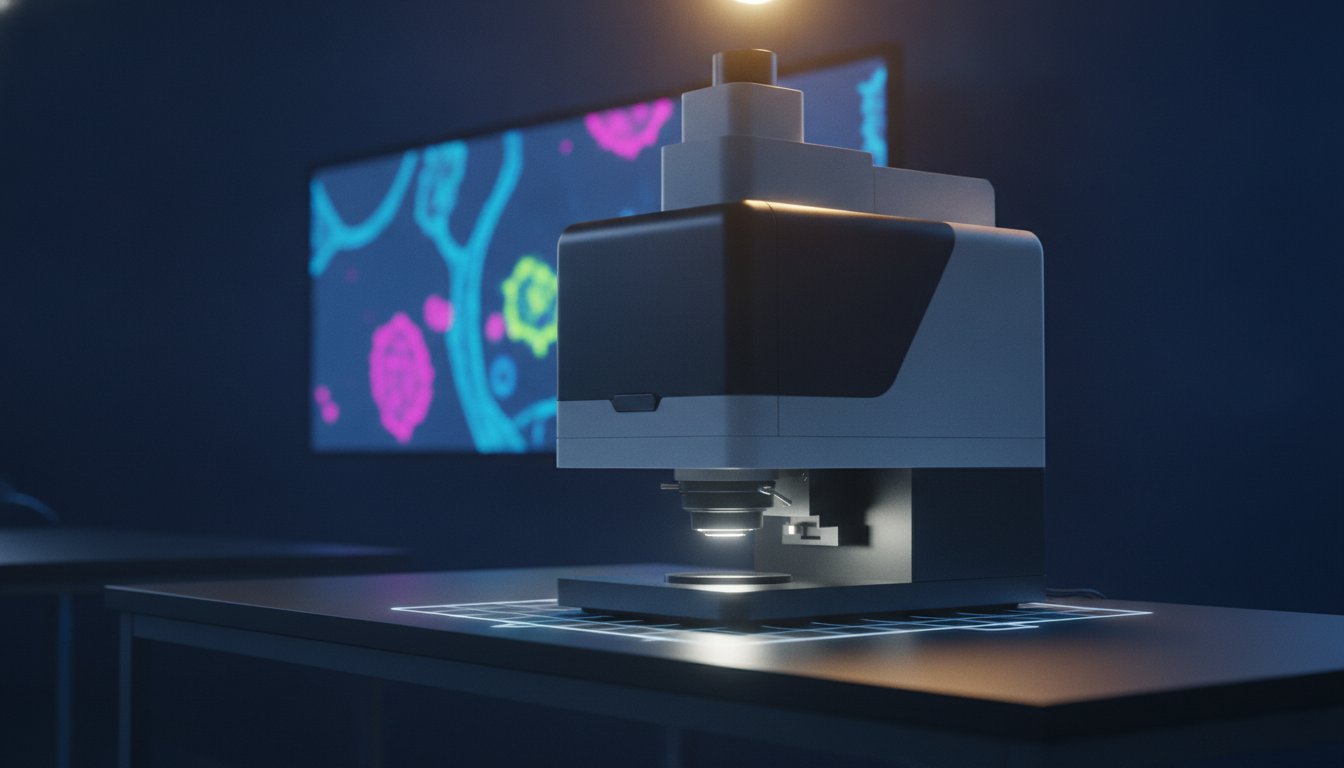
The traditional paradigm that high-resolution electron microscopy requires a dedicated, reinforced suite is being dismantled by the rise of functional density in 2026 laboratory design. You likely recognize that while the promise of benchtop imaging is immense, the reality of limited laboratory real estate and the threat of environmental vibrations often complicate the integration process. Transitioning to a compact system shouldn’t involve guesswork regarding power conditioning or electromagnetic interference shielding. This guide provides a technical blueprint for understanding the precise tabletop sem footprint and space requirements necessary to maintain sub-5nm resolution without the prohibitive costs of traditional infrastructure.
We’ll examine the spatial demands of the Cube II and Genesis series, the impact of the ASTM E3501-25 standard on your workflow, and the critical environmental factors that ensure your investment delivers peak performance. By the end of this analysis, you’ll possess the clarity needed to integrate these sophisticated systems into your modern workflow with absolute confidence. We’ve synthesized thirty years of electron optics expertise to help you master the spatial, environmental, and infrastructural nuances of the contemporary benchtop laboratory.
Key Takeaways
- Analyze the transition from expansive, multi-room floor models to the high functional density of the Cube II Benchtop SEM, which facilitates sophisticated imaging within a consolidated laboratory layout.
- Determine the precise tabletop sem footprint and space requirements for high-performance units, including the necessity for benchtop load-bearing capacities that exceed 150 lbs.
- Identify the environmental thresholds for electromagnetic interference and mechanical vibration that must be managed to preserve imaging integrity in modern, high-traffic industrial settings.
- Optimize your laboratory’s spatial ergonomics by strategically positioning sample preparation stations in proximity to the SEM workstation to minimize workflow latency.
- Recognize the critical importance of professional installation and consistent preventative maintenance in securing the spatial alignment and long-term reliability of your electron optics systems.
The Evolution of SEM Form Factors: Defining the Tabletop Footprint
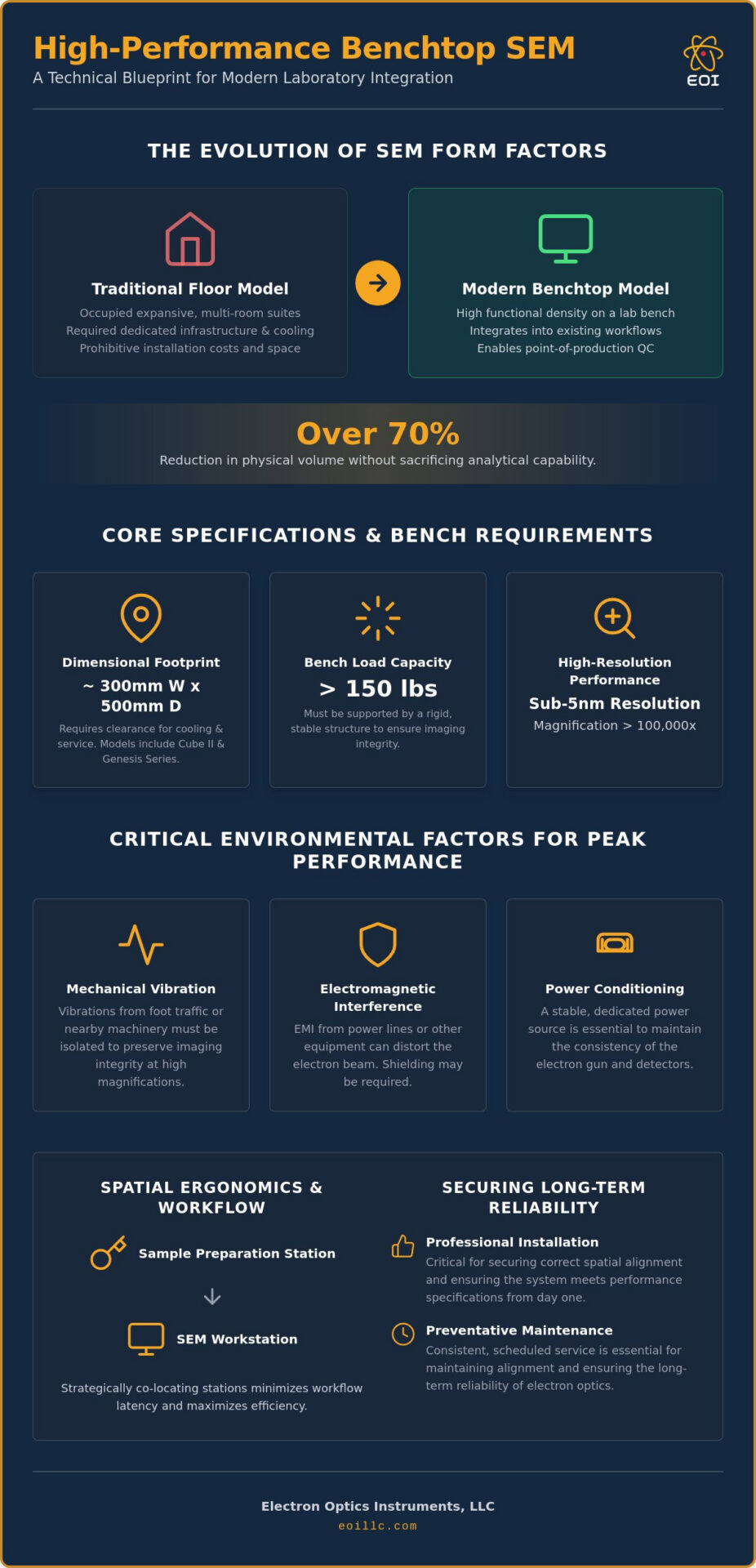
The modern Scanning Electron Microscope (SEM) has undergone a radical structural transformation, evolving from a multi-room installation into a self-contained, high-resolution imaging system. This historical shift represents more than just a reduction in physical volume; it’s a fundamental reconfiguration of electron optics. While traditional floor models required extensive floor space and dedicated cooling systems, the Cube II Benchtop SEM demonstrates that high-performance microscopy can now be integrated directly into a standard laboratory workflow. This evolution is driven by the demand for functional density, where the capability of the instrument is maximized relative to its physical displacement.
A critical factor in this evolution is the strategic reduction of column height. By shortening the electron path, engineers have mitigated many of the mechanical instabilities that plague larger systems. This compact geometry allows for a more rigid structure, which is essential for maintaining resolution at high magnifications. As of 2026, technological refinements in electron gun design and vacuum systems allow these benchtop formats to achieve magnifications exceeding 100,000x with ease. It’s a feat once reserved for heavy-duty industrial installations that required massive power draws and specialized environmental shielding.
Distinguishing Benchtop vs. Tabletop vs. Floor Models
In technical discourse, the terms tabletop and benchtop are frequently used interchangeably to describe high-density imaging solutions. The primary distinction lies in the tabletop sem footprint and space requirements compared to traditional floor-standing units. A floor model typically occupies several dozen cubic feet and necessitates a dedicated room with specialized vibration isolation. In contrast, a modern benchtop unit like the Genesis Tabletop SEM retains all core hardware components, such as the electron column, detector, and vacuum pumps, within a chassis that fits comfortably on a standard laboratory bench. This transition allows for a physical volume reduction of over 70 percent without sacrificing the analytical capabilities required for routine material characterization.
The Advantages of a Minimalist Footprint in 2026
The adoption of a minimalist footprint offers significant strategic benefits for modern research facilities. By maximizing laboratory real estate, organizations can integrate multiple analytical instruments within a single workspace, fostering a more collaborative and efficient environment. Beyond the physical dimensions, the transition to benchtop systems eliminates the need for expensive, dedicated infrastructure like specialized HVAC systems or high-voltage power lines. This democratization of electron microscopy ensures that high-resolution imaging is accessible to a broader range of industrial and academic partners, allowing for immediate quality control directly at the point of production. It’s a move toward a more agile, responsive laboratory model where precision isn’t tethered to massive machinery.
Dimensional Specifications and Laboratory Bench Integration
The transition to benchtop microscopy necessitates a rigorous evaluation of structural and environmental parameters to ensure that the instrument’s performance aligns with its technical specifications. While the Genesis Tabletop SEM offers a significantly reduced physical profile compared to traditional floor models, its integration requires more than just available surface area. Precision imaging at high magnifications is highly sensitive to the stability of the supporting infrastructure. Consequently, defining the tabletop sem footprint and space requirements involves a comprehensive assessment of dimensions, weight distribution, and thermal management.
A standard high-performance unit typically occupies a footprint of approximately 300 mm in width and 500 mm in depth, yet these figures only represent the base of the chassis. Effective installation requires additional clearance for cooling and service access. Maintaining a minimum of 10 to 15 centimeters of unobstructed space around the ventilation ports is essential to prevent thermal drift, a phenomenon where internal heat fluctuations cause microscopic shifts in the electron beam’s position. Furthermore, rear-access requirements must be accounted for to facilitate cable management and routine hardware adjustments during service intervals.
Benchtop Stability and Load-Bearing Requirements
The structural integrity of the laboratory bench is a primary determinant of image clarity. Most high-performance tabletop units weigh approximately 60 to 70 kg, meaning the bench must possess a certified load-bearing capacity exceeding 150 lbs (approx. 70kg) without exhibiting signs of deflection. While stainless steel benches are common, stone-based surfaces such as granite or epoxy resin are preferred for their superior vibration dampening characteristics. A level surface is non-negotiable; even a minor incline can compromise the alignment of the electron column and the precision of the automated stage. To accommodate the Cube II system alongside an integrated EDS controller and associated cabling, an optimal bench depth of 30 to 36 inches ensures sufficient rear-access for maintenance.
Peripheral and Accessory Clearance
Integrating a complete analytical workstation involves planning for peripherals that extend beyond the SEM chassis itself. Energy Dispersive Spectroscopy (EDS) hardware often requires additional lateral space for the detector housing and signal processing electronics. Operator ergonomics also play a vital role in long-term productivity, requiring sufficient desk space for dual-monitor configurations that allow for simultaneous imaging and data analysis. While some models feature integrated vacuum systems, others utilize external pumps that must be situated on the floor to isolate the SEM from mechanical noise and vibration. Ensuring your laboratory environment meets these specifications is the first step toward achieving peak analytical performance, a process often streamlined through professional preventative maintenance visits that verify environmental stability.
Technical Infrastructure: Environmental and Power Requirements
Integrating a scanning electron microscope into a high-traffic environment is a strategic objective for many facilities seeking to decentralize their analytical capabilities. While the physical tabletop sem footprint and space requirements are significantly reduced compared to traditional installations, the instrument’s sensitivity to external stimuli remains a primary engineering concern. It’s a common misconception that a benchtop format is inherently immune to the environmental challenges that typically affect floor models. In reality, maintaining 2026 imaging standards requires meticulous management of electromagnetic interference (EMI) and acoustic noise. Strategic placement is vital; the SEM shouldn’t be positioned near heavy industrial machinery or high-volume HVAC vents that introduce turbulent airflow and mechanical resonance. These invisible factors can degrade resolution long before a sample is even loaded.
Power stability serves as another critical pillar of the technical infrastructure. Fluctuations in voltage or transient surges can lead to beam instability, image artifacts, or long-term hardware degradation. Dedicated circuits are mandatory for high-performance units like the Veritas or Cube II series to ensure that the sensitive electron optics aren’t compromised by the power draw of adjacent laboratory equipment. It’s not enough to simply have an available outlet. The electrical environment must be clean and consistent, often requiring industrial-grade power conditioning to meet the rigorous demands of sub-5nm imaging.
Vibration Isolation Strategies
Sources of vibration in industrial settings are diverse, ranging from the low-frequency hum of a facility’s structural supports to the rhythmic movement of nearby elevators. These mechanical disturbances can induce resonance within the electron column, effectively blurring the image at high magnifications. While passive isolation platforms, such as heavy stone slabs or specialized rubber dampeners, are sufficient for many stable environments, active vibration isolation systems are often necessary for labs located on upper floors or near production lines. These active systems utilize sensors and actuators to cancel out incoming frequencies in real-time, preserving the nanometer-scale precision that modern research demands.
Electromagnetic and Thermal Stability
Precision imaging is highly susceptible to stray magnetic fields generated by large motors or unshielded power lines. Mapping the laboratory for these fields prior to installation is a prerequisite for achieving specified performance levels. Thermal stability is equally paramount; a temperature fluctuation exceeding ±1°C can cause the internal components of the SEM to expand or contract, leading to significant drift in the electron beam’s position. Humidity control is also essential to protect sensitive detectors and maintain the integrity of the vacuum system. A stable, climate-controlled environment ensures that the instrument operates within its design specifications consistently, providing the reliability required for rigorous industrial quality control.
Spatial Ergonomics and Workflow Optimization
Operator comfort is a vital yet frequently overlooked component of workflow optimization. Extended analysis sessions demand ergonomic considerations, such as adjustable monitor mounts and sufficient legroom beneath the bench to prevent fatigue. Storage solutions for critical consumables like filaments, apertures, and sample stubs should be integrated directly into the workstation layout to minimize movement and reduce the risk of environmental contamination. By situating these elements within arm’s reach, facilities can incorporate their tabletop units into a more rigorous SEM operation framework that prioritizes both technical precision and operator longevity. A well-organized station reflects the meticulousness of the data it produces.
The Sample Preparation Zone
Digital Integration and Data Management
Modern laboratory integration in 2026 involves a sophisticated digital infrastructure that mirrors the physical hardware setup. Spatial planning must include dedicated workstations for data processing and high-speed server connectivity for large-scale image archiving. The implementation of remote operation capabilities allows for a reduction in the physical presence within the lab, enabling specialists to conduct analysis from centralized control rooms. Incorporating secondary monitors specifically for real-time EDS mapping enhances the analytical workflow, providing immediate chemical feedback without obstructing the primary imaging interface. To ensure your facility’s layout is optimized for peak performance and operational efficiency, contact our technical team to review your laboratory’s spatial configuration.
Strategic Implementation: Professional Installation and Relocation
The integration of advanced electron optics into a consolidated laboratory environment demands a level of meticulousness that extends far beyond the initial procurement phase. While the compact nature of benchtop units suggests a simplified deployment process, professional installation remains a mandatory prerequisite for achieving specified imaging performance. Electron Optics Instruments, LLC leverages over 30 years of specialized field service expertise to ensure that every deployment, whether for a Cube II or a Genesis series unit, adheres to the most rigorous technical standards. This professional oversight is essential to bridge the gap between a theoretical laboratory layout and the practical realities of high-resolution operation, ensuring that the instrument reaches its full analytical potential from day one.
The Professional Installation Checklist
A comprehensive pre-installation site survey acts as the critical foundation for a successful laboratory integration. During this phase, technical specialists evaluate the tabletop sem footprint and space requirements against the laboratory’s actual environmental variables, including power stability, EMI thresholds, and structural vibration levels. Once the unit is delivered, on-site calibration and performance verification are conducted to confirm that the instrument maintains its sub-nanometer precision within its specific local environment. This process concludes with intensive operator training, which is designed to help your team maximize the utility of the system’s compact footprint while adhering to established operational protocols.
Relocation and Decommissioning Services
Logistical planning for future laboratory moves or equipment relocation is a critical aspect of long-term asset management that many facilities overlook. Don’t assume that the portable nature of a tabletop SEM translates to a simple physical move. The risk of misaligning sensitive optics during transit is significant; mechanical shocks or rapid thermal changes can compromise the delicate internal geometry of the electron column. Consequently, professional assistance is vital to mitigate these risks through specialized packing and transport protocols tailored to sensitive optics.
Every move must be followed by a comprehensive recalibration to ensure that the system returns to its peak analytical state, as even minor structural shifts can disrupt beam alignment. Maintaining this level of precision over the instrument’s lifecycle is best achieved through consistent SEM maintenance. By utilizing annual service contracts, laboratories ensure a structured framework for preserving spatial alignment and securing the technical insurance necessary for long-term operational excellence.
Securing Analytical Precision through Strategic Spatial Integration
The transition toward benchtop microscopy represents a calculated alignment between high-performance imaging and logistical efficiency. Successfully managing the tabletop sem footprint and space requirements involves a holistic approach that balances physical dimensions with rigorous environmental and infrastructural controls. We’ve examined how dimensional specifications, structural stability, and ergonomic workflow design converge to create a high-precision workstation capable of meeting the most demanding 2026 industrial standards. Precision isn’t merely a feature of the hardware; it’s a result of the meticulously prepared environment that allows these sophisticated systems to thrive.
As the sole US distributor for EmCraft Scanning Electron Microscopes, Electron Optics Instruments, LLC provides the technical authority required to navigate these complexities. With over 30 years of expert SEM service and repair experience, we’ll ensure that your integration of the Cube II or Genesis series is supported by comprehensive on-site training and preventative maintenance. Our expertise guarantees that your laboratory’s functional density is maximized without compromising the integrity of your data.
Request a spatial consultation for your Cube II or Genesis SEM installation to optimize your laboratory’s analytical capacity. We’re committed to helping you achieve superior imaging standards within your modern workspace.
Frequently Asked Questions
Do I need a special table for a tabletop SEM?
A specialized table isn’t strictly required, provided the existing laboratory bench possesses a certified load-bearing capacity exceeding 150 lbs (approx. 70kg). The surface must be level and constructed from materials with superior vibration dampening properties, such as epoxy resin or granite. Standard steel benches may suffice if the environment is mechanically stable, but deflection must be avoided to maintain the precise alignment of the electron optics.
Can a tabletop SEM be placed in a room with windows?
While a tabletop SEM can operate in a room with windows, the instrument should be shielded from direct sunlight to prevent thermal fluctuations. Rapid temperature changes can induce thermal drift in the electron column, compromising imaging stability. Additionally, windows should be kept closed to minimize the introduction of airborne particulates, which can degrade the performance of the sensitive vacuum system and detectors over time.
How much clearance is needed behind the SEM for cooling?
Effective thermal management requires a minimum of 10 to 15 centimeters of unobstructed space behind the unit. This clearance ensures sufficient airflow for the internal cooling fans, preventing heat buildup that could interfere with the electronic components. When evaluating the tabletop sem footprint and space requirements, you must account for this additional ventilation zone to ensure the instrument operates within its specified thermal parameters.
Does a tabletop SEM require a dedicated electrical circuit?
A dedicated electrical circuit is highly recommended for high-performance benchtop models to ensure a stable power supply. Tabletop systems are sensitive to voltage fluctuations and transient surges often caused by other heavy laboratory equipment sharing the same line. Utilizing a dedicated circuit with industrial-grade surge protection helps maintain the consistency of the electron beam and protects the sophisticated internal circuitry from electrical noise.
Is a vibration isolation table necessary for all benchtop models?
A vibration isolation table isn’t mandatory for all installations but becomes essential in environments with high mechanical resonance. While the internal damping of units like the Genesis series is robust, facilities located on upper floors or near production lines may require active or passive isolation platforms. These systems cancel out low-frequency structural vibrations that would otherwise blur images at the nanometer scale, ensuring the instrument reaches its maximum resolution.
How much space does the vacuum pump take up?
The space required for a vacuum pump typically amounts to approximately 1 to 2 cubic feet, though this varies by model. Many integrated systems house the pump within the primary chassis, while others utilize external units that are best situated on the floor beneath the bench. Placing an external pump on the floor helps isolate the SEM from mechanical vibrations and noise, preserving the quiet environment necessary for high-resolution imaging.
Can I install a tabletop SEM myself?
Professional installation is mandatory to ensure the instrument meets its stated performance specifications. While the physical setup might appear straightforward, the calibration of the electron optics and the verification of environmental stability require specialized expertise. As part of our comprehensive tabletop sem footprint and space requirements assessment, our field engineers perform critical on-site performance verification and operator training to ensure the system is integrated correctly.
What are the environmental temperature limits for a benchtop SEM?
Most benchtop units operate optimally within a temperature range of 15°C to 30°C, with a stability requirement of ±1°C. Consistent climate control is vital because thermal expansion and contraction of internal components can cause significant drift in the electron beam’s position. Humidity should also be maintained between 20% and 60% to protect the detectors and preserve the integrity of the vacuum system over years of operation.