
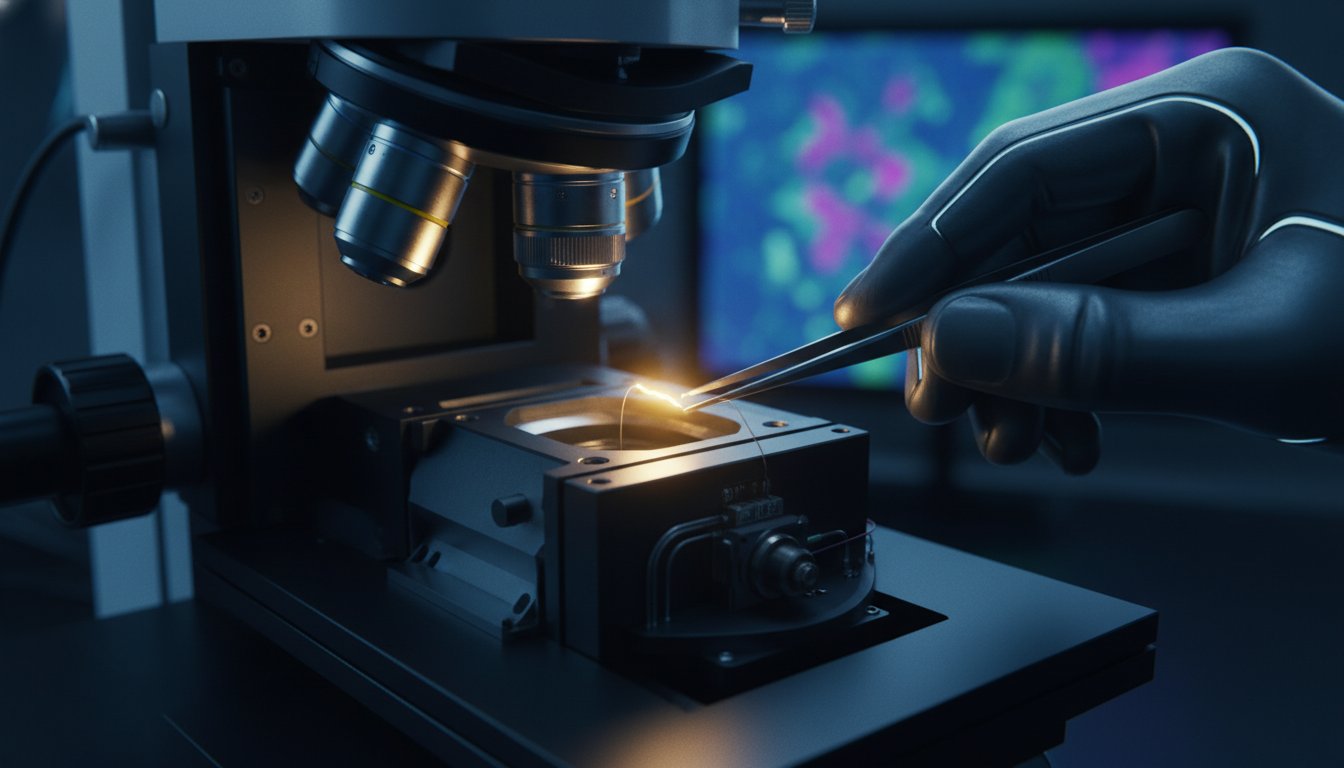
With tungsten powder prices having surged by 470% over the last year, the financial and operational stakes of routine maintenance have reached an unprecedented peak. You likely recognize that a single misstep during a cathode swap can lead to costly downtime or the contamination of the entire electron gun assembly. It’s a delicate balance between maintaining high-resolution output and managing the escalating costs of specialized consumables. This sem filament replacement guide offers the technical precision required to master these nuanced procedures, allowing you to minimize laboratory interruptions while ensuring superior imaging performance.
By following this expert-driven methodology, you’ll secure immediate vacuum recovery and restore beam stability with professional accuracy. We will detail the specific calibration sequences and contamination control protocols necessary to extend the lifespan of your new source. From the initial venting process to achieving full beam saturation, this overview provides the rigorous standards needed to optimize your Veritas Series or Cube II Benchtop SEM systems for the demanding research landscape of 2026.
Key Takeaways
- Identify the critical technical indicators of cathode thinning to preemptively manage filament lifespans and avoid sudden imaging failures.
- Utilize this professional sem filament replacement guide to implement a “Zero-Contamination” protocol that safeguards the electron gun assembly during maintenance.
- Master post-installation degassing and seasoning sequences to eliminate surface oxides and achieve rapid vacuum recovery for immediate operation.
- Execute precise beam alignment procedures to restore analytical accuracy and ensure the highest resolution for complex nanomaterial imaging.
- Evaluate the impact of consistent vacuum levels and annual preventative maintenance on maximizing the long-term durability of your cathode sources.
Diagnostic Indicators: When to Perform an SEM Filament Replacement
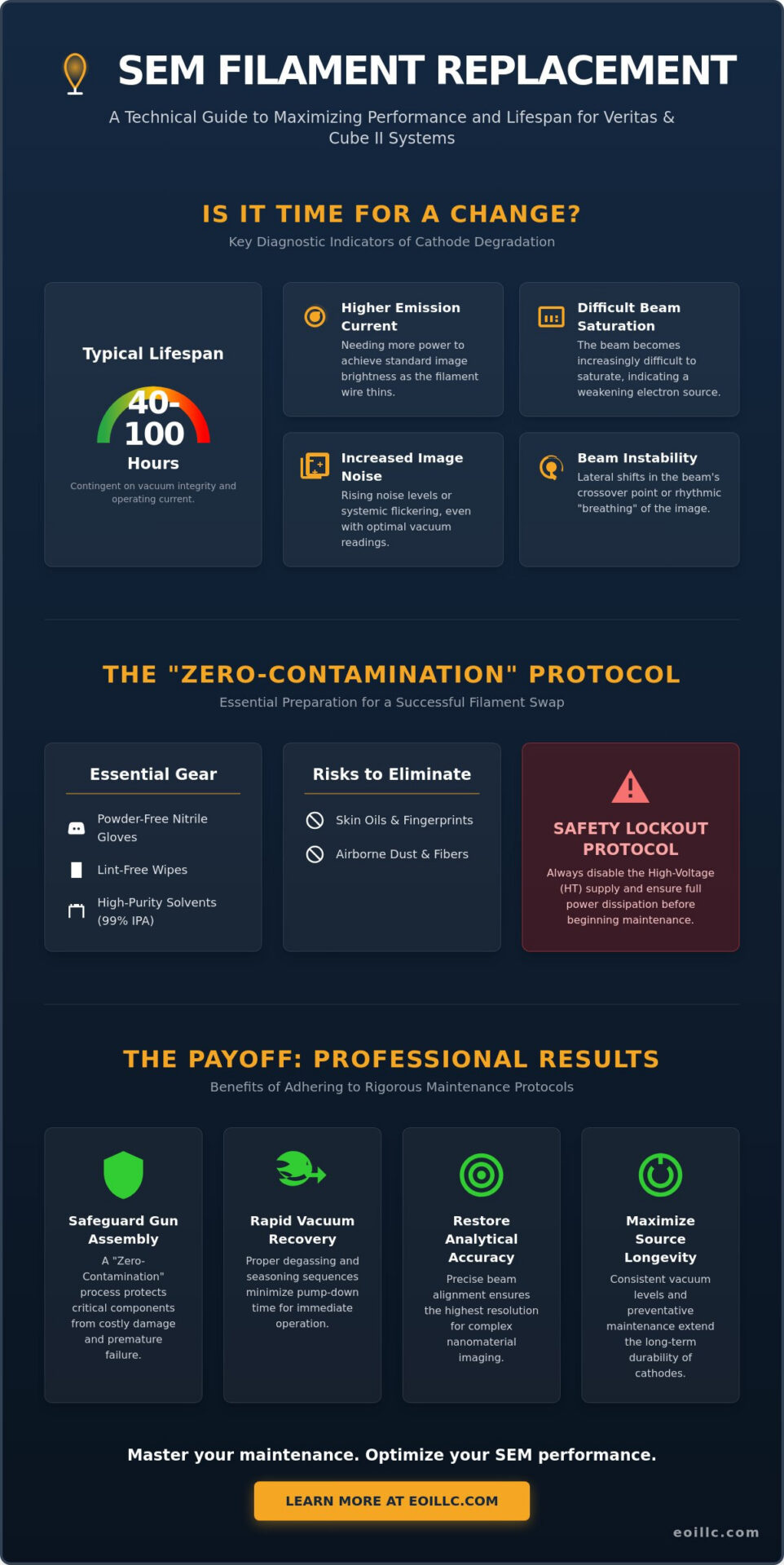
Predicting the precise moment of failure for a thermionic source requires a meticulous understanding of the instrument’s operational telemetry. Within a standard Scanning Electron Microscope (SEM), the tungsten filament typically maintains a functional lifespan between 40 and 100 hours, though this duration remains heavily contingent upon the integrity of the vacuum environment. While a complete open-circuit failure is unmistakable, it’s the more subtle diagnostic indicators that require technical expertise to prevent unplanned downtime during critical imaging sequences. This sem filament replacement guide emphasizes that monitoring the gradual degradation of the cathode is essential for maintaining the analytical standards expected of Veritas Series or Cube II systems.
Early warning signs often manifest as a progressive requirement for higher emission currents to achieve standard brightness levels. As the tungsten wire thins, its electrical resistance changes, necessitating an adjustment in the bias voltage to maintain the electron flux. If you observe that the beam becomes increasingly difficult to saturate or if image noise levels rise despite optimal vacuum readings, the source is likely approaching the end of its viable service life. Distinguishing these symptoms from sample-related charging effects is vital; while charging is localized and specimen-dependent, filament instability presents as a systemic flicker or a lateral shift in the beam’s crossover point across the entire field of view. Integrating these observations into your laboratory’s sem filament replacement guide ensures that imaging precision remains uncompromised.
The Mechanics of Tungsten Filament Evaporation
The operational reality of a tungsten source involves a continuous process of sublimation, where the solid metal transitions directly into a gaseous state under the extreme temperatures required for thermionic emission. This evaporation causes a physical “thinning” of the filament wire, particularly at the apex of the V-shape. As the wire’s cross-section diminishes, the local current density increases, which leads to a shift in the crossover point. This geometric alteration directly impacts the source brightness and the focus of the primary beam. Understanding these mechanics is crucial for operators who wish to balance high-resolution output with the grounded realities of consumable longevity.
Interpreting Software Error Codes and Beam Behavior
Modern SEM interfaces, such as those found on the Veritas Pro or Genesis Tabletop SEM, provide real-time diagnostic feedback to alert operators to gun-related anomalies. Common warnings often include “Gun Pressure High” or “Emission Current Limit Exceeded,” both of which suggest that the filament’s structural integrity is compromised or the vacuum has been breached. Visual artifacts, such as rhythmic “breathing” of the image or sudden, non-periodic brightness spikes, serve as precursors to a catastrophic break. By identifying these artifacts early, laboratories can schedule a preventative maintenance visit or execute a filament swap before a failure occurs during a sensitive EDS analysis or high-magnification scan.
Pre-Replacement Protocol: Essential Tools and Contamination Control
Successful maintenance begins long before the vacuum is vented. Establishing a “Zero-Contamination” workspace is the foundational step in any professional sem filament replacement guide. This requires a dedicated area free from airborne particulates and ambient oils. Technicians should utilize lint-free wipes and high-purity solvents, typically 99% isopropyl alcohol or ethanol, to sanitize all staging surfaces and toolsets. Even a single fingerprint or a stray fiber can outgas within the column, leading to prolonged pump-down times or localized dielectric breakdown.
Human skin oils represent a significant risk to high-vacuum integrity and the longevity of the cathode. Mandating the use of powder-free nitrile gloves ensures that no organic residue is transferred to internal gun components during handling. Additionally, a strict safety lockout procedure for high-voltage power supplies is non-negotiable. This prevents accidental discharge during the extraction of the gun assembly, protecting both the operator and the sensitive electronics of the Veritas HR or Genesis systems. Before proceeding, ensure that the high-voltage (HT) is disabled and the system has had sufficient time to dissipate stored energy.
The Clean-Room Mindset for Benchtop SEM Maintenance
Even microscopic debris on the Wehnelt cap can cause catastrophic arcing. These electrical discharges degrade image quality and can permanently pit the anode plate. During the swap, it’s essential to inspect the anode plate for carbon buildup and clean it using non-abrasive, vacuum-compatible techniques. For metal gun components with stubborn deposits, we recommend using ultrasonic cleaners filled with specialized degreasing solutions. If you require high-quality SEM filaments and consumables to maintain these rigorous standards, sourcing from established innovators ensures component compatibility.
Tooling Requirements for Modern Electron Guns
Modern electron guns require specialized tooling to prevent electrode misalignment. A dedicated Wehnelt removal tool ensures the cap is detached without applying lateral stress to the internal assembly. Precision tweezers, specifically non-magnetic stainless steel or ceramic-tipped variants, are required for handling delicate tungsten loops without introducing magnetic interference. Finally, centering jigs are utilized to verify that the filament tip is perfectly axial. This alignment is a critical step for achieving a symmetric beam profile and maximizing the resolution of your Veritas Series or Cube II Benchtop SEM. Following this sem filament replacement guide ensures that your hardware remains within factory specifications for hundreds of operational hours.
Step-by-Step Guide to Replacing the Tungsten Filament
Executing the physical exchange of a cathode requires a methodical transition from high-vacuum operations to atmospheric intervention. To begin, you must initiate the column venting sequence through the system’s control interface, ensuring a controlled backfill of dry nitrogen or filtered air. This prevents the adsorption of ambient moisture onto the internal column liners. Once the internal pressure reaches equilibrium with the laboratory environment, the gun assembly is unlatched and extracted with deliberate care. Following this sem filament replacement guide ensures that the delicate internal geometry of the Veritas Series or Genesis Tabletop SEM remains undisturbed during the transition.
With the gun assembly secured in a dedicated service jig, the Wehnelt cap is removed using the specialized removal tools identified in the pre-replacement protocol. It’s vital to inspect the ceramic insulator for any evidence of carbon tracking or metallic deposits, as these contaminants can facilitate high-voltage leakage or catastrophic arcing. If deposits are present, they must be removed according to the manufacturer’s rigorous cleaning standards before the new filament is introduced. This level of meticulousness is what separates professional maintenance from routine hardware swaps.
Extracting and Inspecting the Gun Assembly
The crossover point represents the virtual source of the electron beam, and its stability is entirely dependent on the precise centering of the filament apex within the Wehnelt aperture. During extraction, technicians should perform a visual audit of the Wehnelt cap’s interior surface. The presence of asymmetrical scorch marks or heavy tungsten discoloration often indicates a previous misalignment or a history of over-saturation. When removing the old cathode, apply force only to the designated contact points to avoid inducing mechanical stress on the ceramic base, which could lead to vacuum leaks in subsequent cycles.
Precision Installation and Centering
The installation of the new tungsten loop requires exacting calibration of the filament tip height relative to the Wehnelt aperture. This distance dictates the bias effect and directly influences the brightness and convergence of the electron beam. Utilizing a centering microscope or a built-in alignment jig, the operator must verify that the filament apex is perfectly axial and set to the manufacturer’s specified depth. Before re-inserting the gun head into the column, it’s essential to verify the electrical continuity of the new filament with a multimeter. This final check, a core component of any comprehensive sem filament replacement guide, prevents the frustration of discovering a “dead” source only after the system has undergone a lengthy pump-down sequence.
Post-Installation Procedures: Vacuum Recovery and Beam Alignment
Once the gun assembly is re-seated within the column, the transition back to operational vacuum must be handled with technical rigor. Initiate the pump-down sequence through the system software while closely monitoring the pressure gauge for consistent progress. If vacuum levels plateau before reaching the target mPa, or if the recovery time exceeds standard parameters, it often indicates a compromised gun O-ring seal or the presence of microscopic debris on the mating surfaces. Addressing these instabilities immediately is a core tenet of this sem filament replacement guide, as proceeding with a poor vacuum leads to rapid filament oxidation and systemic beam flicker.
Vacuum Integrity and Outgassing
A new tungsten filament requires a deliberate, incremental ramp-up during its first activation. This seasoning process allows for the controlled removal of surface oxides and residual moisture without triggering a catastrophic outgassing event. If the high voltage is applied too aggressively, the resulting pressure spike can cause the system to trip or result in a flashover within the gun assembly. Residual moisture, often introduced during the venting phase, manifests as a wandering beam or erratic emission readings. Maintaining a dry nitrogen environment during the swap, as detailed in the previous sections, remains the most effective way to minimize these post-installation delays.
Achieving the Saturation Point
Achieving optimal brightness requires the operator to identify the precise saturation point where the emission current no longer increases with filament heating. When viewing the crossover image, you’ll observe a first peak followed by a secondary, more stable peak as the filament current rises. It’s essential to stop at the onset of this second peak. Over-saturating the filament by applying excessive current significantly reduces the cathode’s lifespan and can lead to thermal deformation of the tungsten loop. For those seeking to refine their broader imaging workflows, our professional guide to SEM operation provides deeper insights into these nuanced adjustments.
Once saturation is achieved, the final stage involves calibrating the gun tilt and shift. These electronic adjustments center the electron beam within the column’s optical axis, ensuring that the illumination is symmetric and the resolution is maximized. If your laboratory faces persistent challenges with beam stability or vacuum recovery after following this sem filament replacement guide, scheduling Preventative Maintenance Visits ensures your Veritas Series or Cube II systems operate at peak efficiency. This methodical approach ensures that every filament swap translates into hundreds of hours of defensible, high-quality data.
Optimizing Source Longevity through Professional Preventative Maintenance
Maximizing the lifecycle of a thermionic source requires a transition from reactive hardware swaps to a culture of proactive system stewardship. While this sem filament replacement guide provides the technical steps for a successful swap, the broader operational environment dictates how frequently these interventions are necessary. Maintaining consistent, high-grade vacuum levels is the most effective method for preventing premature oxidative failure of the tungsten wire. Even minor fluctuations in column pressure can accelerate the thinning process, leading to the erratic beam behavior described in earlier sections. Professional oversight ensures that the vacuum pumps and seals of your Veritas Series or Cube II systems are performing at their theoretical limits.
Annual service contracts offer a strategic advantage for laboratories that cannot afford the operational delays of unplanned downtime. These agreements facilitate regular inspections of the entire gun assembly, ensuring that precision components like the anode plate and Wehnelt cap remain free from the microscopic pitting that causes beam instability. Professional maintenance acts as the primary defense against catastrophic column contamination, which often occurs when a filament is driven to the point of structural failure. By identifying these risks during scheduled visits, technicians can replace consumables before they compromise the integrity of the electron optics.
The Value of Expert SEM Field Service
Professional calibration of the anode-cathode distance is a fundamental factor that extends filament life by optimizing the bias field. This precise adjustment requires specialized diagnostic tools that go beyond the scope of a standard sem filament replacement guide. For a deeper understanding of how integrated care impacts your instrument’s performance, refer to our definitive guide to SEM maintenance. We strongly encourage the use of certified consumables to ensure hardware compatibility and to maintain the rigorous standards of your Veritas HR or Veritas FE SEM systems.
Proactive Support and Technical Training
Technical training for laboratory staff significantly reduces the risk of user-induced damage to the gun assembly during routine handling. In industrial high-throughput labs, where multiple operators interact with the equipment, standardized protocols prevent the subtle misalignments that lead to poor image resolution. Preventative maintenance visits provide an opportunity for on-site education, ensuring that every team member understands the nuances of vacuum recovery and beam saturation. To secure the long-term reliability of your imaging infrastructure, Contact Electron Optics Instruments for professional SEM repair and service contracts. This commitment to excellence ensures that your research and production goals are met with uncompromising precision.
Advancing Laboratory Precision through Rigorous Maintenance Standards
Mastering the technical intricacies of cathode maintenance ensures that your imaging infrastructure remains a reliable pillar of analytical discovery. This sem filament replacement guide has detailed the rigorous protocols required to maintain vacuum integrity and beam stability, moving beyond simple component swaps toward a model of total system optimization. By prioritizing meticulous contamination control and precise beam saturation, laboratories can significantly mitigate the risks of unplanned downtime and systemic column degradation.
As the sole US distributor for EmCraft Scanning Electron Microscopes and a provider of comprehensive service contracts for all major manufacturers, Electron Optics Instruments, LLC brings over 30 years of specialized expertise to your facility. Our commitment to technical excellence ensures that your hardware, from the Veritas Series to refurbished units, operates with the meticulousness required for sophisticated industrial applications. We invite you to explore our Cube II Benchtop SEM and expert service solutions to secure the future of your microscopy operations. Maintaining superior standards in your laboratory is a journey of continuous improvement and expert-driven support.
Frequently Asked Questions
How long does a typical tungsten SEM filament last before replacement?
A standard tungsten filament typically maintains an operational lifespan between 40 and 100 hours. This duration is heavily contingent upon the integrity of the vacuum environment and the operator’s adherence to proper saturation procedures. While some sources report longer lifespans under ideal conditions, consistent monitoring of emission stability is essential to prevent unexpected failures during critical research phases.
Can I use a higher emission current to get a brighter image without damaging the filament?
Increasing the emission current beyond the saturation point doesn’t improve image brightness; it only accelerates the thermal evaporation of the tungsten loop. This practice leads to premature thinning and eventual failure without providing any analytical benefit. To achieve higher brightness while maintaining source longevity, you should optimize the gun tilt and bias settings rather than over-driving the filament current.
What are the signs that my Wehnelt cap needs professional cleaning or replacement?
Visible indicators such as asymmetrical scorch marks, metallic discoloration, or carbon buildup around the aperture signify that the Wehnelt cap requires professional cleaning. If these deposits aren’t removed, they can cause electrical arcing or beam instability. A cap that shows physical pitting or deformation of the aperture geometry must be replaced to ensure the precision of the electron optics within Veritas Series systems.
Why is my SEM failing to reach high vacuum after a filament swap?
A failure to reach high vacuum after a swap usually indicates a compromised gun O-ring seal or the presence of microscopic particulates on the mating surfaces. Even a single lint fiber can prevent the system from achieving the required mPa levels. You should inspect the seal for physical damage and ensure the assembly is seated correctly, as detailed in this sem filament replacement guide.
What is the difference between a tungsten filament and a Lab6 (Lanthanum Hexaboride) source?
The primary difference lies in brightness and longevity. A tungsten filament is a cost-effective thermionic source with a 40 to 100-hour lifespan, whereas a Lanthanum Hexaboride (LaB6) crystal provides ten times the brightness and lasts over 1,500 hours. While LaB6 offers superior resolution and stability, it requires a significantly higher vacuum environment and a larger initial investment compared to standard tungsten consumables.
Is it necessary to realign the electron beam every time the filament is replaced?
Yes, performing a full beam alignment is essential every time a filament is replaced because the mechanical position of the new loop will never be identical to the previous one. Even a micron-scale shift in the filament apex alters the crossover point and the illumination symmetry. Following a comprehensive sem filament replacement guide ensures that the gun tilt and shift are recalibrated to restore the instrument’s specified imaging resolution.
How do I prevent arcing in the electron gun after installing a new source?
Preventing arcing requires a “Zero-Contamination” approach and a methodical degassing or “seasoning” of the new filament. You must ensure that all internal gun components are cleaned with high-purity solvents and handled with powder-free nitrile gloves to eliminate skin oils. Gradually ramping up the high voltage allows residual moisture to outgas safely, preventing the dielectric breakdown that leads to catastrophic arcing events.