
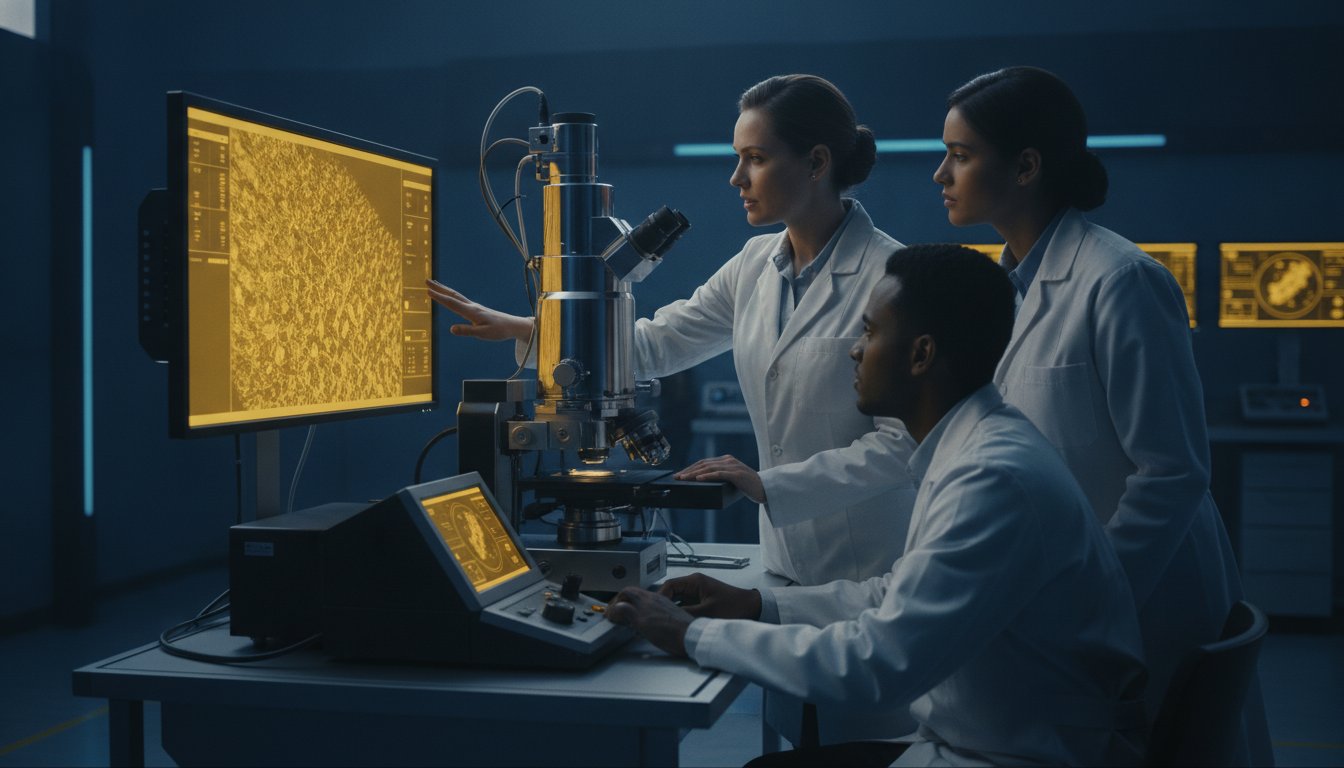
The most sophisticated scanning electron microscope remains a dormant asset if its operator lacks the nuanced understanding required to navigate the complexities of electron optics and vacuum physics within a specific laboratory environment. Implementing a rigorous program for on-site sem operator training isn’t merely an educational initiative; it’s a strategic necessity for organizations seeking to eliminate the cycle of suboptimal imaging and preventable hardware failure. You likely recognize that high staff turnover and the resulting loss of institutional knowledge frequently compromise research timelines and equipment longevity. It’s frustrating when frequent downtime, often caused by avoidable errors like premature filament burnout, stalls critical production cycles and delays vital data acquisition.
This guide illustrates how specialized, localized instruction transforms laboratory personnel into technical masters who can secure the highest image data integrity while maximizing the return on your instrumentation investment. We’ll examine the essential components of technical competency, from mastering filament management to standardizing energy dispersive spectroscopy protocols across your entire organization. By aligning human skill with the specific variables of your facility, you can establish a foundation of reliability that extends the operational lifespan of your Veritas or Cube II systems and ensures consistent, high-end analytical results.
Key Takeaways
- Transition from rote operation to a sophisticated understanding of electron-matter interactions to ensure superior signal generation and consistent image resolution.
- Understand why professional on-site sem operator training is essential for calibrating high-end hardware; it’s the most effective way to account for electromagnetic interference and floor vibration.
- Learn to implement standardized operating procedures that mitigate common technical failure points, ensuring it’s possible to extend the operational lifespan of filaments and vacuum components.
- Discover how specialized instructional modules for Veritas and Cube II systems optimize the precision of energy dispersive spectroscopy and high-resolution imaging protocols.
- Identify the strategic synergy between operator competency and preventative maintenance to maximize the long-term return on your electron microscopy investment.
Defining the Critical Need for On-Site SEM Operator Training in 2026
On-site sem operator training constitutes a specialized, expert-driven instructional program designed to align human technical proficiency with the specific environmental and hardware configurations of a client’s facility. This pedagogical approach represents a significant departure from rudimentary “knob-turning,” where operators follow a memorized sequence of adjustments without comprehending the underlying physics. Instead, true mastery requires a foundational understanding of electron-matter interactions within the Scanning Electron Microscope (SEM). As we progress through 2026, the industry is witnessing a decisive shift toward AI-assisted imaging and automated feature recognition. While these advancements streamline routine tasks, they simultaneously demand higher-level human oversight to validate automated data and troubleshoot the nuanced anomalies that AI systems may misinterpret.
Relying on “tribal knowledge” presents a pervasive risk to modern laboratories. When technical skills are passed down through informal, internal training, inefficient habits and technical inaccuracies become institutionalized. This cycle of inherited error compromises the integrity of research and production data. Professional on-site sem operator training breaks this cycle by introducing rigorous, standardized methodologies that are calibrated to the specific performance characteristics of the hardware in situ, whether it’s a Genesis series tabletop unit or a high-performance Veritas Ultra system.
The Cost of Inadequate Operator Proficiency
The financial ramifications of operator error are often underestimated. Frequent filament replacements and premature column contamination represent substantial operational expenses that are almost entirely preventable through sophisticated beam management techniques. Beyond these tangible costs, poor data integrity in failure analysis or quality control creates a “hidden cost” that can jeopardize entire production lines. Catastrophic vacuum system failures, often triggered by improper sample outgassing or venting procedures, can lead to weeks of downtime. Precision is mandatory. A single lapse in protocol doesn’t just damage a component; it halts the progress of organizational innovation and erodes the ROI of your capital investment.
Addressing the Institutional Knowledge Gap
High personnel turnover in research and industrial environments creates a constant vacuum of expertise. To mitigate this, organizations must move away from ad hoc learning and toward the development of a permanent repository of Standardized Operating Procedures (SOPs) that are unique to their facility’s specific environmental variables. These SOPs ensure that even as staff changes, the quality of imaging remains consistent and compliant with international standards and audit requirements. Professional training establishes a benchmark for operator competency, transforming a volatile human variable into a stable, high-performance asset that supports long-term industrial performance and logistical excellence.
Core Curriculum: Technical Mastery from Vacuum Physics to EDS Analysis
The efficacy of on-site sem operator training depends on a curriculum that bridges theoretical physics with the practicalities of industrial application. A comprehensive program must move beyond basic operation to address the intricate mechanics of the electron column. This involves detailed modules on signal generation, vacuum maintenance, and advanced imaging modalities that are essential for technical mastery. By focusing on the specific hardware in your facility, the training ensures that every operator understands the unique performance characteristics of your instrumentation.
- Technical Module 1: The Physics of the Electron Column and Signal Generation. Instruction covers the mechanics of the electron source, beam convergence, and the formation of the probe.
- Technical Module 2: Vacuum System Management and Contamination Mitigation. Operators learn to maintain ultra-high vacuum integrity and implement protocols to prevent hydrocarbon buildup.
- Technical Module 3: Advanced Imaging Techniques. This module clarifies the distinction between the topographical detail of secondary electrons and the compositional contrast provided by backscattered electrons.
- Technical Module 4: Analytical Integration with Energy Dispersive Spectroscopy (EDS). Training focuses on synchronizing hardware for precise chemical characterization and elemental mapping.
- Technical Module 5: Sample Preparation for Non-Conductive Materials. Technicians master mounting and coating techniques to prevent charging on sensitive polymers or ceramics.
Mastering the Electron-Matter Interaction
Training protocols prioritize the operator’s ability to recognize the interaction volume and its direct impact on spatial resolution. The selection of accelerating voltage must be a deliberate choice based on sample density and the desired depth of information. High voltages may provide better resolution but can damage sensitive structures or obscure surface details. Optimization of working distance remains a critical skill, as it dictates the balance between expansive depth of field and the requirements of high-resolution imaging. Technicians who master these variables can produce consistent, high-quality data regardless of sample complexity.
Analytical Excellence with EDS Integration
Mastery of analytical integration requires a deep dive into to ensure that elemental mapping is both accurate and reproducible. Calibration of these systems is most effective when performed on the specific SEM hardware used daily, as it accounts for unique detector geometries and take-off angles. Energy Dispersive Spectroscopy (EDS) stands as the primary method for non-destructive chemical characterization. For organizations seeking to verify their current system performance, scheduling Preventative Maintenance Visits alongside operator training provides a robust framework for long-term technical stability.
On-Site vs. Remote Training: Why Environmental Context Dictates Image Quality
While digital learning platforms offer a degree of accessibility for theoretical instruction, they inherently lack the capacity to replicate the physical complexities of a localized laboratory environment. The structural integrity of imaging data is inextricably linked to the localized seismic and electromagnetic profile of the installation site. Integrating on-site sem operator training allows for the direct calibration of technical skills against the specific hardware quirks and environmental variables of the facility. This localized approach ensures that operators don’t just learn the theory of microscopy but master the practical realities of their specific instrument, such as a Veritas Series or Cube II system, within its permanent vacuum and power environment.
A primary advantage of this methodology lies in the use of actual institutional samples rather than idealized, pre-prepared teaching specimens. Training on the specific materials an organization analyzes daily, whether they are sensitive biological tissues or non-conductive polymers, provides immediate relevance that remote courses cannot match. This real-time troubleshooting of hardware quirks specific to the facility’s installation builds a level of technical intuition that is essential for maintaining high-end analytical standards. It’s the difference between knowing how a system should work and knowing how your specific system actually performs under local conditions.
The Advantage of Environmental Calibration
Identifying local sources of noise, such as stray electromagnetic fields or subtle floor vibrations from adjacent industrial machinery, is critical for maximizing the performance of a Veritas HR SEM. On-site instruction permits the instructor to assist in optimizing the SEM’s cooling and vacuum throughput for the specific lab climate, which can vary significantly based on altitude and HVAC stability. Ensuring that sem maintenance protocols match the local usage intensity is vital for long-term reliability. This environmental alignment transforms the microscope from a generic tool into a precision-tuned instrument tailored to its surroundings.
Hands-On Problem Solving in Real-Time
Direct instructor feedback during complex sample alignment and focus routines accelerates the learning curve for laboratory personnel. By demonstrating proper column cleaning and precise aperture alignment on the specific unit used daily, the instructor demystifies the internal mechanics of the electron column. This supervised execution of high-risk procedures, such as filament replacement or vacuum seal inspection, builds operator confidence. It ensures that the transition from training to independent operation is seamless, reducing the likelihood of catastrophic hardware failure and maintaining a steady flow of high-quality analytical data.
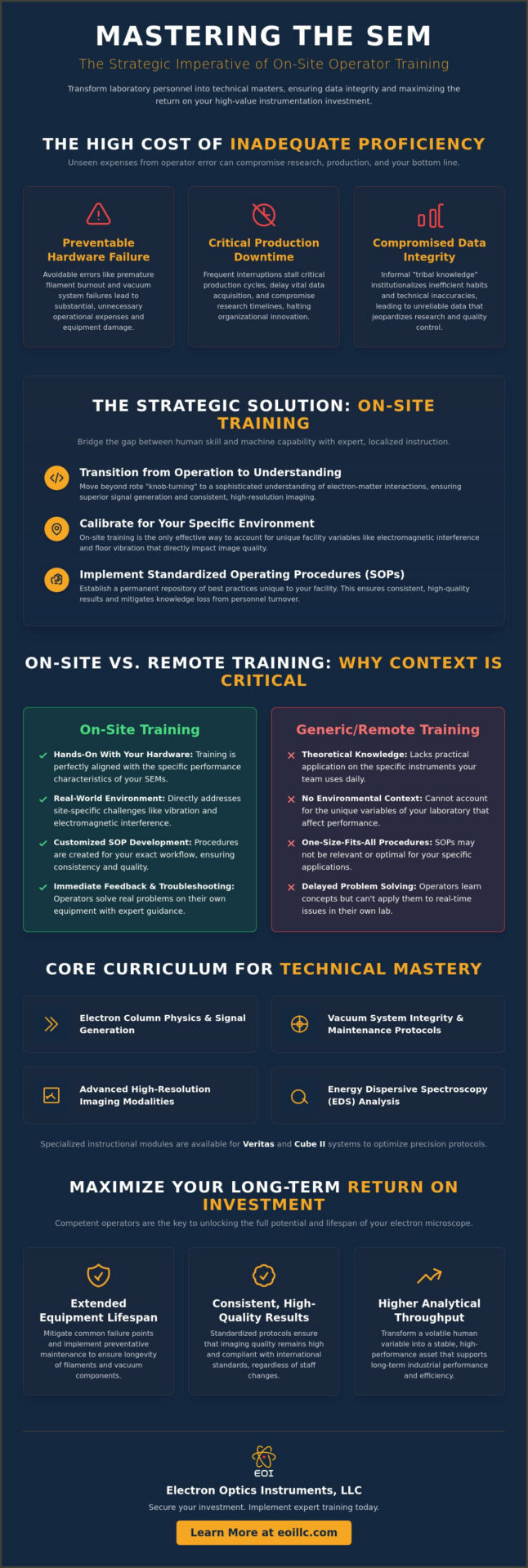
Implementing Standardized Operating Procedures (SOPs) to Reduce Maintenance Costs
Establishing a rigorous framework for equipment utilization requires more than just verbal instruction; it necessitates the formalization of expertise through Standardized Operating Procedures (SOPs). By integrating on-site sem operator training with the development of site-specific documentation, organizations can ensure that every interaction with the electron column adheres to sem operation best practices. These protocols serve as a structural safeguard against the technical inaccuracies often found in informal training environments. Comprehensive SOPs provide clear, step-by-step checklists for start-up, shut-down, and critical emergency venting procedures, which are essential for protecting the delicate internal components of the vacuum system.
The implementation of detailed training logs further enhances institutional oversight. These logs allow laboratory managers to track operator progress and equipment utilization metrics with precision, creating a transparent record of technical proficiency across the department. This methodical approach to documentation ensures that the high standards established during initial training sessions are maintained throughout the operational life of the instrument. It transforms individual skill into a repeatable, corporate asset that supports long-term industrial performance.
Training as a Form of Preventative Maintenance
Trained operators function as the primary line of defense for hardware longevity. They’re taught to identify subtle indicators of vacuum leaks or the early onset of filament degradation before these issues escalate into system-wide failures. This proactive stance significantly reduces the frequency of unscheduled service calls, as proper sample handling and loading techniques become second nature. Mastery in this area is deeply rooted in sem scanning electron microscope fundamental care, ensuring that the intersection of human skill and mechanical performance remains optimized. To maintain this high level of operational readiness, ensure your laboratory is stocked with the necessary SEM Filaments and Consumables to support continuous, standardized performance.
Standardizing Data Integrity and Reporting
Beyond hardware protection, SOPs stabilize the quality of the analytical output. Consistency in image capture parameters is paramount for longitudinal research studies where data sets must be comparable over extended periods. Modern training includes proficiency in advanced software environments, such as Windows 11-supported SEMView8000 systems, ensuring that operators can leverage the latest digital imaging enhancements without compromising data integrity. Establishing metadata standards for archived electron micrographs ensures that every image carries the necessary context for future audits or failure analysis reports. This meticulousness in data management reflects a commitment to international standards of excellence and technical accuracy.
The Electron Optics Advantage: Customised Training for Veritas and Cube II Systems
The culmination of technical mastery lies in the alignment of human expertise with the specific architectural nuances of the hardware. Electron Optics Instruments, LLC leverages over 30 years of industry experience in electron optics service and sales to deliver instructional programs that are as rigorous as the systems themselves. This legacy of expertise ensures that on-site sem operator training isn’t a generic seminar but a deep dive into the operational excellence required for high-end research and industrial production. It’s this dedication to meticulousness that allows us to facilitate a transition from basic imaging to sophisticated analytical mastery, focusing on the unique configurations of the Veritas Series or the compact efficiency of the Cube II.
Specialized Training for Benchtop and Tabletop Models
Benchtop and tabletop systems require a specific pedagogical focus that accounts for their compact electron optics and high-throughput design. Maximizing the utility of the Cube II Benchtop SEM for rapid industrial screening involves mastering the customizable chamber configurations and various detector options that this conventional SEM provides in a small package. Similarly, training for the Genesis Tabletop SEM emphasizes efficiency in high-throughput environments without sacrificing the resolution necessary for quality control. These sessions address the specific maintenance needs of compact systems, ensuring that vacuum integrity and filament longevity don’t suffer despite the high-cycle nature of benchtop applications.
Partnering for Long-Term Laboratory Success
Long-term laboratory success is achieved through a strategic partnership that extends beyond the initial training sessions. Advanced training modules for the Veritas Ultra and Veritas FE (Field Emission) systems allow operators to push the boundaries of high-resolution imaging and complex elemental analysis. These field emission systems demand a nuanced understanding of beam stability and ultra-high vacuum requirements, which our instructors cover in granular detail. This instructional path integrates seamlessly with annual service contracts and priority support, creating a holistic ecosystem of reliability. As your team transitions from basic operation to advanced analytical research, the path to institutional imaging excellence remains supported by a dedicated technical authority. It’s a commitment to ensuring your hardware investment continues to deliver superior data as your research requirements evolve. To begin this transformation, you should Contact Electron Optics Instruments, LLC for a customized on-site training quote to ensure your facility meets the highest standards of technical precision.
Securing the Future of High-Resolution Analytical Excellence
The synergy between localized calibration and rigorous operator competency serves as the foundation for institutional reliability in specialized industrial sectors. We’ve explored how environmental variables, including seismic profiles and electromagnetic interference, necessitate a site-specific approach to technical instruction. Transitioning from rote operation toward a comprehensive understanding of electron-matter interactions ensures that your laboratory maintains the highest standards of data integrity while extending the operational lifespan of sophisticated hardware. Implementing professional on-site sem operator training transforms a high-end instrument into a precision-tuned asset perfectly aligned with its unique facility requirements.
With over 30 years of electron microscopy expertise and our standing as the sole US distributor for EmCraft SEMs, Electron Optics Instruments, LLC provides comprehensive support for the Cube II, Genesis, and Veritas series. Our methodology bridges the gap between theoretical physics and the practical realities of international production. Request a Customized On-Site SEM Training Proposal to align your technical personnel with the rigorous demands of modern failure analysis and quality control. Elevating your facility’s internal imaging capabilities today ensures a sustainable trajectory of technical accuracy and innovation for years to come.
Frequently Asked Questions
What is the typical duration of an on-site SEM operator training session?
The duration of a technical engagement typically spans two to three consecutive days, depending on the complexity of the instrumentation and the number of personnel involved. This timeframe allows for a methodical progression from theoretical principles to hands-on proficiency with the specific vacuum and optical configurations of the facility. Intensive sessions ensure that operators achieve a level of competency sufficient for independent, high-resolution imaging without the need for constant external supervision.
Can on-site training be customized for specific industries like semiconductor or life sciences?
Customization is a fundamental requirement for effective on-site sem operator training, as the analytical demands of semiconductor metrology differ significantly from the imaging requirements of life sciences. Instructional modules are tailored to address specific sample types, such as non-conductive biological specimens or thin-film semiconductor layers. By focusing on industry-specific protocols, the training ensures that the resulting data integrity meets the rigorous standards of specialized industrial sectors.
Is training included with the purchase of a new Cube II or Veritas SEM?
Comprehensive instructional support is considered a critical component of the initial installation and integration phase for every new Veritas Series or Cube II Benchtop SEM. Providing this technical foundation ensures that laboratory personnel can immediately leverage the advanced capabilities of the hardware while minimizing the risk of operational error. This integrated approach maximizes the initial return on investment by establishing standardized protocols from the first day of system deployment.
Do you provide training for electron microscopes from other major manufacturers?
Our technical expertise extends across a broad spectrum of electron optics, allowing for high-level instruction on various platforms, including refurbished SEM units and legacy systems. While the primary focus remains on optimizing our proprietary Veritas and Genesis series, the fundamental principles of vacuum physics and electron-matter interaction are universal. This broad expertise ensures that organizations with heterogeneous laboratory environments can maintain a unified standard of technical mastery across all their imaging assets.
What prerequisites should lab personnel have before starting advanced SEM training?
Participants typically benefit from a foundational background in physical sciences or engineering, which provides the necessary context for understanding electron column mechanics. While our programs are designed to accommodate various experience levels, a basic familiarity with material properties and laboratory safety protocols is highly advantageous. This preparation allows the instructor to focus on advanced technical integration and the nuances of high-resolution signal generation rather than introductory concepts.
How often should SEM operators undergo refresher training to maintain competency?
We recommend an annual review of operational protocols to account for software updates, such as the latest SEMView8000 enhancements, and to mitigate the gradual adoption of suboptimal technical habits. Regular refresher sessions are also essential when a facility experiences personnel turnover or transitions into new research areas requiring different imaging modalities. Maintaining a consistent schedule of professional development ensures that institutional knowledge remains current and that imaging standards don’t degrade over time.
Does the training cover sample preparation and EDS analysis integration?
Technical mastery of the electron microscope is incomplete without a rigorous understanding of sample preparation and the nuances of Energy Dispersive Spectroscopy (EDS) systems. Our curriculum includes detailed modules on mounting techniques for various materials and the calibration of X-ray detectors for precise elemental mapping. By integrating these analytical components into the training, we ensure that operators can provide a comprehensive chemical and topographical characterization of their specimens.
Will on-site training help reduce our annual SEM maintenance and repair costs?
Professional on-site sem operator training is a highly effective strategy for reducing long-term maintenance expenditures by preventing common technical failures. Operators who understand the intricacies of filament management and vacuum system protocols are far less likely to cause catastrophic damage through procedural errors. This proactive approach to equipment care minimizes unscheduled downtime and extends the operational lifespan of critical components, directly enhancing the logistical excellence of the laboratory.